Gigabyte Bets Big on Local AI and RTX 50-Series Cooling at Computex 2026
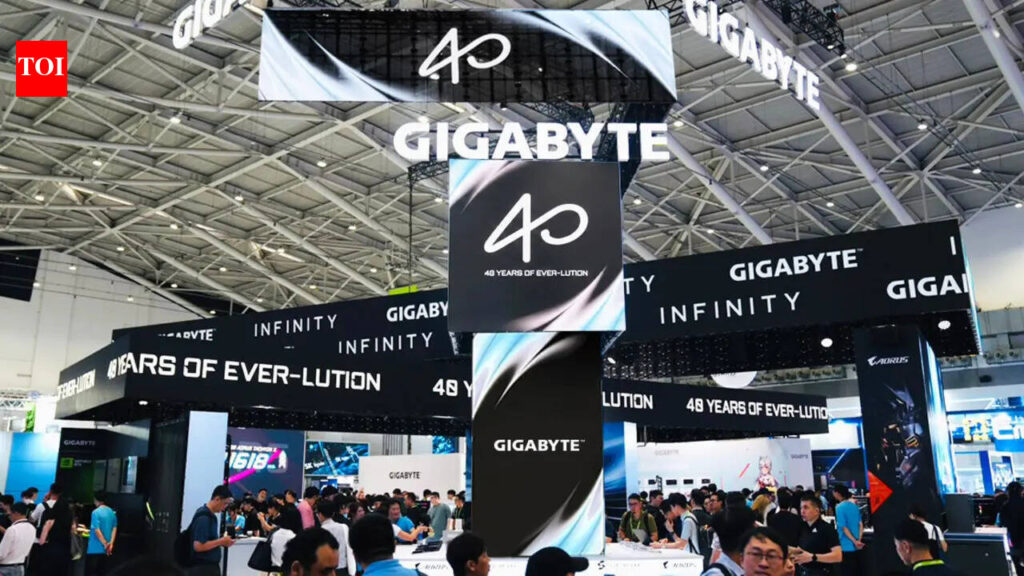
Table of Contents
Moving AI from the Cloud to the Chassis
While the last two years of AI integration in consumer hardware have largely focused on “AI-powered” software shortcuts and NPU-driven battery savings, Gigabyte is pivoting toward a more aggressive vision of local autonomy. At Computex 2026, the center of the company’s showcase wasn’t a single laptop, but the “AI TOP” ecosystem—a specialized hardware framework designed specifically for developers and enterprises wanting to run Large Language Models (LLMs) locally without relying on expensive cloud subscriptions or compromising data privacy.
The AI TOP approach focuses on high-density compute and massive VRAM availability. By leveraging multi-GPU configurations and specialized cooling, Gigabyte is targeting the “prosumer” gap—users who find a standard gaming rig insufficient for training models but aren’t ready to invest in a full-scale server rack. This push into local AI infrastructure positions Gigabyte as more than just a motherboard vendor; it’s an attempt to own the physical layer of the generative AI revolution.
Engineering for the RTX 50 Series
The heat problem has plagued GPU design for years, but with the arrival of the GeForce RTX 50 series, the thermal envelope has shifted. Gigabyte utilized its Computex floor space to debut a series of cooling innovations specifically tailored for these next-gen cards. The new AORUS line features redesigned vapor chambers and a more aggressive fin array intended to combat the higher power draws of the Blackwell-based architecture.
These thermal solutions aren’t just about keeping temperatures low; they are about maintaining peak clock speeds. In live demonstrations, the company showcased custom loop integrations and hybrid air-liquid coolers that aim to minimize thermal throttling during sustained AI workloads and 4K gaming sessions. This engineering push coincides with the launch of new AORUS monitors that push the resolution ceiling further with 5K panels, bridging the gap between traditional gaming displays and professional-grade creative monitors.
The AORUS MASTER 16 and the New Gaming Baseline
On the mobile front, the AORUS MASTER 16 has emerged as the flagship for Gigabyte’s 2026 strategy. The machine is less of a traditional laptop and more of a portable workstation, integrating the latest high-wattage chips to ensure that the “AI’ capabilities aren’t limited by power profiles. The device has already garnered industry awards for its balance of thermal management and raw performance, which Gigabyte attributes to its revised chassis airflow.
Beyond the Master 16, the company showcased several custom PC builds that emphasize a modular approach to AI. These builds aren’t just about aesthetics; they utilize specific motherboard layouts that optimize PCIe lane distribution for multiple GPUs, ensuring that data bottlenecks are minimized when running complex AI inference tasks.
The Shift Toward Hardware Sovereignty
Gigabyte’s strategy at Computex 2026 reveals a broader trend in the industry: the move toward hardware sovereignty. As companies like OpenAI and Google tighten their grip on cloud-based AI, there is a growing market for users who want to own their compute. By combining high-resolution 5K displays, extreme cooling for the RTX 50 series, and the AI TOP ecosystem, Gigabyte is betting that the future of tech isn’t just in the cloud, but in the hardware we can physically touch and upgrade.