Fueling the Crisis: How Geopolitical Volatility is Driving U.S. Gas Prices Toward $5
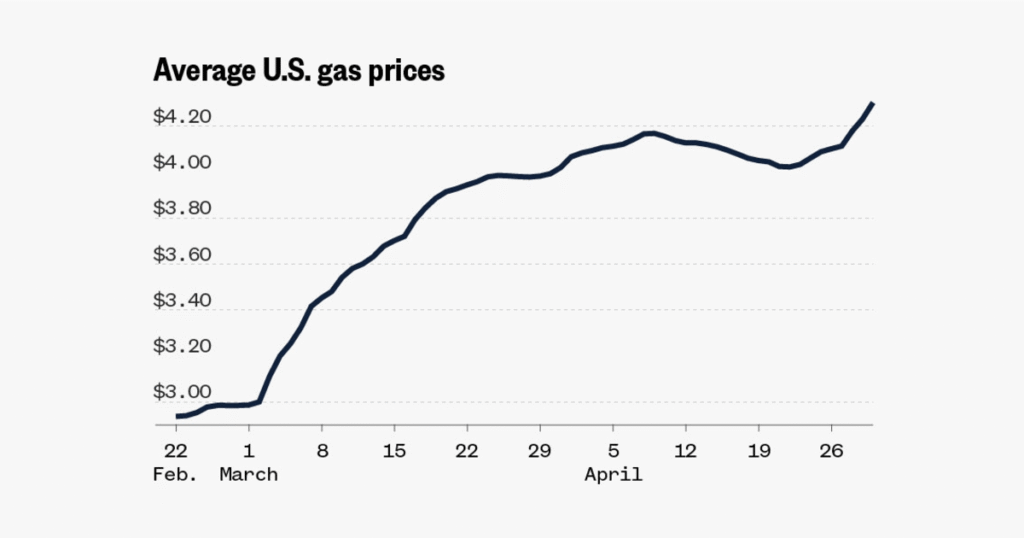
Table of Contents
The Breaking Point at the Pump
The American commute is becoming an increasingly expensive endeavor. According to the latest data from the motor club AAA, the national average for a gallon of gasoline is now hovering near $4.50, marking a staggering 50% increase since the onset of military actions involving the U.S., Israel, and Iran. This surge isn’t just a statistical anomaly; it is a direct reflection of how fragile the global energy supply chain remains when geopolitical friction hits primary oil-producing regions.
For most households, the spike is felt as a sudden erosion of disposable income. While energy markets often fluctuate based on seasonal demand or refinery maintenance, the current trajectory is driven by a constriction of global oil supply. The volatility has created a ‘see-saw’ effect in pricing: brief moments of relief following ceasefire announcements are quickly erased by new escalations, leading to a cycle of price hikes that have left consumers struggling to predict their weekly budgets.
A Fractured Geographic Landscape
The burden of these price hikes is not being shared equally across the country. A look at the regional data reveals a stark divide in how different states are absorbing the shock. In the West and Midwest, the numbers are particularly grim. California has already eclipsed the $6 per gallon mark, cementing its position as the most expensive state for fuel in the nation.
Six other states—Alaska, Hawaii, Illinois, Nevada, Oregon, and Washington—are seeing averages push toward the $5 threshold. Conversely, states in the center of the U.S. continue to see the lowest relative costs, though even these regions are seeing a steady upward climb as the national average pulls the floor higher.
Beyond the Passenger Car: The Aviation Ripple Effect
The crisis extends far beyond the standard gas station. The volatility in crude oil is directly impacting the cost of refined jet fuel, creating a secondary wave of economic pressure on the aviation industry. For airlines, fuel is one of the most significant overhead costs, and the inability to hedge against these sudden spikes is forcing a shift in business models.
This pressure has manifested in higher ticket prices for consumers and, in more extreme cases, corporate instability. The precarious financial position of Spirit Airlines, which has recently faced the prospect of shutting down, serves as a case study in how fuel volatility can push a low-cost carrier over the edge. When the margin for error is already thin, a surge in jet fuel costs can turn a struggling operation into an unsustainable one.
Market Psychology and the April Pivot
Industry analysts had previously suggested that prices might begin a meaningful decline in April, following a pattern of gradual easing that hinted at a stabilization of the market. However, those hopes were short-lived. The recent jump to new highs suggests that the market is currently pricing in a ‘risk premium,’ anticipating further disruptions in the Strait of Hormuz or other critical transit points.
The reality is that as long as the conflict between the U.S., Israel, and Iran remains unresolved, the oil market will likely remain reactive. The interplay between diplomatic ceasefire attempts and military escalation creates a high-variance environment where a single headline can trigger a price jump of several cents per gallon across the entire country within hours.


