From Deep-Sea Octopuses to Prehistoric Smelting: The Science We Almost Missed
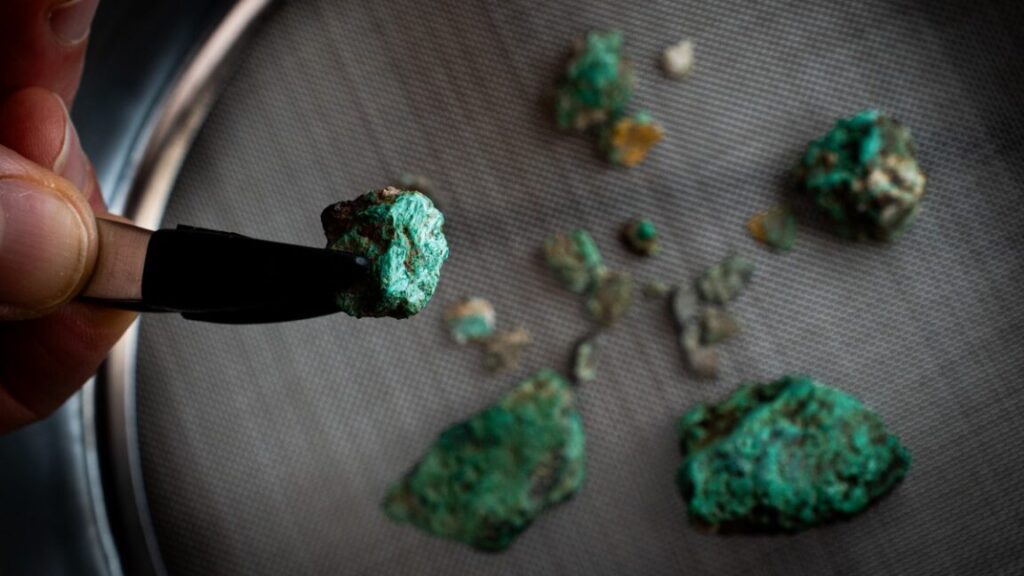
Table of Contents
A New Resident of the Galapagos Deep
In the depths of the Galapagos Islands, a creature that has been sitting in a preservation jar since 2015 has finally been given a name. Researchers from the Charles Darwin Foundation have officially classified a tiny, vivid blue octopus as a new species: Microeledone galapagensis. The specimen was originally captured 5,800 feet below the surface by a remotely operated vehicle (ROV) during an E/V Nautilus expedition.
Because the specimen was unique and irreplaceable, scientists avoided traditional dissection. Instead, they employed mini-CT scans to perform a 3D virtual autopsy. The imaging revealed a creature specifically adapted for its extreme environment, featuring short arms, a minimal number of suckers, and a complete absence of an ink sac. These physiological traits, combined with its smooth skin and a distinctively large rachidian tooth, distinguish it from its cousins in the deep.
The Prehistoric Industrialists of the Pyrenees
While the discovery of a new species captures the imagination, archaeologists in the eastern Pyrenees are uncovering evidence of early human industry. Excavations conducted between 2021 and 2023 have revealed a cave site that may have served as one of the earliest copper smelting hubs in the region. According to a paper published in Frontiers in Environmental Archaeology, the site shows signs of much more frequent human occupation than previously recorded.
The evidence lies in 23 distinct hearths discovered in the lower layers of the site. These hearths were filled with crushed green mineral fragments—likely malachite—that show clear signs of intense burning. Since malachite can be processed through heat to produce copper, this suggests a sophisticated understanding of metallurgy between 4,000 and 5,500 years ago. The site also yielded personal artifacts, including prehistoric pendants, a baby tooth, and a human finger bone, hinting that the area may have also served as a burial ground.
Rewiring the Brain for Song
In the cloud forests of Costa Rica, certain species of mice engage in complex, chirping call-and-response duets. For years, biologists wondered if this behavior required a significant evolutionary leap in brain architecture. However, new research from the Cold Spring Harbor Laboratory (CSHL) suggests the answer is far simpler: it’s all about the wiring.
Using a molecular barcoding technique developed by Anthony Zador, researchers mapped thousands of individual neurons. They found that singing mice don’t have ‘extra’ brain regions; rather, they possess roughly triple the number of neurons connecting the hearing cortex to the regions controlling mouth movement and vocalization. This discovery implies that complex behaviors can emerge from targeted changes to existing neural patterns rather than the creation of new brain structures. In a provocative twist, the authors suggest that applying similar wiring changes to a standard laboratory mouse could theoretically enable it to ‘sing.’
The Physics of Art and Sound
Beyond biology and archaeology, recent studies are attempting to quantify the subjective. In the realm of acoustics, Daniel Ludwigsen of Kettering University has been analyzing the mechanics of the ‘slapstick’—the tool Foley artists use to simulate whip cracks. Testing five different commercial models in an anechoic environment, Ludwigsen found that the ‘Sleighride Special’ performed best in low-frequency ranges, while smaller, spring-hinged models excelled in high-frequency output. The research highlights how the physics of materials and the force of impact dictate the sonic texture of cinematic sound effects.
Similarly, mathematicians are applying computational topology to the world of abstract art. A study in PLoS Computational Biology suggests there may be a ‘golden rule’ of structure that exists across multiple scales, explaining why the chaotic splatters of a Jackson Pollock feel balanced and appealing to the human eye, while other abstract works feel disjointed. By analyzing the underlying mathematical structure, researchers are attempting to bridge the gap between raw emotion and geometric precision.