France Bets on Vast for Next-Gen Orbitals, Sending Astronauts to Haven-1
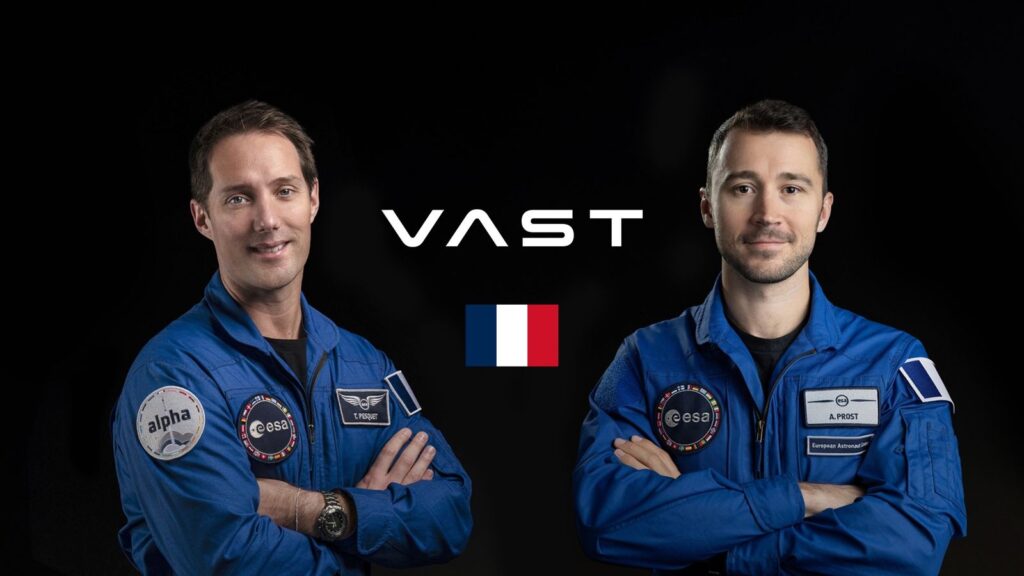
Table of Contents
A Strategic Shift in Orbital Access
The French government is formally pivoting toward the commercial sector for its next phase of human spaceflight. In a deal announced during the Choose France Summit, commercial space station developer Vast has secured an agreement to fly two French astronauts on upcoming missions, marking a significant transition from traditional intergovernmental partnerships to private-sector procurement.
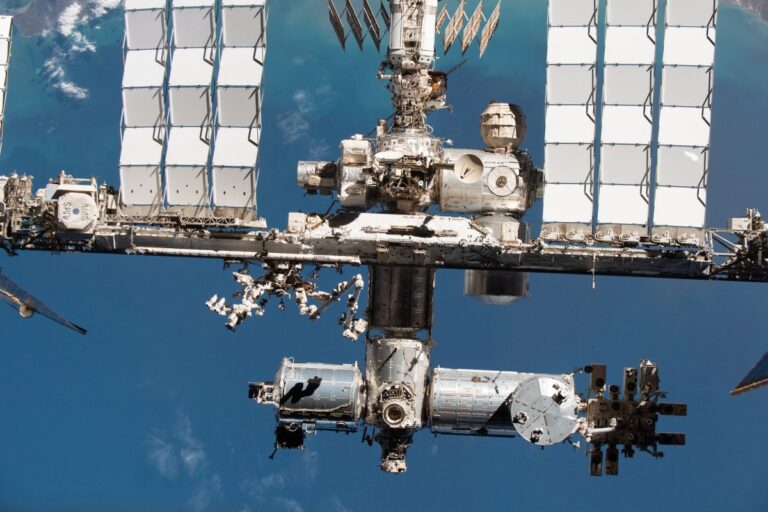
The agreement centers on two distinct flight paths: a private mission to the International Space Station (ISS) and the inaugural flight to Haven-1, Vast’s first commercial orbital outpost. Both missions are slated for 2027 and will utilize SpaceX’s Crew Dragon spacecraft, with each mission lasting approximately two weeks.
This partnership isn’t just about flight hours; it’s a geopolitical statement. By establishing European headquarters in Paris, Vast is embedding itself into the French industrial ecosystem, while France gains a fast track to the emerging ‘commercial LEO’ (Low Earth Orbit) economy without relying solely on the rigid schedules of the European Space Agency (ESA) or NASA.
The Command Shift: Thomas Pesquet’s New Role
One of the most notable aspects of the deal is the selection of veteran ESA astronaut Thomas Pesquet to command the ISS mission. Pesquet, who completed long-duration missions in 2016 and 2021, represents a breakthrough in NASA’s regulatory framework. Historically, NASA required private missions to the ISS to be commanded by former NASA astronauts.
However, a policy shift in 2025 opened the door for companies to propose alternative commanders from Canada, Europe, or Japan, provided they possess equivalent spaceflight experience. This change removes a significant bottleneck for commercial providers like Vast and Axiom Space, allowing them to leverage a more global pool of experienced commanders to lead sovereign missions.
Testing the Waters with Haven-1
While the ISS mission is a proven route, the flight to Haven-1 is where the real technical gamble lies. Arnaud Prost, an ESA reserve astronaut from the 2022 class, will be the primary French representative on this voyage. Prost belongs to a specific tier of ‘reserve’ astronauts—personnel trained for short-term, high-impact missions rather than the multi-year career tracks of the core astronaut corps.
This follows a growing trend of using reserve astronauts to bridge the gap between government science and private logistics. Similar paths were taken by Sweden’s Marcus Wandt and Poland’s Sławosz Uznański-Wiśniewski during Axiom Space’s Ax-3 and Ax-4 missions. For France, placing Prost on Haven-1 is an exercise in operational readiness for a future where the ISS is decommissioned and commercial stations are the only available hubs for research.
The Rise of the ‘Sovereign Astronaut’
The Vast-France deal underscores a critical business trend in the aerospace industry: the emergence of the “sovereign astronaut.” As NASA moves toward a commercial-first model for LEO, national governments are realizing that they no longer need to build their own stations or enter decades-long treaties to maintain a presence in space.
Instead, they are becoming high-value customers. By purchasing seats and research time on private stations, countries can maintain their national prestige and scientific output while offloading the immense cost of station maintenance to companies like Vast.
The missions are expected to carry a payload of science experiments and technology demonstrations developed by French academic institutions and private firms. Further specifics on these payloads are expected to be unveiled at the International Space Summit in Paris this September.
Vast has indicated that the crews will likely include other professional astronauts from countries with diplomatic ties to France, though these candidates must still pass a multilateral review board composed of the primary ISS partners. This ensures that while the flight is commercial, the safety and security protocols remain aligned with international orbital standards.