France Bets on Vast: A Strategic Shift Toward Commercial Space Stations
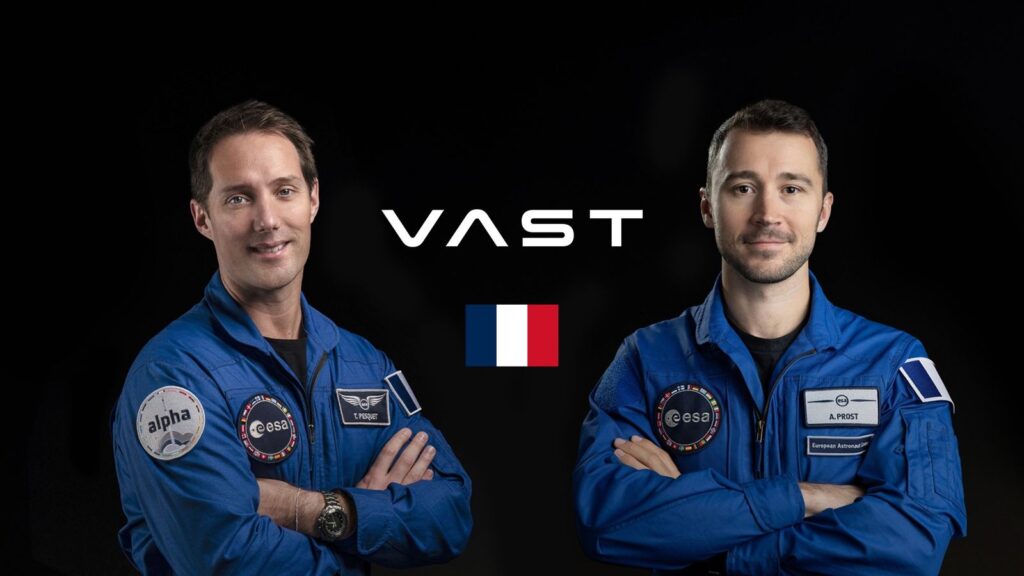
Table of Contents
A New Era for French Orbital Presence
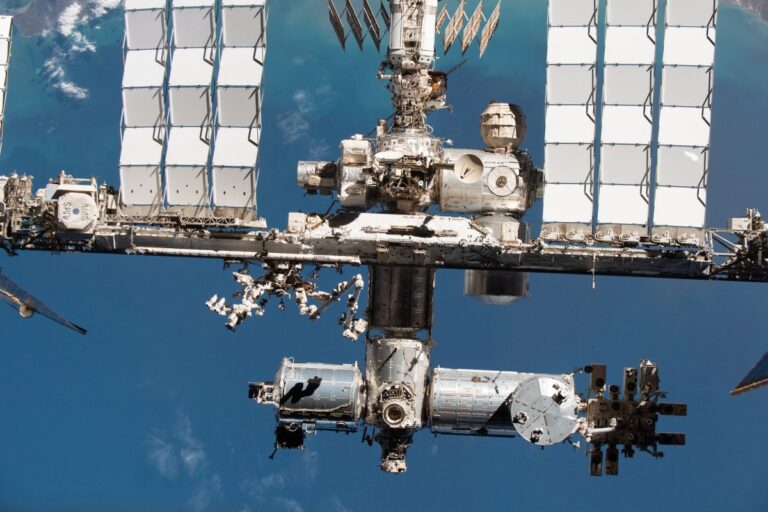
The French government has officially pivoted toward the burgeoning commercial low-Earth orbit (LEO) economy, signing a strategic agreement with Vast to send two of its astronauts on upcoming private missions. The deal, announced during the Choose France Summit, is more than a simple transportation contract; it is a calculated move to secure a footprint on the next generation of orbital infrastructure as the International Space Station (ISS) nears its sunset.
Under the terms of the agreement, France will fly one astronaut on a private mission to the ISS and another to Vast’s inaugural commercial outpost, Haven-1. Both flights are scheduled for 2027 and will utilize SpaceX’s Crew Dragon spacecraft for transit. While the missions are relatively short—each lasting roughly two weeks—the symbolic and technical weight of the deal suggests a shift in how European nations intend to maintain their spacefaring status.
The Return of Thomas Pesquet
The most high-profile element of the announcement is the selection of veteran European Space Agency (ESA) astronaut Thomas Pesquet to command the ISS mission. Pesquet is already a household name in Europe, having completed two long-duration missions in 2016 and 2021. However, his role as commander of a private mission marks a significant shift in NASA’s operational policy.
For years, NASA mandated that private astronaut missions be commanded by former NASA astronauts. In a pivotal 2025 solicitation, the agency relaxed these rules, allowing companies to propose experienced commanders from Canada, Europe, or Japan. By placing Pesquet in the commander’s seat, Vast and the French government are testing the viability of a multilateral command structure that doesn’t rely exclusively on U.S. federal experience.
Testing the Waters with Haven-1
While the ISS mission provides a stable environment, the flight to Haven-1 represents a leap into the unknown. That mission will be flown by Arnaud Prost, an ESA reserve astronaut from the 2022 class. The use of reserve astronauts—specialists trained for short-term bursts rather than multi-year deployments—has become a trend in the commercial sector, mirrored by the recent flights of Sweden’s Marcus Wandt and Poland’s Sławosz Uznański-Wiśniewski on Axiom Space missions.
Haven-1 is designed to be a proof-of-concept for Vast’s larger ambitions: a fully commercial, artificial-gravity space station. By sending Prost to the first flight, France is effectively buying a front-row seat to the viability of private habitation modules, ensuring that French academic institutions and companies can conduct science experiments and technology demonstrations in a non-governmental environment.
The ‘Sovereign Astronaut’ Business Model
From a business perspective, this deal highlights the emergence of the “sovereign astronaut” as a primary customer for commercial space companies. As the cost of launching payloads decreases, countries that lack their own heavy-lift capabilities are increasingly looking to lease seats and lab space rather than building their own state-run programs from scratch.
Max Haot, CEO of Vast, framed the agreement as a validation of the company’s commitment to commercializing LEO. To solidify this partnership, Vast is establishing its European headquarters in Paris, signaling that the company views France as its primary gateway into the European market.
The full scope of the mission objectives—including specific scientific payloads and the identities of other crew members who will be “professional astronauts from sovereign countries with diplomatic ties to France”—will be detailed at the International Space Summit in Paris this September. For now, the deal serves as a clear indicator that the transition from the ISS era to a commercial orbital economy is no longer a theoretical projection, but an active procurement strategy.