Focus Entertainment Taps Former Rockstar and Ubisoft Veterans for Surreal Platformer ‘Bradley the Badger’
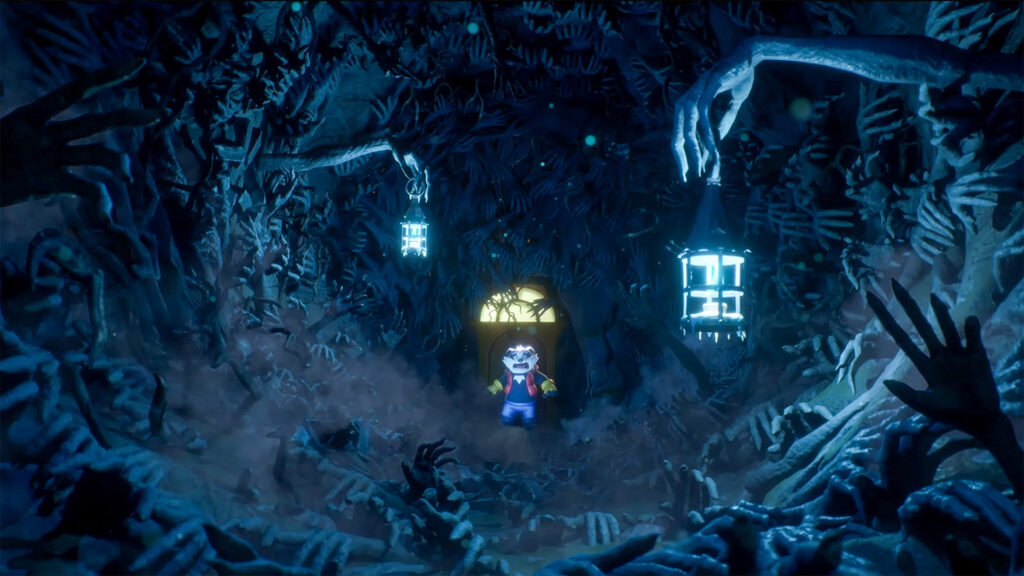
Table of Contents
A Pedigree of Polished Chaos
The indie game scene is frequently defined by small teams taking massive risks, but the upcoming title Bradley the Badger arrives with a level of industry pedigree that is rare for a debut project. Focus Entertainment has officially stepped in to publish the surreal 3D platformer, a game being crafted by a collective of developers who spent years polishing some of the most technically demanding titles in the medium, including Rockstar Games’ Red Dead Redemption series and Ubisoft’s Mario + Rabbids.
For those tracking the movement of talent in the AA and indie space, this partnership signals a broader trend: veteran developers leaving the rigid structures of massive AAA studios to apply high-end production values to more experimental, idiosyncratic genres. Bradley the Badger isn’t aiming for the hyper-realism of the frontier or the tactical rigidity of a turn-based battler; instead, it is positioning itself as a “surreal” experience, a descriptor that usually implies a departure from traditional level design in favor of dream-logic and visual eccentricity.
Bridging the Gap Between AAA and Indie
The transition from working on open-world behemoths like Red Dead to a focused 3D platformer allows the team to pivot from systemic complexity to mechanical precision. In the current market, where the 3D platformer is seeing a revival—spurred by the success of titles like Psychonauts 2 and the continued legacy of Mario Odyssey—the challenge is often not the idea, but the execution. This is where the pedigree of the development team becomes a competitive advantage.
Focus Entertainment, known for its work with titles like Saints Row (the reboot) and The Surge, typically looks for projects with a strong hook and a polished core loop. By backing Bradley the Badger, they are betting on the intersection of professional-grade technical stability and a quirky, original art direction. While specific gameplay footage remains limited, the “surreal” tag suggests an environment that will challenge the player’s expectations of physics and spatial orientation, moving away from the standard ‘collect-a-thon’ tropes of the early 2000s.
The Market for Surrealism
The gaming industry is currently seeing a divide between the massive, live-service ecosystems and smaller, highly authored experiences. Bradley the Badger sits firmly in the latter. By leveraging the skills of developers who understand how to build immersive worlds on a massive scale, the team can implement a level of environmental storytelling and visual fidelity that often eludes smaller indie teams.
The move also highlights Focus Entertainment’s strategy of diversifying its portfolio. Rather than competing solely in the high-budget action-RPG space, the publisher is expanding into the ‘creative-platformer’ niche, which often enjoys a longer tail of sales and a dedicated cult following. The success of the title will likely depend on whether the “surrealism” translates into meaningful gameplay mechanics or if it remains a stylistic choice.
As the project moves toward its next major milestone, the industry will be watching to see how these Rockstar and Ubisoft alumni handle the freedom of a smaller project. There is a distinct tension in seeing the architects of the most grounded, realistic worlds in gaming pivot to the absurd, and that tension is exactly what makes Bradley the Badger one of the more intriguing mid-sized projects on the horizon.