FAA Grounds Starship After V3 Booster Failure Complicates SpaceX’s Path to IPO
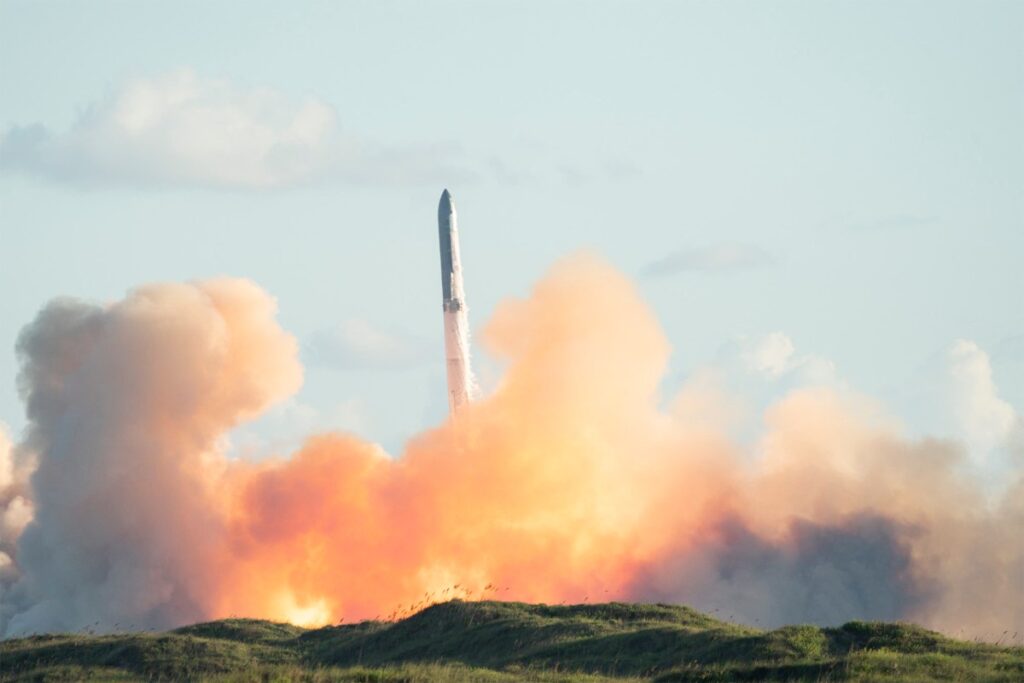
Table of Contents
A ‘Mishap’ in the Gulf
The Federal Aviation Administration (FAA) has officially classified the May 22 SpaceX Starship Flight 12 launch as a “mishap,” triggering a mandatory investigation into the failure of the Super Heavy booster. In a statement released Wednesday, the agency confirmed that while there were no reports of public injury or property damage, the failure of the booster during its return trajectory to the Gulf of Mexico necessitates a formal review.
Under FAA regulations, this designation effectively pauses further Starship test launches. SpaceX cannot return to the pad until it completes a thorough investigation and submits a corrective action plan that receives federal approval. For Elon Musk’s aerospace company, the timing is particularly fraught; the grounding threatens to disrupt a tight flight schedule leading up to a widely anticipated mid-June IPO.
The V3 Technical Breakdown
Flight 12 was intended to be a litmus test for the “V3” iteration of the Starship system. Unlike previous flights, the V3 architecture introduced a series of critical hardware modifications aimed at increasing reliability and payload capacity. These included redesigned booster structures and the debut of third-generation Raptor engines, which SpaceX hopes will eventually allow the rocket to achieve the kind of operational cadence seen with the Falcon 9.
The mission initially appeared successful. The stack cleared the point of maximum dynamic pressure and reached space, successfully executing the stage separation. However, the failure occurred during the booster’s descent. As the Super Heavy attempted the sustained burn required to steer itself back toward the South Texas launch site for a simulated water landing, it suffered what appeared to be a catastrophic engine failure—or a sequence of failures across multiple Raptor units.
The result was a loss of attitude control, causing the booster to tumble toward the Gulf before exploding on impact. The instability wasn’t limited to the booster; the Starship upper stage also suffered a failure of one of its six Raptor engines, forcing SpaceX to abandon a key objective: a second sustained burn while in orbit.
The Financial Stakes of Reusability
While SpaceX famously embraces a “fail fast, learn fast” philosophy, the stakes for Starship are fundamentally different from early Starflight tests. The company’s financial future, specifically the growth of its Starlink satellite constellation, is inextricably linked to the success of this vehicle. According to SpaceX’s own IPO filings, Starlink is the company’s primary revenue driver and its only consistently profitable business segment.
The ability to launch massive quantities of Starlink satellites depends on a fully reusable, high-capacity heavy-lift system. Without the V3’s promised reliability, the cost per kilogram to orbit remains too high to scale the network at the pace Musk has envisioned. The transition from experimental prototypes to a reliable commercial workhorse is the final hurdle before the company can fully realize the valuation expected by public investors.
A Regulatory Bottleneck
The FAA’s oversight of Starship has been a point of contention, as the agency balances public safety with the rapid pace of private space exploration. SpaceX is not alone in this regulatory scrutiny; rival Jeff Bezos and Blue Origin have faced similar mishap investigations during the development of their New Glenn rocket.
The contrast in current trajectories is sharp. Just last week, the FAA cleared New Glenn to return to flight, with Blue Origin expected to attempt its fourth launch within the coming month. As SpaceX navigates the paperwork and technical audits of the Flight 12 failure, the window for a pre-IPO victory launch is rapidly closing, leaving the company to prove that the V3’s innovations can overcome the volatility of the Raptor engine’s combustion cycle.


