EU Sanctions Iranian Navy as Israel and Iran Exchange Missile Strikes

Table of Contents
EU Targets IRGC Navy Over Strait of Hormuz ‘Tollbooth’
The European Union has moved to penalize Iran’s maritime operations, imposing targeted sanctions on the Islamic Revolutionary Guard Corps (IRGC) Navy for restricting commercial traffic through the Strait of Hormuz. The move comes as Tehran has effectively implemented a toll system for vessels traversing the vital waterway, a response to Israeli-American strikes carried out in late February.
According to a statement from the Council of the EU, the 27 member states approved sanctions against the IRGCN’s Hormozgan Provincial Command. The bloc also targeted two high-ranking officials: Mohammad Akbarzadeh, the navy’s deputy commander for political affairs, and Hamid Hosseini, a representative of Iran’s Oil, Gas and Petrochemicals Exporters Union. The sanctions include asset freezes and travel bans, while prohibiting the provision of economic resources to the named individuals.
Kaja Kallas, the EU’s top diplomat, emphasized the urgency of the situation during a news conference in Brussels. “Tehran actively, effectively closed the strait, and its drones continue to threaten the maritime traffic,” Kallas stated, adding that the bloc considers Iran’s actions “unacceptable.”
Escalation in the Air: Missiles and Interceptions
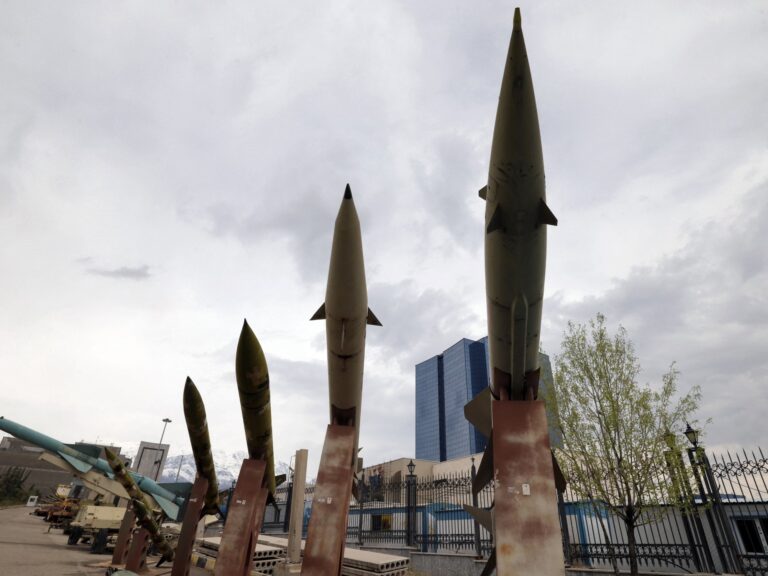
The diplomatic friction coincides with a sharp spike in kinetic military action. The Israeli military reported that Iran launched approximately 30 missiles toward Israel this morning, though the IDF maintains that the majority were intercepted. Footage released by the Revolutionary Guard Corp purportedly shows these launches, though independent verification remains ongoing.
The ripple effects of the barrage were felt across the region. Iraq and Syria closed their airspace as a precaution as missiles crossed their territories. In Syria, images emerged of a missile that had been intercepted by Israeli air defense systems falling into the agricultural lands of Najha, near Damascus.
Israel responded within hours, launching a targeted strike on a petrochemical plant in Iran. State television in Iran reported audible explosions in several major cities, including Isfahan, Karaj, Tabriz, and Tehran. While the Iranian Red Crescent Society acknowledged that Israel hit 12 locations across the country, spokesperson Mojtaba Khaledi stated in a video message on X that no casualties or deaths had been reported.
The Geopolitical Friction Between Washington and Jerusalem
The timing of Israel’s retaliation has sparked debate over the current power dynamics between the U.S. and Israel, specifically following public calls from President Donald Trump for both sides to “stop shooting.”
Sanam Vakil, director of the Middle East and North Africa program at Chatham House, suggests that Prime Minister Benjamin Netanyahu is navigating a complex internal political landscape. “There’s an asymmetry in these dynamics where obviously Israel is dependent and beholden to the United States, but… Netanyahu is thinking about his own political career,” Vakil noted. She argued that failing to respond to Iranian strikes would make Netanyahu appear as a U.S. proxy, which would be politically untenable domestically.
Conversely, Kobi Michael of the Institute for National Security Studies suggests that a response was inevitable. Michael argues that the IRGC’s strikes—conducted in retaliation for Israeli actions in Lebanon—were something Israel simply could not tolerate. He noted that despite Trump’s rhetoric, the U.S. administration is likely to tolerate the Israeli response.
A Fragile Balance of Diplomacy and Defense
The conflict continues to spill over into Lebanon, with the national news agency reporting Israeli airstrikes on several southern villages. Meanwhile, the IDF has issued alerts for the Zar’it area in northern Israel, noting that details of an incident there are still under review.
Iranian President Masoud Pezeshkian maintained a dual-track posture in a statement posted to X, asserting that Iran has “abandoned neither the battlefield nor the negotiating table.” He framed the current strategy as a balance between diplomacy and defense to ensure national security.
The international community remains on edge, with Pakistan’s Prime Minister Shehbaz Sharif urging restraint. Sharif, whose government has attempted to mediate the conflict, described the missile exchanges as a “stark reminder of the dangers associated with a tenuous ceasefire.”