ESA Chief Warns Against ‘Passenger’ Status in NASA-Dependent Space Race
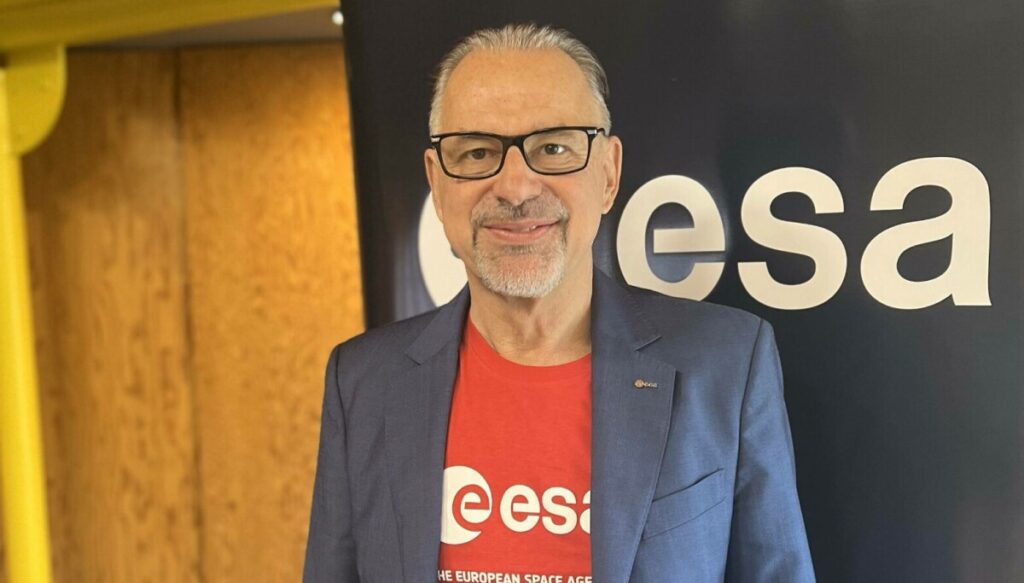
Table of Contents
The Price of Partnership
For decades, the European Space Agency (ESA) has operated as a premier partner to NASA, providing critical hardware, scientific expertise, and funding for the most ambitious missions in the solar system. But that partnership is beginning to feel less like a collaboration and more like a liability.
Josef Aschbacher, the Director General of ESA, has issued a candid wake-up call to Europe’s space-faring nations, posing a stark question in a recent editorial: “Are we pilots or are we passengers?”
The frustration stems from what appears to be a volatile period of policy shifts within NASA. In recent months, the US agency has pivoted on several high-profile initiatives, leaving its international partners to scramble. The most pressing examples include the Lunar Gateway project—which has seen proposed pauses and shifts in favor of a permanent Moon base—and the Mars Sample Return mission, which has been plagued by budget overruns and timeline delays.
For ESA, these aren’t just technical setbacks; they are strategic vulnerabilities. When a partner agency pivots, the European projects tied to those missions are effectively held hostage by decisions made in Washington, D.C.
Breaking the Cycle of Dependency
Aschbacher’s critique is a direct response to the realization that Europe is “too exposed to decisions beyond its control.” This sentiment echoes a broader trend within the agency, which recently moved to sever ties with Russia regarding the ExoMars mission following the geopolitical fallout of the invasion of Ukraine.
The goal now is to apply that same logic to human spaceflight. Currently, Europe lacks the independent means to launch its own astronauts into orbit or beyond, relying instead on US-led vehicles and infrastructure. Aschbacher argues that this isn’t just a matter of pride, but a requirement for geopolitical and economic security.
“Europe must decide whether it prefers to be dependent on others to send its explorers into space or to assume its role as a fully capable space power,” Aschbacher wrote. “Autonomous human spaceflight is not a luxury. It is a necessary anchor for Europe to secure its freedom.”
Industry insiders suggest the tension has been simmering for years. Some within the agency have described the relationship with the US as unpredictable, with a level of volatility that makes long-term European planning nearly impossible.
The Political Hurdles of Autonomy
While the technical path to autonomy is clear, the political path is treacherous. Unlike NASA, which operates under a single national government, ESA is a consortium of 23 member states. Every single euro spent on a new independent launch system or crewed capsule must be negotiated across different national budgets and political priorities.
The clock is ticking. Aschbacher noted that even if Europe began building these capabilities today, it would take years to reach operational status. The agency is now facing a critical window of decision-making, with key meetings scheduled for the ESA Council in June and the Intermediate Ministerial Council in December, leading up to a full Ministerial Council in 2028.
Strategic Diversification
Interestingly, as Europe seeks more autonomy from the US, it is simultaneously diversifying its international ties. This was evidenced by the recent launch of the Smile spacecraft on a Vega-C rocket from French Guiana. A joint venture between ESA and the Chinese Academy of Sciences (CAS), the mission is designed to study the Earth’s response to solar wind.
This move toward diversification signals a shift in ESA’s strategic philosophy: maintain global partnerships, but never at the expense of the ability to act alone.
The ultimate challenge for Aschbacher will be transforming this editorial plea into a funded mandate. Without the collective political will of its 23 members, Europe risks remaining a passenger in a race where the drivers are changing the rules of the road without notice.