Equal AI Secures $30M to Solve India’s Call Spam Crisis with Multilingual AI Screening
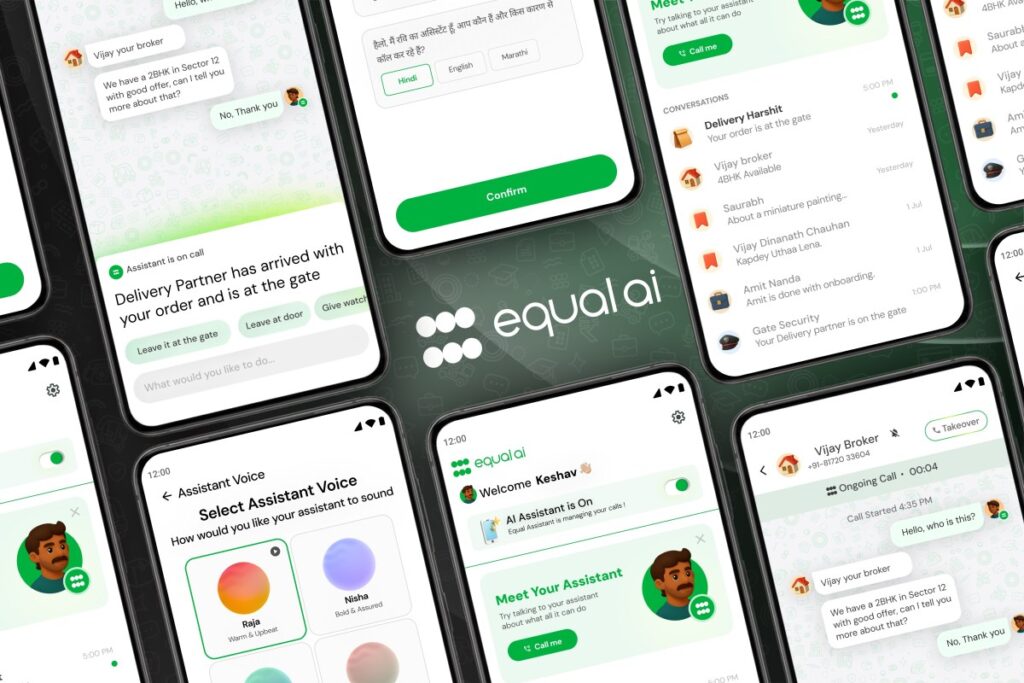
Table of Contents
The War on the ‘Unknown Number’ in India
For millions of smartphone users in India, the ringtone of an unknown number is rarely a cause for excitement; it is usually a signal of an impending sales pitch, a delivery coordinator who can’t find the house, or a sophisticated phishing attempt. While apps like Truecaller have long dominated the landscape by providing a digital directory of who is calling, they solve only half the problem. Knowing a call is from ‘XYZ Insurance’ doesn’t stop the interruption—it only tells you why you’re being interrupted.
Enter Equal AI, a startup that has just secured $30 million in Series B funding to transition the user experience from identification to delegation. Rather than simply labeling a call, Equal AI deploys an intelligent agent to answer the phone, interrogate the caller, and present the user with a concise summary of the intent before they ever pick up the device.
- The Core Shift: Moving from passive identification (Truecaller) to active mediation (Equal AI).
- The Scale: Over 1 million monthly active users (MAUs) on Android since its launch last year.
- The Tech: A sophisticated orchestration layer handling ‘code-mixing’—the blending of English with native Indian languages.
- The Backing: Led by Prosus Ventures and Tomales Bay Capital, with a total funding pool now exceeding $42 million.
Breaking Down the $30 Million Series B Structure
The recent funding round for Equal AI is not a standard equity injection. The $30 million is structured in three distinct tranches, a strategic move that ties valuation to the achievement of specific, predetermined performance targets. While this ‘milestone-based’ pricing is uncommon in the current venture capital climate, it provides a safeguard for investors while incentivizing the startup to hit aggressive growth metrics.
The round saw participation from a high-profile group of strategic investors. Beyond the institutional lead from Prosus Ventures, the cap table includes Sameer Nigam (founder of fintech giant PhonePe) and Sandhya Devanathan (VP for Meta India and Southeast Asia). This blend of venture capital and operational expertise from the fintech and social media sectors suggests that Equal AI is being positioned as more than just a utility app—it is being built as a gateway for broader digital interactions in the Indian economy.
The GVK Connection and Strategic Pivot
The company’s origin story is rooted in the intersection of traditional Indian business power and new-age tech. Founded in 2022 by Keshav Reddy—whose family manages the GVK conglomerate with deep interests in energy, healthcare, and infrastructure—Equal didn’t start as a consumer app. It began as a B2B data-sharing entity focusing on financial analysis and ‘Know Your Customer’ (KYC) verification.
The pivot to a consumer-facing AI assistant was born from a specific observation: the friction of the Indian financial services market. In India, the process of shopping for car insurance or a home loan often triggers a deluge of 20 to 30 calls per week from competing agents. By solving this specific point of friction, Reddy identified a scalable use case that could transition the company from a backend data provider to a frontend essential service.
The Technical Challenge: Solving the ‘Code-Mixing’ Problem
From a technical perspective, the biggest hurdle for any AI assistant in India is not just the number of languages, but how they are spoken. In urban centers, users rarely speak a ‘pure’ version of Hindi, Tamil, or Bengali; instead, they engage in code-mixing, where English words and phrases are woven into native syntax.
Standard Automatic Speech Recognition (ASR) models often struggle with this fluid transition, leading to transcriptions that are nonsensical or inaccurate. Equal AI has developed a proprietary orchestration layer that manages a mix of speech recognition, ASR, and speech generation models specifically tuned for this linguistic hybridity. This allows the AI to understand a caller who might start a sentence in Hindi and end it in English, ensuring the summary provided to the user is accurate.
How the Screening Process Works in Practice
For the end-user on Android, the experience is designed to minimize cognitive load. When an unknown call arrives, the AI intercepts it. As the caller speaks, the app generates a real-time transcription and reason for the call. The user can then interact with the caller via a ‘Quick Reply’ menu:
- Logistical Responses: “Leave the package at the door” or “Give it to the security guard.”
- Deflective Responses: “I am not interested in this service; please remove me from your list.”
- Custom Inputs: Users can type a specific message that the AI reads back to the caller in a natural voice.
Once the call concludes, the user is left with a recorded audio file, a full transcription, and a concise summary, allowing them to decide if a callback is actually necessary.
What This Means for the Digital Ecosystem
The success of Equal AI indicates a shift in how users perceive the ‘AI Assistant.’ For years, Siri and Google Assistant were treated as voice-activated search engines. Equal AI is moving toward agency—the ability for AI to act on a user’s behalf in a real-world transactional environment.
The implications here are three-fold. First, for the consumer, it represents the reclamation of time and mental bandwidth. Second, for businesses, it forces a shift in outreach strategies; if an AI is screening the calls, the ‘cold call’ becomes significantly less effective unless the value proposition is immediately clear to the bot.
Third, it highlights a strategic avoidance of ‘platform dependency.’ Many AI startups in the region attempted to build bots on top of WhatsApp (such as Luzia or Zapia). However, Meta’s tendency to tighten restrictions on third-party bots has created a precarious environment. By building a standalone app that integrates with the native dialer, Equal AI is owning the user relationship and the data pipeline, reducing the risk of being wiped out by a single API change from a Big Tech provider.
Competitive Landscape: The Battle of the Dialers
Equal AI is not operating in a vacuum. It faces formidable competition from both global giants and local incumbents.
| Competitor | Approach | Weakness in Indian Market |
|---|---|---|
| Google Call Screen | Integrated OS-level screening | Limited availability across all Android tiers; less nuanced with local dialects. |
| Apple Intelligence | Privacy-focused on-device AI | Strict ecosystem lock-in; slower rollout of localized Indian language support. |
| Truecaller | Community-based crowdsourcing | Primarily identification-focused; AI assistant features are additive rather than core. |
| Cloaked (US) | Privacy-first masking | Geographically focused on US/EU; lacks the linguistic complexity needed for India. |
The edge Equal AI claims is local context. While Google can provide a generic screening service, a tool that specifically understands the nuance of a delivery driver in Mumbai or a loan officer in Bangalore provides a level of utility that global models often miss.
The Path Forward: Proactive Agency
The roadmap for Equal AI extends beyond simple screening. The company is currently developing an iOS version to break the Android-only barrier and is planning a transition toward ‘proactive action.’ This means the AI wouldn’t just screen incoming calls, but would handle outbound tasks—such as calling a clinic to book an appointment or texting a delivery person a precise location with the user’s consent.
Furthermore, the introduction of a paid subscription tier suggests a move toward a sustainable SaaS model. By offering ‘Power User’ features—perhaps more advanced agency or deeper integration with calendars and emails—the company can diversify its revenue streams beyond the initial venture funding.
Frequently Asked Questions
Is Equal AI a replacement for Truecaller?
Not necessarily. Truecaller excels at identifying who a caller is based on a massive community database. Equal AI focuses on what the caller wants and handles the interaction for you. Many users may find value in using both: Truecaller for the ‘Who’ and Equal AI for the ‘Why’.
How does Equal AI handle privacy and data security?
The app records calls and generates transcriptions to provide summaries. While the company utilizes these for the functionality of the service, users should be aware that their call data is being processed by AI models. The company has not released a detailed public audit of its data retention policies, which is a common point of scrutiny for AI-driven utility apps.
Does it work with all languages spoken in India?
Equal AI currently supports over 10 languages, with a specific focus on ‘code-mixing’ (the blending of English with native languages). This is a key differentiator from standard voice assistants that require a single, pure language setting.
Is the app available for iPhone?
Currently, Equal AI is primarily available on Android due to the more open nature of the Android dialer and permissions system. An iOS version is in development, though Apple’s strict restrictions on call interception may result in a different feature set for iPhone users.
How does the AI know how to respond to the caller?
The AI uses a combination of speech-to-text and a large language model (LLM) to understand the caller’s intent. It then presents the user with a set of context-aware ‘Quick Replies’ or allows the user to type a custom response, which the AI reads back using a natural-sounding voice.
Final Analysis: A High-Stakes Bet on Localized AI
The $30 million injection into Equal AI is a signal that the ‘AI Assistant’ market is moving away from general-purpose bots and toward hyper-localized, utility-driven agents. In a market as complex as India, the winner will not be the company with the largest model, but the company that best understands the chaotic reality of the user’s daily digital life.
By focusing on the ‘call screening’ niche, Equal AI is building a high-frequency touchpoint with the user. If they can successfully transition from a screening tool to a proactive personal agent, they may well become the primary interface through which millions of Indians interact with the services and businesses around them.