EPA’s Coal Ash Rollbacks Spark Outcry Over Groundwater Contamination and Pediatric Health
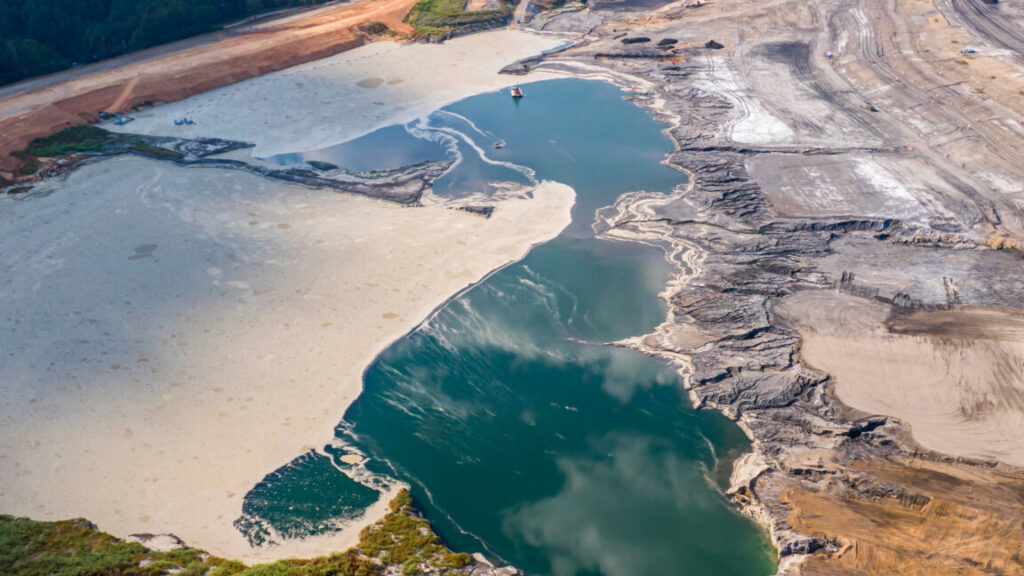
Table of Contents
The Battle Over ‘Beneficial Use’ vs. Toxic Waste
A virtual public comment hearing hosted by the U.S. Environmental Protection Agency (EPA) on Thursday became a flashpoint for conflict between industrial interests and public health advocates. At the center of the dispute is a proposed set of regulations by the Trump administration aimed at weakening the cleanup requirements for coal ash—the toxic byproduct of burning coal for electricity—at hundreds of sites across the United States.
The proposed changes would effectively repeal a 2024 rule established under the Biden administration, which mandated that utilities monitor coal ash sites even at inactive power plants. The Trump EPA seeks to shift the burden of monitoring and enforcement to individual states, potentially allowing local authorities to bypass national safety standards. EPA Administrator Lee Zeldin characterized these shifts as “commonsense changes” intended to restore “American energy dominance” and facilitate “cooperative federalism.”
However, the definition of “beneficial use” is where the technical and political arguments diverge most sharply. The coal and cement industries argue that coal ash should be viewed as a domestic mineral resource rather than waste. By redefining these residuals as part of the production process for cement and wallboard, the industry hopes to streamline the supply chain for construction materials. Leah Pilconis, vice president of government affairs at the American Cement Association, noted that as the supply of fresh coal ash declines, easing these regulations would improve access to legacy residues.
The Hydrogeological Risk
For environmentalists, the push to reclassify toxic waste as a “resource” is a dangerous legal maneuver. Coal ash contains high concentrations of mercury, arsenic, and lead—heavy metals known to cause systemic health failures and cancer. While a portion of the residue is recycled into concrete, vast quantities remain in unlined ponds and landfills.
Critics point to a 2022 study by Earthjustice and other advocacy groups indicating that over 90 percent of U.S. coal power plants are currently contaminating groundwater. This risk is not theoretical; as far back as 2002, the EPA itself reported that improper lining in these facilities allowed toxins to leach into the water table, often exceeding federal safety limits. Jennifer Cassel, an attorney with Earthjustice, described the resulting pollution as a “tea” that steeps into the environment, a situation exacerbated by the increasing frequency of hurricanes and extreme rain events that can cause ash ponds to breach.
The Pediatric Impact: Beyond the Water Table
The hearing also brought a critical, often overlooked dimension to the debate: the neurobiological impact on children. Kristina Zierold, a professor at the University of Mississippi, presented findings from her NIH-funded research investigating the link between coal ash exposure and cognitive development in children aged 6 to 14.
Zierold’s research, which utilized air pollution and dust sampling within homes, suggests a correlation between coal ash exposure and increased rates of depression and poor academic performance. According to Zierold, the impact is not merely a temporary setback but a cascading developmental issue that can affect social interaction and long-term mental health throughout adulthood. This testimony shifted the narrative from a purely ecological concern to a public health crisis, questioning the safety of children playing in parks or playgrounds located near legacy ash dumps.
As the American Coal Ash Association continues to lobby for the elimination of waste criteria to unlock the “mineral value” of these sites, the legal battle is expected to move into the courts. The tension remains between an industrial push for deregulation and a growing body of evidence suggesting that the cost of “energy dominance” may be measured in groundwater toxicity and pediatric developmental delays.