Early Galaxy Fold Failures: Samsung’s $2,000 Experiment Hits a Fragile Reality
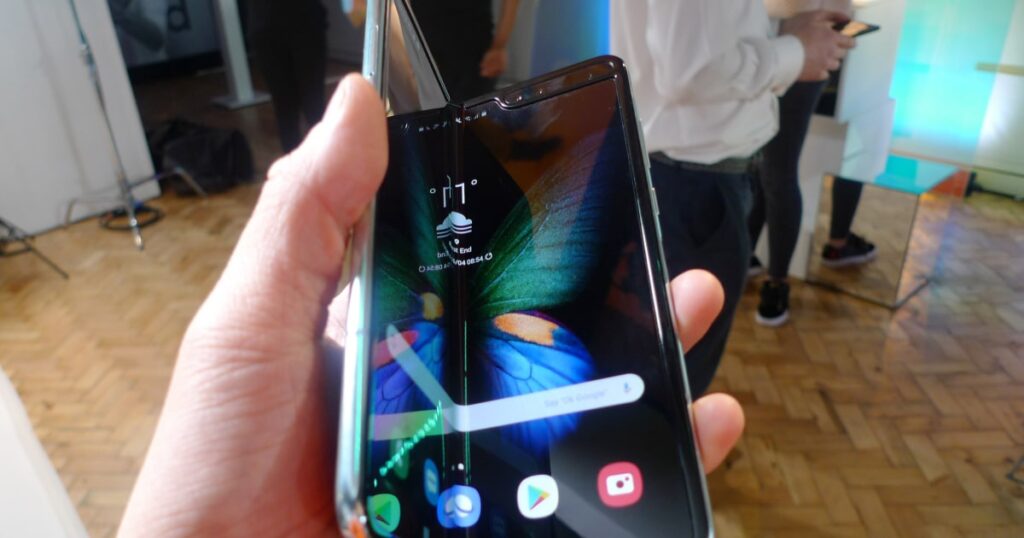
Table of Contents
The Cost of Convergence
Samsung’s gamble on the foldable form factor is facing an early, public stress test. The Galaxy Fold, priced at a staggering $1,980, is designed to be the ultimate convergence device—a standard smartphone that unfolds into a tablet-sized canvas. However, before the device has even hit general retail shelves on April 26, a pattern of catastrophic screen failures has emerged among the journalists tasked with reviewing it.
The reports are consistent: screens are flickering, developing dead zones, and in some cases, turning completely black within 48 hours of use. For a device that carries a premium price tag nearly double that of a flagship S-series phone, these failures are more than just teething problems; they are a direct challenge to the viability of the technology.
The ‘Protective Layer’ Debate
In the wake of the initial reports, a point of contention has emerged regarding the device’s factory-installed screen protector. Some early testers admitted to peeling off the thin film, assuming it was temporary packaging. Samsung has since clarified that this layer is integral to the screen’s structural integrity and must remain in place to prevent scratches and debris from compromising the OLED panel.
However, that explanation fails to account for users who followed the rules. Reporters from The Verge and CNBC have documented screen failures on units where the protective film was never touched. A video produced by CNBC’s Todd Haselton illustrates a jarring failure: the left side of the interior display intermittently flashes while the right side remains entirely unresponsive, rendering the $2,000 handset essentially a very expensive paperweight.
Engineering Claims vs. Real-World Use
Samsung has leaned heavily on its laboratory data to justify the Fold’s durability, claiming the hinge and screen can withstand 200,000 folds—roughly 100 openings and closings per day for five years. But there is often a significant gap between a robotic arm performing a precise fold in a climate-controlled lab and a human being unfolding a phone in a coffee shop or a taxi.
The fragility of the interior display suggests that the tension across the fold may be creating micro-fractures in the organic light-emitting diode (OLED) layer. When these failures occur, they aren’t just aesthetic; they are systemic, often leading to total display blackout.
A Shadow of the Note 7
For Samsung, the timing and nature of these failures are particularly sensitive. The company is still haunted by the memory of the 2016 Galaxy Note 7 disaster, where battery defects led to spontaneous combustion and a global recall that cost billions. While a flickering screen is not a fire hazard, the narrative of a rushed, unstable product launch is one Samsung is desperate to avoid.
In an official statement, Samsung acknowledged the reports and stated it would “thoroughly inspect these units in person to determine the cause of the matter.” While the company is moving to clarify the necessity of the screen protector, it has yet to provide a definitive technical explanation for why screens are failing on units that were handled according to specification.
As the April 26 launch date approaches, the industry is watching to see if these are isolated ‘lemon’ units or a fundamental flaw in the foldable architecture. For the early adopter, the Galaxy Fold represents the bleeding edge of mobile computing—but for now, that edge seems dangerously sharp.


