Early Galaxy Fold Failures: Samsung’s $2,000 Bet Faces Durability Crisis
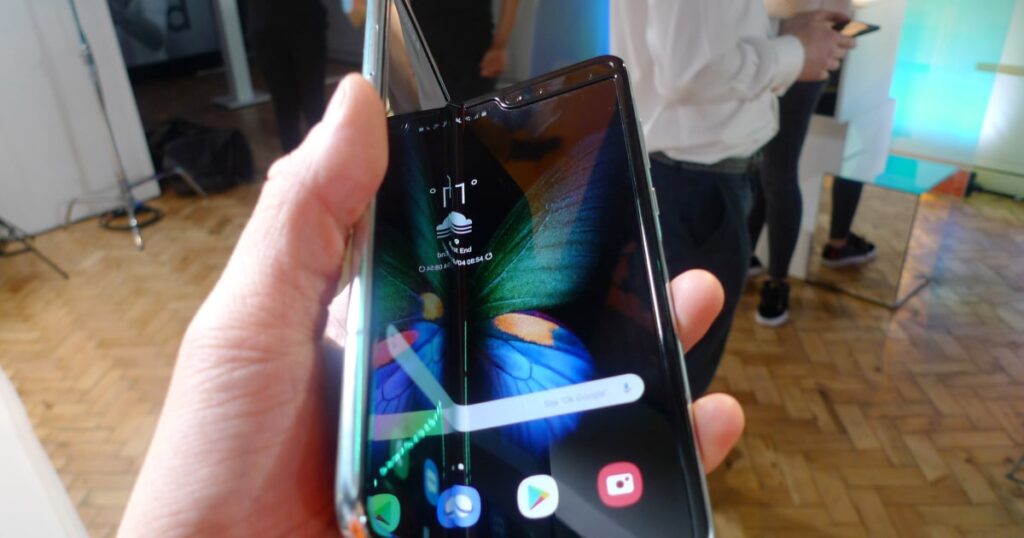
Table of Contents
A Costly Gamble on Foldable Glass
Samsung is attempting to redefine the smartphone form factor with the Galaxy Fold, but the rollout is being marred by reports of catastrophic hardware failure. A handful of journalists and early reviewers, who received the devices ahead of the official April 26 U.S. launch, are reporting that the $1,980 handset is failing within mere days of normal use.
The symptoms are consistent: screens begin to flicker, develop black voids, and eventually lose all responsiveness. For a device positioned as a luxury productivity tool, the fragility is a jarring contrast to its price tag. In one instance, CNBC reporter Todd Haselton documented the device becoming “completely unusable” after just 48 hours, with video footage showing the internal display flashing intermittently while half the screen remained dead.
The Protective Layer Controversy
Initial reactions from Samsung’s camp suggested a potential user-error component. Some reviewers noted they had peeled off a thin, protective plastic film on the inner display, assuming it was a standard shipping screen protector. Samsung later clarified that this layer is integral to the screen’s structural integrity and must remain in place to prevent scratches and damage.
However, this explanation fails to account for all the failures. Reporters from The Verge and CNBC confirmed that their units—which still had the factory protective layer intact—suffered the same screen collapses. This suggests that the issue may be deeper than surface-level scratching, potentially pointing to a failure in the OLED substrate or the complex hinge mechanism that manages the stress of repeated folding.
The Math of Durability vs. Reality
Samsung has marketed the Galaxy Fold with an ambitious durability claim: the screen is rated to withstand 200,000 folds, which the company calculates as roughly 100 folds per day for five years. But the gap between lab-tested fatigue and real-world failure is proving wide. While a hinge might technically rotate 200,000 times, the organic light-emitting diodes (OLED) and the bonding agents holding the foldable assembly together are clearly under immense pressure.
The device attempts to solve the “tablet in your pocket” problem by bisecting the internal screen with a visible crease. While the crease is an aesthetic compromise, the total screen blackout reported by reviewers is a functional failure. If the hardware cannot survive the first week of a professional review cycle, the implications for the average consumer—who may be less gentle with their devices than a tech journalist—are concerning.
Ghost of the Note 7
For Samsung, the timing and nature of these failures are precarious. The company is still haunted by the 2016 Galaxy Note 7 disaster, where systemic battery defects led to devices catching fire and a global recall that cost billions. While a flickering screen is not as dangerous as a combustible battery, the pattern of rushing a revolutionary but unstable product to market is a narrative Samsung desperately wants to avoid.
In a statement, Samsung acknowledged the reports and stated it would “thoroughly inspect these units in person to determine the cause of the matter.” The company is now tasked with proving that these failures are isolated anomalies rather than a fundamental flaw in the foldable architecture. With a retail price of $1,980, the Galaxy Fold isn’t just a phone; it’s a stress test for the entire foldable industry.


