Early Galaxy Fold Failures Raise Red Flags Over Samsung’s $2,000 Folding Bet
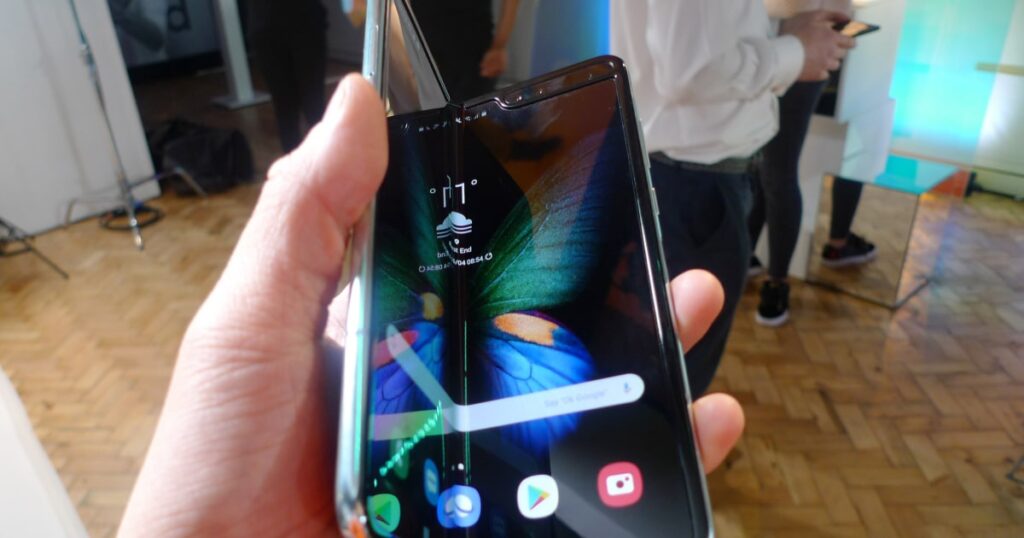
Table of Contents
The High Cost of First-Generation Hardware
Samsung is venturing into a precarious territory with the Galaxy Fold. Priced at a staggering $1,980, the device represents as much of a social statement as it does a technical achievement. However, the initial rollout to reviewers has been marred by reports of hardware failures that suggest the device’s fragility may outweigh its utility.
Several journalists who received early units for review have reported that the massive interior screen—the centerpiece of the device—began flickering, displaying black artifacts, and eventually failing entirely within just a few days of standard use. For a device approaching the $2,000 mark, the margin for error is nonexistent, and these reports of “completely unusable” hardware are hitting the news cycle just as the public launch approaches.
The Protector Layer Controversy
In the wake of the initial reports, a debate emerged regarding a thin, protective plastic film covering the interior display. Some early users mistakenly believed this layer was a temporary shipping protector intended for removal. Two journalists admitted to peeling this layer off, which Samsung later clarified was a critical component of the screen’s structural integrity and scratch resistance.
However, the “user error” narrative doesn’t cover all the failures. Reporters from The Verge and CNBC documented screen failures on units where the protective layer remained perfectly intact. In a video shared by CNBC’s Todd Haselton, the device’s internal display showed intermittent flashing on the left side while the right side became entirely unresponsive, rendering the tablet-sized interface a useless slab of glass and plastic.
Engineering Ambition vs. Real-World Reliability
On paper, the Galaxy Fold is an engineering marvel. Samsung claims the hinge and display are rated for 200,000 folds—roughly 100 opens and closes per day for five years. The device aims to bridge the gap between a standard smartphone and a small tablet, allowing for a seamless transition between a narrow cover screen and a wide, bisected interior display.
But there is a distinct gap between lab-tested durability and the chaotic environment of real-world usage. When a screen fails after 48 hours of light use, the 200,000-fold promise feels like a theoretical exercise rather than a practical guarantee. The fragility of the organic light-emitting diode (OLED) material when subjected to constant mechanical stress remains the primary Achilles’ heel of the foldable category.
A Company Haunted by the Note 7
For Samsung, these reports are more than just a series of isolated hardware glitches; they are a psychological trigger. The company is still recovering from the catastrophic 2016 rollout of the Galaxy Note 7, which resulted in a global recall after batteries began spontaneously combusting. While a flickering screen is far less dangerous than a thermal runaway event, the timing is disastrous. The Note 7 incident damaged Samsung’s reputation for quality control, and a high-profile failure of its most expensive new product could revive those anxieties among consumers.
Samsung has acknowledged the reports, stating that it intends to “thoroughly inspect these units in person to determine the cause of the matter.” While the company is eager to push the boundaries of mobile form factors, the Galaxy Fold serves as a reminder that in the luxury tech market, stability is the most valuable feature of all.


