Drone Swarms and Precision Missiles: The Technical Escalation of Russia’s Latest Assault on Ukraine
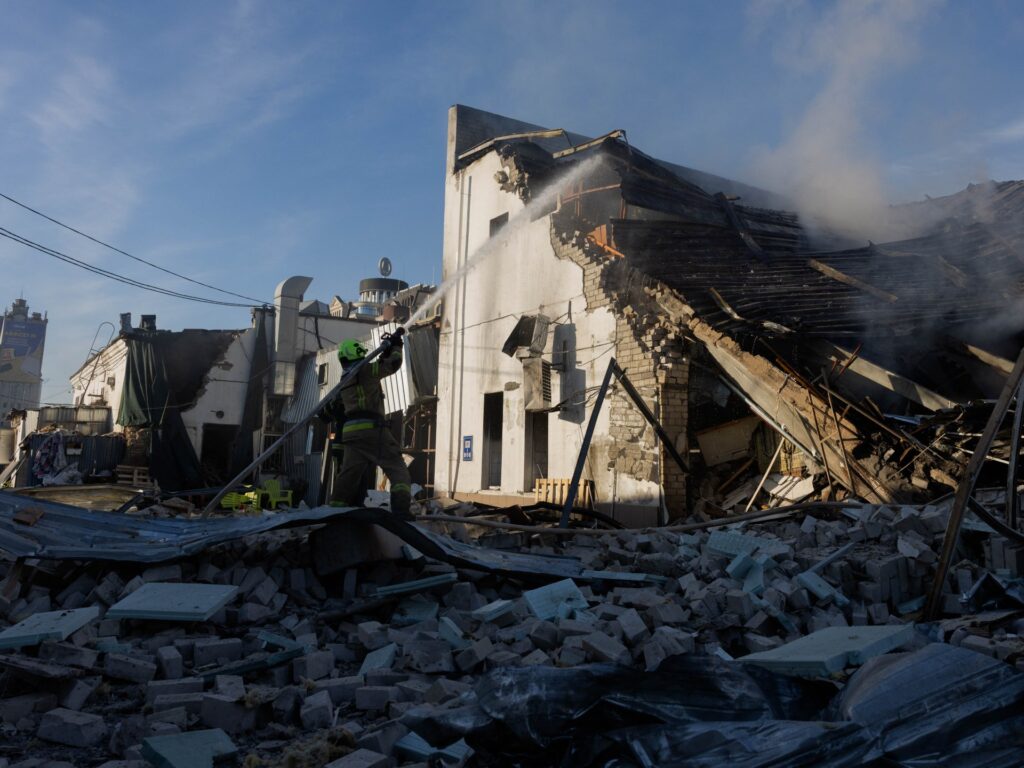
Table of Contents
The Scale of the Saturation Attack
The latest wave of Russian aggression against Ukraine has transitioned from sporadic shelling to a sophisticated exercise in saturation warfare. In a single overnight operation, Moscow deployed a staggering 656 drones and 73 missiles, targeting key urban centers including Kyiv, Dnipro, Poltava, Kharkiv, and Zaporizhzhia. While the human toll is devastating—with at least 12 confirmed dead and dozens wounded—the technical specifics of the assault reveal a calculated attempt to overwhelm Ukrainian air defense networks through sheer volume.
The deployment of over 600 drones suggests a strategy of ‘attrition by distraction.’ By flooding the airspace with low-cost, slow-moving Shahed-style loitering munitions, Russian forces force Ukrainian operators to commit limited high-value interceptors and radar resources to targets that offer little strategic value. This ‘noise’ is designed to mask the arrival of high-precision ballistic missiles, which are significantly harder to detect and intercept in the final seconds of their flight path.
The Critical Interception Gap
Despite reports from the Ukrainian air force stating they destroyed or suppressed 602 drones and 40 missiles, the remaining penetrations resulted in significant casualties and infrastructure damage. Kyiv Mayor Vitali Klitschko confirmed four deaths in the capital, while Governor Oleksandr Ganzha reported eight fatalities in the Dnipropetrovsk region. The persistence of these strikes underscores a recurring technical bottleneck: the disparity between short-range drone defense and long-range ballistic interception.
Ukraine currently possesses a robust array of point-defense systems capable of downing drones and cruise missiles. However, intercepting hypersonic or high-velocity ballistic missiles requires a specific tier of air defense—such as the Patriot or SAMP/T systems—that remains in critically short supply. When Russia utilizes “high-precision weapons” as claimed by its Ministry of Defence, they are targeting the military-industrial complex and energy grids with munitions that fly too fast and too low for conventional radar-guided systems to consistently neutralize.
Symmetric Responses and Infrastructure Targeting
The conflict is increasingly mirroring a war of algorithmic and autonomous systems. While Russia hammered Ukrainian cities, Ukraine launched counter-strikes using its own drone fleet, striking the Kursk region and igniting a fire at an oil refinery in Krasnodar. This shift toward long-range drone strikes allows Ukraine to project power deep into Russian territory, targeting the logistics and fuel supply chains that sustain the invasion force.
The Russian Ministry of Defence framed the bombardment as a strike against “energy and transport infrastructure,” a tactic aimed at degrading the technical capacity of the Ukrainian military to move equipment and maintain communication. By targeting the power grid, Russia attempts to disrupt the digital command-and-control systems that allow Ukrainian forces to coordinate their air defense responses in real-time.
The Geopolitical Vacuum
The timing of this escalation coincides with a perceived lull in Western diplomatic intervention. With the Trump administration in the U.S. currently prioritizing Middle Eastern conflicts, the pause in peace efforts has created a strategic window for Moscow. President Volodymyr Zelenskyy had warned of this “massive strike” days in advance, signaling that Ukrainian intelligence had detected the buildup of launch platforms, yet the technical capacity to fully shield the nation’s airspace remains dependent on external hardware shipments that have yet to reach the necessary scale.
As both sides integrate more AI-driven target acquisition and swarm logic into their drone fleets, the battlefield in Ukraine is becoming a testing ground for the next generation of electronic warfare. The ability to jam GPS signals, spoof radar, and deploy autonomous swarms is no longer a theoretical capability but a daily operational reality.