DJI Osmo Pocket 4 Swaps to 1-Inch Sensor, Betting on Low-Light Dominance for Vloggers
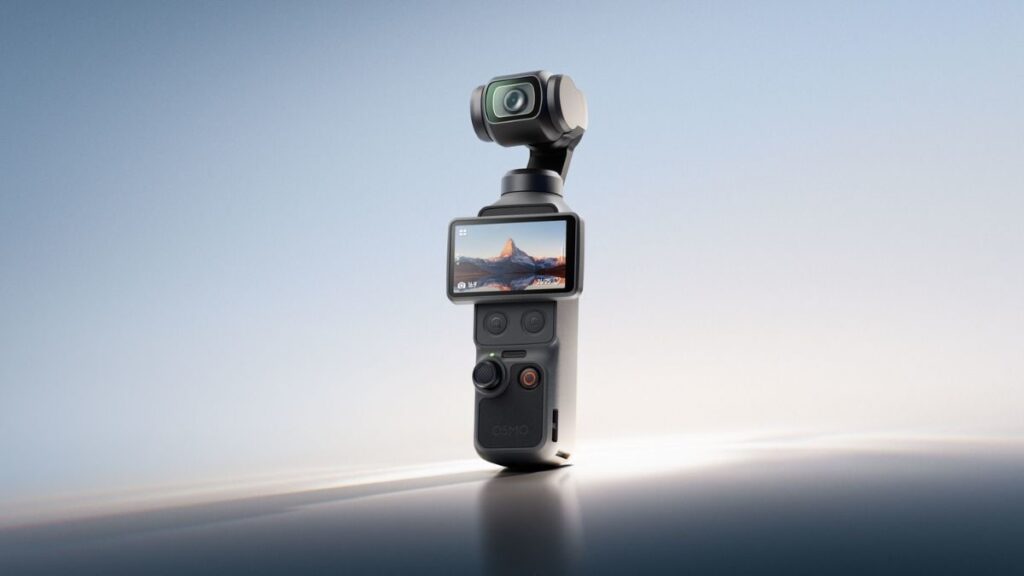
Table of Contents
The pursuit of the perfect handheld shot just got a hardware overhaul.
DJI has officially unveiled the Osmo Pocket 4, and for the first time in the series’ history, the company is moving the needle on raw image quality by integrating a 1-inch CMOS sensor. While previous iterations relied on software magic and smaller sensors to maintain their pocketable form factor, the Pocket 4 is a clear admission that creators are demanding better dynamic range and low-light performance without carrying a full-frame mirrorless rig.
The jump to a 1-inch sensor is the headline here. In the world of compact cameras, sensor size is everything. By increasing the surface area, DJI is effectively reducing the noise floor in dim environments—a chronic pain point for vloggers filming at night or in poorly lit interiors. This hardware shift allows the Pocket 4 to capture more light and detail, potentially narrowing the gap between “convenience cameras” and professional cinematography tools.
Refining the mechanical dance
It isn’t just about the glass and the sensor. DJI has updated the 3-axis gimbal stabilization system, which remains the core value proposition of the Pocket line. While the Pocket 3 was already remarkably smooth, the Pocket 4 introduces refined motor calibration that reduces the “micro-jitters” often seen during fast panning movements. This improved stabilization works in tandem with the larger sensor to ensure that high-bitrate 4K footage remains fluid, even when the operator is walking or moving abruptly.
The AI-powered tracking, a staple of the Osmo ecosystem, has also seen an update. The device now leverages improved computer vision to keep subjects in frame more reliably, even when they momentarily exit the shot or are obscured by objects. This “ActiveTrack” evolution suggests DJI is leaning harder into the “solo creator” market—people who don’t have a camera operator and need the device to act as a robotic cinematographer.
The Ecosystem Play: Mic 3 and the Creator Combo
DJI knows that great video is useless without great audio. To that end, the Pocket 4 is being launched alongside the DJI Mic 3 Transmitter. The integration is seamless; the camera handles the audio encoding internally, removing the need for external recorders or cumbersome cabling.
The pricing strategy reflects a tiered approach to the creator economy. In Europe, the Standard Combo starts at €499 (approximately ₹54,600), providing the core camera and basic accessories. However, the real draw for professional users will be the Creator Combo at €619 (approximately ₹67,700). This bundle isn’t just about value; it’s about utility, including the new DJI Mic 3, a dedicated fill light for those low-light scenarios the sensor is built for, a wide-angle lens attachment, and the Osmo Mini tripod.
Positioning against the competition
With this release, DJI is positioning the Pocket 4 not just as an alternative to the smartphone, but as a direct competitor to the Insta360 X series and the GoPro Hero line. While GoPros dominate the “extreme” side of action, the Pocket 4 targets the “lifestyle” and “cinematic” side. By prioritizing a larger sensor over waterproof ruggedness, DJI is betting that the modern creator values bokeh and low-light clarity over the ability to dive 30 feet underwater.
The device maintains its signature portable form factor, ensuring that the move to a 1-inch sensor didn’t result in a bulky chassis. It remains a tool that can be whipped out of a pocket and ready to record in seconds, which is the primary reason creators stick with this ecosystem over traditional DSLRs.


