Digital Vigilantism: How Social Media is Redefining Public Space and Religious Liberty in India
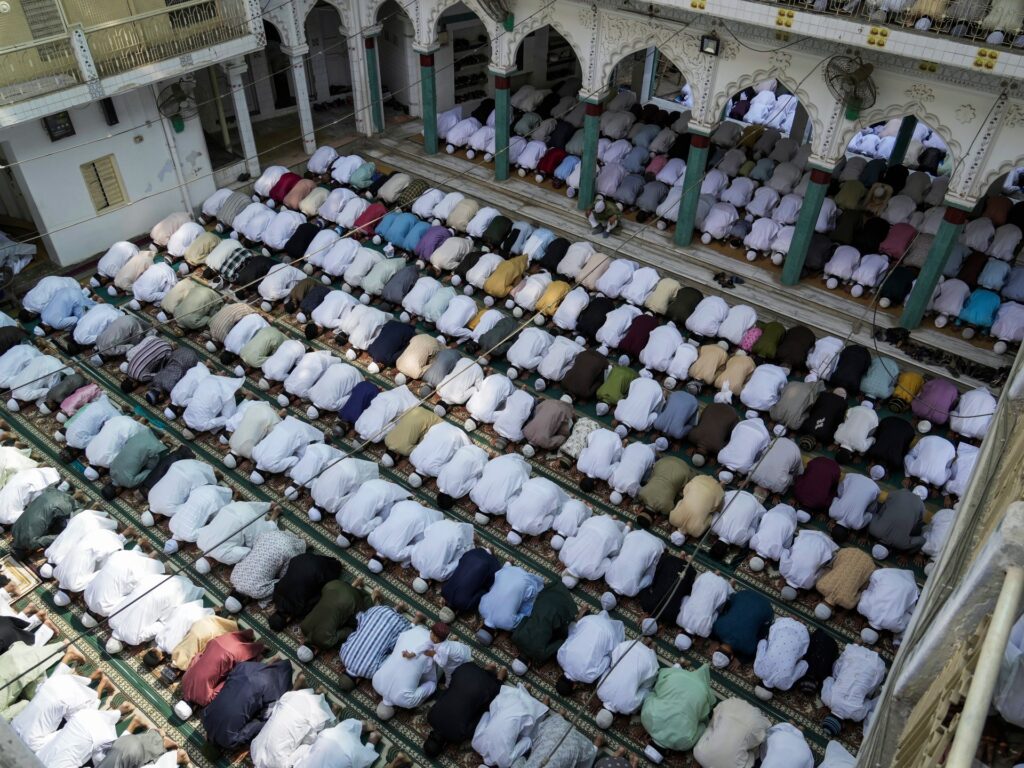
Table of Contents
The Rise of the ‘Citizen Cameraman’ as a State Tool
In the village of Maliyana, situated roughly 80km from New Delhi, the primary concern for worshippers preparing for Eid al-Adha is no longer just the logistics of the holiday. Instead, the conversation has shifted toward a modern, digital threat: the smartphone camera. In recent years, the act of recording a religious gathering and uploading it to social media has transformed from simple documentation into a mechanism of state and social discipline.
For the Muslim community in Uttar Pradesh, the ‘viral video’ has become a weapon of digital vigilantism. In a region where tensions are high, a brief clip of namaz prayers spilling onto a public road can trigger an immediate chain reaction. Once uploaded to X (formerly Twitter) or WhatsApp, these videos often serve as ‘evidence’ for right-wing groups like the Vishwa Hindu Parishad (VHP) to claim a ‘show of strength,’ which in turn prompts authorities to revoke permissions or initiate legal action against worshippers.
Algorithmic Hostility and the ‘Othering’ of Public Space
This shift reflects a broader trend in how digital platforms are interacting with physical geography. In the BJP-governed state of Uttar Pradesh, led by Chief Minister Yogi Adityanath, the integration of social media monitoring with police enforcement has created a climate of pervasive visibility. When Adityanath suggests on X that prayers be offered in ‘shifts’ and hints at ‘another method’ for those who don’t comply, the implicit threat is backed by a digital infrastructure of surveillance.
The psychological impact is a phenomenon known as the ‘chilling effect.’ The fear is not just of a physical police presence, but of the invisible, ubiquitous lens. Worshippers are now instructed by mosque committees to avoid recording videos themselves, not to protect their privacy, but to prevent the creation of content that could be weaponized against them. The digital footprint of a religious gathering now carries the risk of triggering home demolitions, the cancellation of passports, or the revocation of driving licenses—administrative punishments that leverage state data systems to penalize social behavior.
The Infrastructure of Exclusion
The technical reality is that many mosques and traditional ‘Eidgahs’ (prayer grounds) are physically incapable of handling the surge of worshippers during mass congregations. This necessitates the use of public roads and open plots. However, by framing these spatial requirements as security threats via digital narratives, the state effectively shrinks the available public sphere for minority communities.
Community leaders in Meerut report that the strategy has evolved into a form of self-censorship. Mosque committees are now tasked with ‘crowd management’ that mimics the logic of a security operation: reducing congregation sizes, implementing strict shift timings, and ensuring that no individual’s presence on a road is captured on camera. The prayer mat, once a symbol of faith, is now carefully placed to avoid visibility from the street, acknowledging that in the age of the smartphone, visibility equals vulnerability.
From Documentation to Prosecution
The transition from organic social media usage to a tool for targeted harassment is evident in the way local police advisories circulate. WhatsApp groups, once used for community coordination, are now the primary channels for state warnings. The speed of information flow means that a prayer gathering can be flagged, analyzed, and targeted by enforcement agencies in near real-time.
As the digital divide in India continues to narrow, the tools of the internet are being repurposed to enforce traditional social hierarchies. For the students at Aligarh Muslim University and the shopkeepers of Meerut, the smartphone is no longer just a tool for connection; it is a sentinel that monitors their movement and regulates their right to occupy public space.