Digital Forensics and Records Access: Muscatine Police Navigate Complex Investigation After Family Massacre
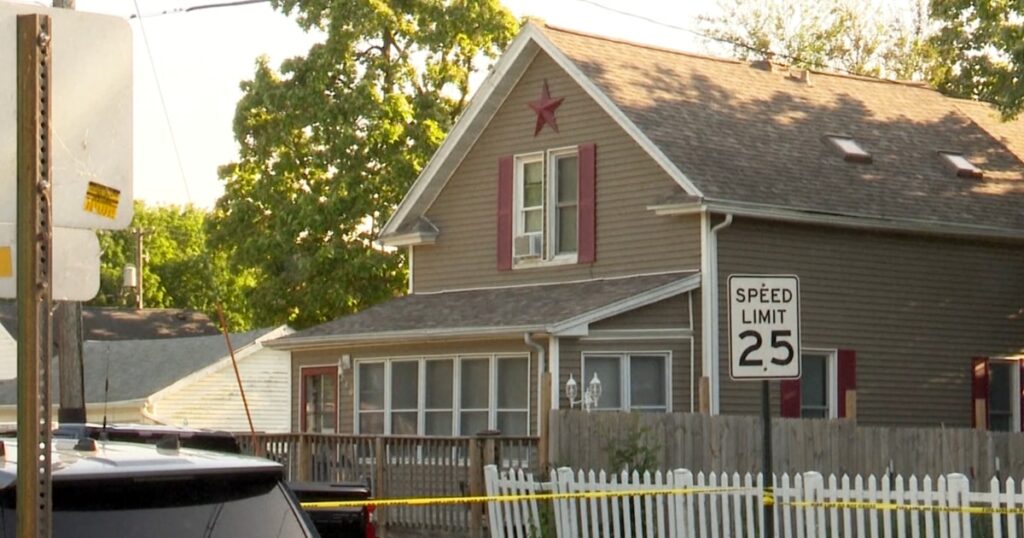
Table of Contents
A Community in Shock and the Search for Answers
The quietude of Muscatine, Iowa, was shattered Monday when local authorities uncovered a scene of unimaginable violence. Six individuals, believed to be members of the same family, were found dead across multiple locations in the city. The suspected perpetrator, 52-year-old Ryan Willis McFarland, ended his own life during a confrontation with police on a local trail, leaving a community grappling with the ‘why’ behind the carnage.
While the immediate tragedy is human, the subsequent investigation has become a race against time for the Muscatine Police Department. With the primary suspect deceased, the burden of discovery now falls on forensic analysts and digital investigators to reconstruct the hours leading up to the killings. In modern criminal investigations, the ‘digital ghost’—the trail of search histories, GPS pings, and encrypted messages—often provides the only window into a suspect’s mental state when there are no survivors to testify.
Processing Distributed Crime Scenes
The scale of the event was compounded by the geography of the crimes. Muscatine Police Chief Anthony Kies confirmed that the victims were not found in a single location. Four victims were discovered at one residence, while two other men—also believed to be relatives of McFarland—were found separately: one in a private home and another within a local business. This spatial distribution suggests a calculated movement across the city, likely tracked through cellular tower triangulation and surveillance footage from surrounding commercial properties.
Processing these scenes requires a meticulous approach to evidence recovery. Beyond the physical ballistics, investigators are likely scrubbing for any discarded devices or cloud-synced hardware that could reveal a manifesto or a series of communications. Chief Kies noted that McFarland had a prior criminal record, though the specific details remain withheld. The integration of legacy paper records with modern digital databases is now a central pillar of the investigation, as police attempt to find patterns in McFarland’s history that might explain the sudden escalation to mass violence.
The Role of Digital Footprints in ‘Closed’ Cases
When a suspect commits suicide, the case is legally ‘closed’ in terms of prosecution, but the investigative process enters a critical phase of narrative reconstruction. Forensic examiners will likely be looking at McFarland’s digital footprint—specifically his recent interactions on social media and private messaging apps—to determine if there were warning signs or ‘leaked’ intentions that went unnoticed.
In many similar cases, the use of digital forensics allows investigators to access deleted files or cached browser data that can pinpoint the exact moment a perpetrator’s plan transitioned from ideation to action. For the Muscatine Police, this means coordinating with tech providers to secure data backups and analyzing any smart-home devices that may have captured audio or motion logs at the primary crime scene.
A Community Seeking Closure
The emotional weight of the tragedy was evident during Chief Kies’ news conference, where he described the event as an “act of evil.” However, the technical challenge remains: identifying the victims and notifying extended family while maintaining the integrity of a crime scene that spans multiple city blocks.
As the major crimes unit continues its interviews and data processing, the focus remains on the intersection of behavioral science and technology. By synthesizing McFarland’s criminal history with his recent digital activity, authorities hope to provide the victims’ families with a semblance of understanding, even if the primary actor is no longer there to provide the answers himself.