Digital Divide in Disaster: Venezuela’s Earthquake Death Toll Cloaked in ‘Information War’
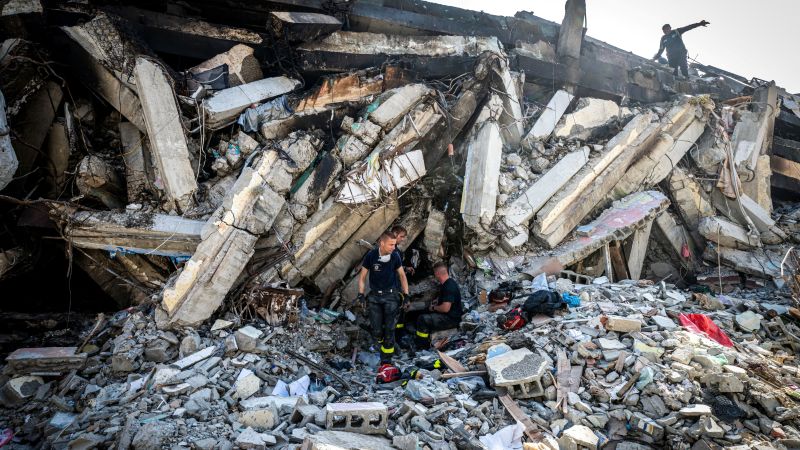
Table of Contents
The Gap Between Official Data and Ground Reality
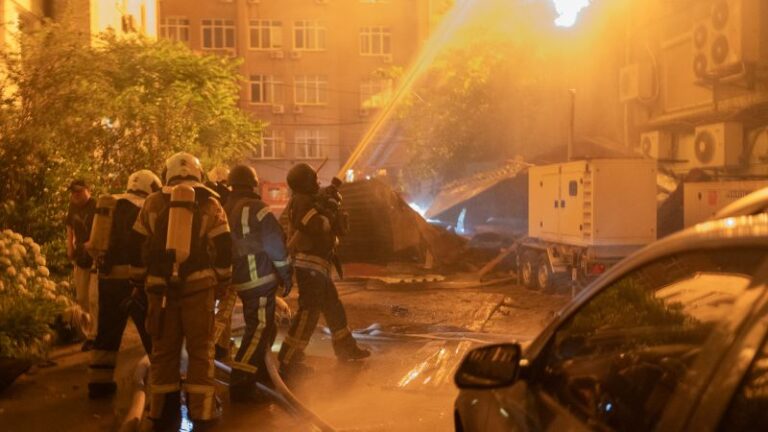
A week after the devastating twin earthquakes struck Venezuela, a stark discrepancy has emerged between the government’s official casualty reports and the lived experience of those working in the disaster zone. As of Wednesday, Venezuelan authorities have placed the death toll at 2,295—a figure that critics and frontline medical workers describe as a gross underestimation of the tragedy’s scale.
In the port city of La Guaira, the epicenter of the destruction, the infrastructure for managing the dead has completely collapsed. A forensic pathologist working at a makeshift morgue, speaking on condition of anonymity for fear of government retaliation, told CNN that the official count represents “not even a third” of the actual casualties. The pathologist described a scene of systemic failure: refrigerated trucks are overflowing, forcing body bags to be stored in the direct sun, which accelerates decomposition and complicates the identification process.
The crisis is compounded by the sheer volume of arrivals. The morgue is reportedly processing approximately 400 bodies per day, many of which are recovered not by state emergency services, but by families digging through the rubble with their bare hands due to severe fuel shortages that have stalled official rescue machinery.
A Pattern of Opacity
The current tension over data transparency is not an isolated incident but part of a historical pattern in Venezuela. Opposition leaders, including María Corina Machado, have accused the administration of intentionally obscuring the scale of the disaster to avoid political delegitimization. This mirrors the aftermath of the 1999 La Guaira landslides, where the government of the late President Hugo Chávez notably failed to produce a comprehensive official death toll.
However, the nature of the “information war” has evolved. While the state controls the official narrative and manages the flow of communication, the diaspora and local activists have leveraged decentralized digital tools to fill the void. Venezuelans abroad have established unofficial online registries and crowdsourced databases to track missing persons, effectively creating a shadow information system to bypass state censorship.
The Sociology of the ‘Number Game’
The debate over the death toll has split experts into two camps: those who see a deliberate cover-up and those who see systemic incompetence. David Smilde, a sociologist at Tulane University, suggests that the government may lack a strong incentive to undercount if higher numbers could trigger more international humanitarian aid. He notes that unlike the 1999 floods, where bodies were swept into the Caribbean, the current wreckage consists of collapsed high-rises where victims remain trapped and countable.
Conversely, Rafael Uzcátegui of the Laboratorio de Paz argues that the opacity is a shield for political figures. Uzcátegui suggests that revealing the true magnitude of the loss would expose the state’s total incapacity to manage resources or protect its citizens, specifically threatening the standing of officials like Delcy Rodríguez.
With the US Geological Survey indicating a high probability that casualties could reach into the tens of thousands, the digital struggle for a verifiable headcount continues. For the families in La Guaira, the distance between an official statistic and a recovered loved one remains a cavernous, digital, and physical void.