Dell Reboots the XPS 13 as a Budget-Friendly Attack on Apple’s MacBook Neo
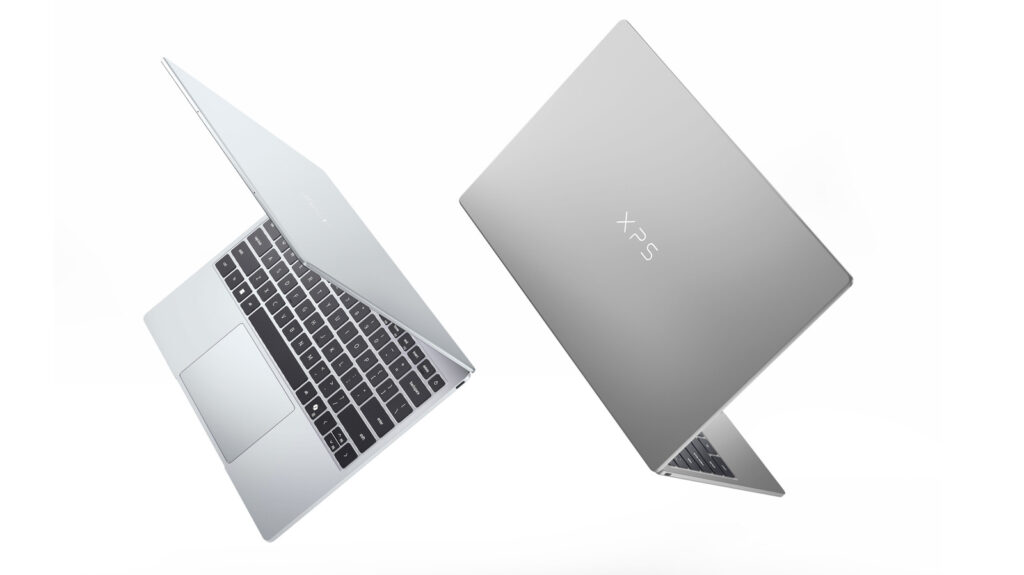
Table of Contents
A Strategic Pivot in the Ultraportable Market
Dell is attempting a daring brand resurrection. After a period of ambiguity surrounding the future of its most celebrated flagship line, the company is bringing back the XPS 13 not as an overpriced luxury statement, but as a direct, aggressive challenger to Apple’s MacBook Neo. The move signals a significant shift in Dell’s strategy: prioritizing market share in the student and entry-level professional segments without sacrificing the “premium” feel of the XPS chassis.
The most disruptive element of this relaunch is the pricing. In a market where “premium’ usually translates to a four-figure price tag, the new XPS 13 starts at just $599 for verified students (including high schoolers aged 16+ and college attendees) and $699 for the general public. This puts Dell in a price bracket previously occupied by mid-range plastic laptops, yet it retains the CNC aluminum build that defined the XPS legacy.
Engineering the Thinnest XPS Yet
Physically, the new iteration is a study in minimalism. Measuring just 12.7mm in thickness and weighing in at 2.2 pounds, this is officially the lightest and thinnest XPS 13 Dell has ever produced. It manages to undercut the MacBook Neo’s footprint while packing a hardware suite that feels surprisingly robust for the cost.
The base configuration for students pairs an Intel Core Series 3 CPU with 8GB of RAM and 256GB of storage. However, the scalability of the machine is where it finds its legs for power users. Higher-tier configurations will offer Intel Core Ultra Series 3 chips, jumping up to 32GB of RAM and 1TB of SSD storage. To keep the aesthetic modern, Dell is offering the machine in two finishes: Storm and Sky.
The Display Battle: 120Hz vs 60Hz
Where Dell is attempting to clearly outmaneuver Apple is in the panel specifications. While the MacBook Neo sticks to a standard 60Hz refresh rate, the XPS 13 features a 120Hz touch display. This isn’t just a spec-sheet win; the higher refresh rate makes UI animations smoother and the overall experience feel more responsive. Furthermore, the 2.5K IPS display covers 100 percent of the DCI-P3 color gamut, making it a viable tool for student creators and designers who need color accuracy without the cost of a Studio Display setup.
Thermal Management and Port Trade-offs
One of the most contentious points of comparison is the cooling architecture. Apple has leaned into a fanless, silent design for the Neo. Dell has taken the opposite approach, opting for a dual-fan configuration. While this means the XPS 13 won’t be perfectly silent under load, active cooling provides a distinct advantage for those working in warm environments or pushing the CPU during heavy multitasking—scenarios where fanless chips often throttle performance to manage heat.
Connectivity remains lean, which is a continuing trend in the ultraportable space. The XPS 13 provides two USB-C ports (3.2 Gen 2) and an IR camera for Windows Hello biometric login. However, the omission of a 3.5mm headphone jack is a recurring frustration. Dell has not yet clarified if a dongle will be included in the box, meaning users may need to factor in an additional purchase for wired audio.
The rollout is happening rapidly. Dell is slated to ship the base $599 and $699 models in June, with the higher-spec Ultra Series 3 versions following later this summer. By positioning the XPS 13 as a high-value alternative to the MacBook Neo, Dell isn’t just selling a laptop; it’s trying to capture a new generation of Windows users before they commit to the Apple ecosystem.