Court Dismisses Elon Musk’s Lawsuit Against OpenAI, Closing a Bitter Chapter of AI Governance
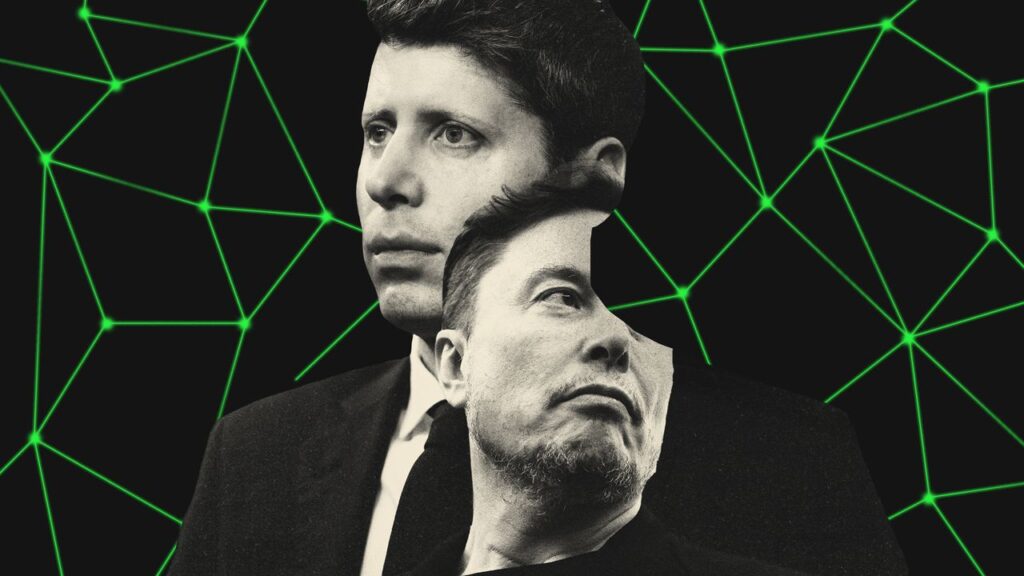
Table of Contents
A Legal Clash of Silicon Valley Titans
The protracted legal battle between Elon Musk and OpenAI has come to a definitive end, with the court ruling in favor of Sam Altman and the OpenAI leadership. The lawsuit, which Musk filed alleging that the company had betrayed its original humanitarian mission, sought to unwind OpenAI’s transition into a for-profit entity and demanded $150 billion in damages to be returned to the original nonprofit structure.
At the heart of the dispute was Musk’s claim that he was misled into donating his own capital and expertise to a charity that was ostensibly designed to protect humanity from the risks of artificial intelligence. Musk argued that the organization had been “stolen,” transforming from a research lab dedicated to the public good into a commercial powerhouse designed to enrich a small circle of executives and its primary investor, Microsoft.
The Theater of the Courtroom
The trial was as much a study in personality as it was a legal argument. Throughout the proceedings, the stark contrast between the two protagonists was evident. While Sam Altman maintained a carefully curated image of the measured executive, Musk’s appearances on the stand were marked by a characteristic volatility. The proceedings were further complicated by a jury selection process that highlighted Musk’s polarizing public image, with some prospective jurors openly expressing disdain for the Tesla CEO.
Judge Yvonne Gonzalez Rogers, presiding over the case, famously dismissed attempts by Musk’s legal team to argue that negative public sentiment toward the billionaire constituted judicial prejudice. “The reality is that people don’t like him,” the judge noted, insisting that such public perception does not inherently undermine the integrity of the judicial process.
Internal Turmoil and ‘Directional’ Communications
The second week of testimony focused heavily on the chaotic events of November 2023, when the OpenAI board briefly ousted Altman. The court reviewed an exhaustive trail of emails and text messages that provided a glimpse into the high-stakes maneuvering between OpenAI, Microsoft, and its internal leadership.
One particularly revealing set of messages showed Altman conferring with Microsoft CEO Satya Nadella and former OpenAI interim CEO Mira Murati. In these exchanges, Altman appeared less as a calculating mastermind and more as an executive struggling to maintain control during a corporate coup, using Silicon Valley jargon like “directionally” to gauge the stability of his position. These revelations served to humanize the executive team, contrasting with the image of a monolithic, profit-driven entity presented by Musk’s attorneys.
The Governance Dilemma
Beyond the personal grievances, the trial underscored a fundamental tension in the development of frontier AI: the conflict between nonprofit ideals and the sheer cost of computation. Both sides essentially acknowledged that the scale of the “data-center fight”—the race to outpace competitors like Google—required capital that a traditional donor-funded charity could not provide.
The transition to a capped-profit model was presented by OpenAI as a necessity for survival. While Musk argued that this shifted the company’s incentives away from safety and toward shareholder returns, the court ultimately found that the shift did not constitute a legal breach of the organization’s founding principles. The ruling suggests that in the eyes of the law, the practicalities of scaling AGI (Artificial General Intelligence) outweigh the rigid adherence to a nonprofit charter.
With the dismissal of the case, OpenAI can move forward without the threat of a forced restructuring. However, the legal resolution does little to silence the broader debate over who should control the most powerful technology of the century and whether a corporate structure can ever truly prioritize the “destiny of the species” over a bottom line.