Congo’s Ebola Crisis: Why the Bundibugyo Strain Threatens a Global Health Catastrophe
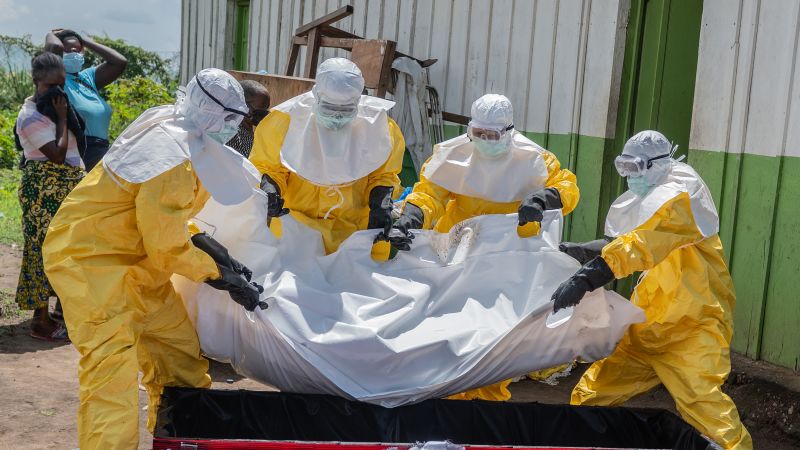
Table of Contents
The Escalation of a Silent Emergency
The Democratic Republic of Congo (DRC) is currently grappling with a public health emergency that threatens to dwarf previous viral catastrophes. According to recent warnings from Jean Kaseya, Director-General of the Africa Centres for Disease Control and Prevention (Africa CDC), the current Ebola outbreak in Congo could become the worst in history if immediate systemic failures in funding and containment are not rectified.
Unlike previous high-profile outbreaks, the current crisis is driven by the Bundibugyo strain of the virus. This specific variant presents a unique and terrifying challenge: there is currently no proven vaccine or standardized treatment protocol specifically tailored to this strain. With over 830 confirmed cases and a fatality rate that remains alarmingly high, the virus is rapidly migrating across three provinces, leaving health officials racing against a ticking clock.
- High Lethality: Over 830 confirmed cases with 196 fatalities reported, driven by the vaccine-resistant Bundibugyo strain.
- Funding Gap: Only $100 million of the requested $518 million has been secured, creating a critical resource deficit.
- Containment Failure: Contact tracing is currently capturing only 12% of exposed individuals, leaving the true scale of the outbreak unknown.
- Economic Risk: Africa CDC warns that failure to act now could increase containment costs from $500 million to $7.5 billion.
Understanding the Bundibugyo Strain: A Technical Perspective
To understand why the Africa CDC is sounding such an urgent alarm, one must understand the virology at play. Ebola virus disease (EVD) is caused by several different species of the genus Ebolavirus. While the Zaire strain—responsible for the devastating 2014-2016 West African outbreak—has a developed vaccine (Ervebo), the Bundibugyo strain is genetically distinct.
What is the Bundibugyo strain? The Bundibugyo virus is a species of ebolavirus that typically results in a lower case-fatality rate than the Zaire strain, but it is far more dangerous when medical infrastructure is absent because existing vaccines are not cross-reactive. This means the biological ‘key’ used by current vaccines to identify the Zaire virus does not fit the ‘lock’ of the Bundibugyo virus.
Transmission occurs through direct contact with infected blood, secretions, organs, or other bodily fluids. A critical driver of the current spread in the DRC is the practice of traditional burials. Because the virus remains active and highly infectious in the body after death, the process of washing and touching the deceased without Personal Protective Equipment (PPE) creates super-spreader events within families and villages.
The Funding Paradox: A Mathematical Warning
The financial trajectory of the current response is described by Africa CDC officials as a precarious gamble. During a virtual summit of African heads of state in Burundi, President Evariste Ndayishimiye noted that of the $518 million required for the six-month response plan, less than $100 million has been delivered.
Jean Kaseya’s warnings are not based on speculation but on the historical cost of containment. In epidemiological terms, the cost of stopping an outbreak grows exponentially, not linearly, as the geographic footprint expands. If the virus establishes a permanent foothold in high-density urban areas or crosses borders into neighboring countries, the logistics of containment—ranging from the construction of Treatment Centers (ETCs) to the deployment of thousands of burial teams—scale up dramatically.
| Funding Timeline | Estimated Cost | Outcome/Risk |
|---|---|---|
| Immediate (Next 4 Weeks) | $518 Million | Containment within current provinces |
| Delayed Response | $1.5 Billion | Regional spread; increased ETC needs |
| Late Intervention | $7.5 Billion | Pandemic potential; systemic economic collapse |
The Logistics of Fear and Resistance
Beyond the biological and financial hurdles, the DRC is facing a sociological crisis. Bruno Michon, operations manager for the International Federation of Red Cross and Red Crescent Societies (IFRC), reports that the outbreak has not yet peaked and may persist for a full year. More concerning is the rising tide of community resistance.
In many affected regions, the arrival of health workers in full-body PPE is met with suspicion. This distrust is often rooted in historical grievances or misinformation, leading to verbal abuse and physical attacks on Red Cross teams. When communities reject stringent hygiene measures and safe burial protocols, the virus finds a frictionless path to spread. The tension between medical necessity and cultural tradition is currently the most volatile variable in the DRC’s response strategy.
The Contact Tracing Gap
One of the most damning statistics provided by the Africa CDC is the contact tracing rate. Currently, only 12% of the contacts of confirmed cases are being followed. In the world of infectious disease control, this is a catastrophic failure. If 88% of potentially infected individuals are moving freely in their communities, the official case count is likely a fraction of the actual prevalence. This ‘blind spot’ makes it impossible for the government to determine if the outbreak is accelerating or stabilizing.
What This Means for Global Health Security
The situation in the DRC serves as a stark reminder that global health security is only as strong as the weakest link in the chain. The Bundibugyo outbreak highlights three critical vulnerabilities in our current global response framework:
- Vaccine Lag: We are overly dependent on vaccines for the Zaire strain. The lack of a Bundibugyo-specific vaccine proves that our ‘rapid response’ is not actually rapid when faced with genetic mutations.
- Donor Fatigue: There is a visible lag in international response compared to the 2014 West African crisis. The delay in funding suggests that the international community is more reactive than proactive.
- Infrastructure Fragility: The shortage of Personal Protective Equipment (PPE) and burial teams demonstrates that local health systems in the DRC are unable to absorb the shock of a high-mortality pathogen without external support.
For the average person, this means that while a global pandemic of Ebola is unlikely due to its mode of transmission (it does not spread through the air like COVID-19), the economic and humanitarian fallout of a prolonged crisis in Central Africa can destabilize regional trade and trigger mass migration, potentially introducing the virus to new urban hubs.
Addressing Common Questions About the Ebola Outbreak
Is the Bundibugyo strain more dangerous than the Zaire strain?
In terms of individual case-fatality rates, the Bundibugyo strain is often slightly lower than the Zaire strain. However, it is more dangerous from a public health perspective because we lack the vaccines and established treatments that were developed for the Zaire strain, making it harder to stop the spread.
Why are burial practices causing the virus to spread?
Ebola remains highly concentrated in the bodily fluids of a deceased person. Traditional burials often involve washing the body or kissing the forehead of the loved one. This direct contact allows the virus to enter the bloodstream or mucous membranes of the living, creating a secondary wave of infections.
Can the Ebola virus be treated if there is no vaccine?
While there is no specific vaccine for the Bundibugyo strain, supportive care can improve survival rates. This includes aggressive fluid replacement (IV fluids), treating secondary infections, and maintaining oxygen levels. However, this requires a specialized Treatment Center (ETC), which are currently in short supply in the DRC.
How does contact tracing work and why is 12% too low?
Contact tracing involves identifying every person who had a significant interaction with an infected individual and monitoring them for 21 days. If only 12% are traced, it means 88% of the ‘at-risk’ population is not being monitored. This allows the virus to jump from one cluster to another undetected.
Who is funding the response in the DRC?
Current funding comes from a mix of the African Union, the US government (which has been cited as the most generous donor), and contributions from South Africa, China, Germany, and France. However, the total amount collected still falls far short of the $518 million required.
Concluding the Crisis Analysis
The warnings from the Africa CDC and the IFRC are unambiguous: the window for a low-cost containment of the Ebola outbreak in Congo is closing. The intersection of a vaccine-resistant strain, a critical funding shortfall, and community resistance has created a perfect storm. Without an immediate infusion of capital and a drastic increase in contact tracing efficacy, the DRC may be facing a health catastrophe that will redefine the global understanding of viral containment in the 21st century.