Commerce Department Closes Loophole on AI Chip Shipments to Overseas Chinese Subsidiaries
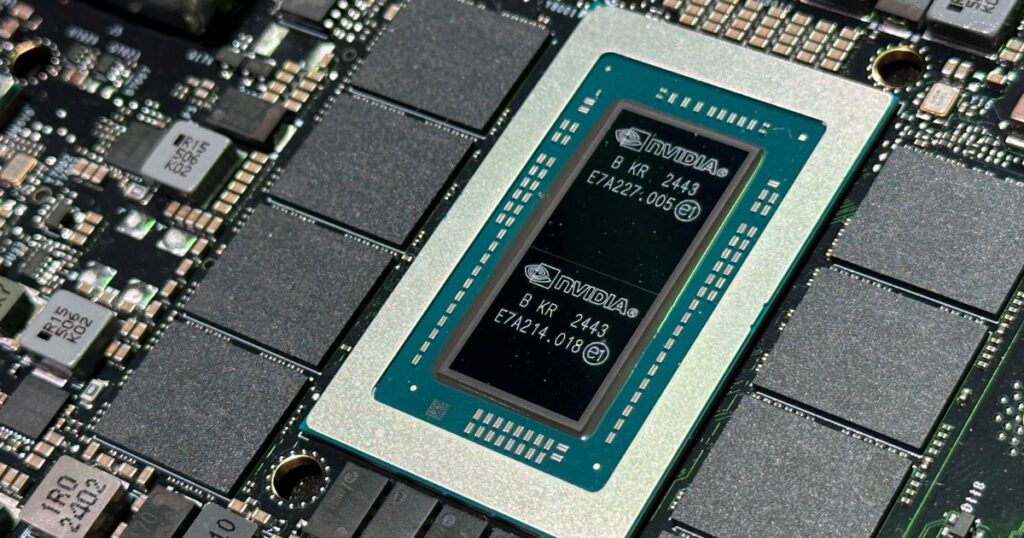
Table of Contents
Washington Plugs a Critical Leak in the AI Arms Race
The U.S. Department of Commerce has issued a stern clarification to the global semiconductor supply chain: the nationality of the parent company, not the location of the office, determines whether a shipment of advanced AI chips is legal. In a notice released Sunday, the Bureau of Industry and Security (BIS) affirmed that licensing requirements for high-end semiconductors apply to all businesses headquartered in China or owned by a Chinese parent company, even if those entities are operating from soil outside the People’s Republic of China (PRC).
The move is a direct attempt to close a regulatory gray area that officials fear has been exploited to funnel restricted hardware into Chinese AI development programs. For months, the industry has grappled with the fallout of the Trump administration’s decision last May to scrap the Biden-era ‘Framework for Artificial Intelligence Diffusion’—a sweeping, global licensing regime that many tech giants argued was too restrictive to be practical.
The Regulatory Vacuum and the ‘Loophole’
The tension between national security and corporate revenue has created a volatile environment for chipmakers. When the Trump administration dismantled the previous framework, citing ‘burdensome regulatory requirements’ and a desire to protect diplomatic ties, it inadvertently created a vacuum. According to Chris McGuire, a former State Department technology policy official, this lack of clarity may have allowed a surge of illicit procurement.
“Chinese companies have been buying these chips, very likely at scale,” McGuire stated via X. He argued that because the BIS had not explicitly updated its enforcement parameters following the framework’s removal, many of these transactions were technically legal. “This clarification does make clear that Blackwell shipments to China-headquartered companies outside of China are now illegal again,” McGuire added, noting that the BIS’s own language suggests these shipments were already occurring.
Industry Response: Nvidia’s Compliance Stance
The scrutiny falls heaviest on Nvidia, whose Blackwell GPU architecture represents the current gold standard for training large language models (LLMs). While the most powerful Blackwell iterations are strictly banned for export to China, the company has had to navigate a complex web of ‘down-specced’ versions to maintain its market share in Asia.
In a statement to Al Jazeera, a spokesperson for Nvidia maintained that the company’s internal vetting processes remained aligned with the government’s intent. “The guidance reaffirms that NVIDIA’s sales and vetting process is correct – consistent with our existing approach, licences are required to ship controlled products to PRC headquartered companies,” the company stated.
However, the market remains on edge. While Nvidia has been vocal, competitors like AMD and Intel, as well as the primary manufacturer TSMC, have yet to comment on how this clarification affects their specific shipping pipelines to third-party distributors in regions like Singapore or the UAE, which often serve as hubs for Chinese tech procurement.
The Strategic Pivot: From Total Ban to Selective Access
This tightening of the rules comes at a curious time, as the U.S. government appears to be shifting from a policy of total containment to one of calibrated pressure. In December, President Trump signaled a pivot by allowing Nvidia to sell the H200 chip to China. While not as potent as the Blackwell series, the H200 is roughly six times more powerful than the H20, the previous ceiling for Chinese imports.
This paradoxical approach—loosening restrictions on specific mid-tier chips while aggressively hunting for loopholes in high-end shipments—suggests a strategy aimed at maintaining U.S. commercial dominance in the hardware market while preventing the “leapfrog” moment where China achieves parity in frontier AI models. By targeting subsidiaries abroad, Washington is signaling that it will no longer tolerate “geographic arbitrage” as a means of bypassing national security mandates.