Classic 7: The Uncanny Resurrection of the Windows 7 Desktop
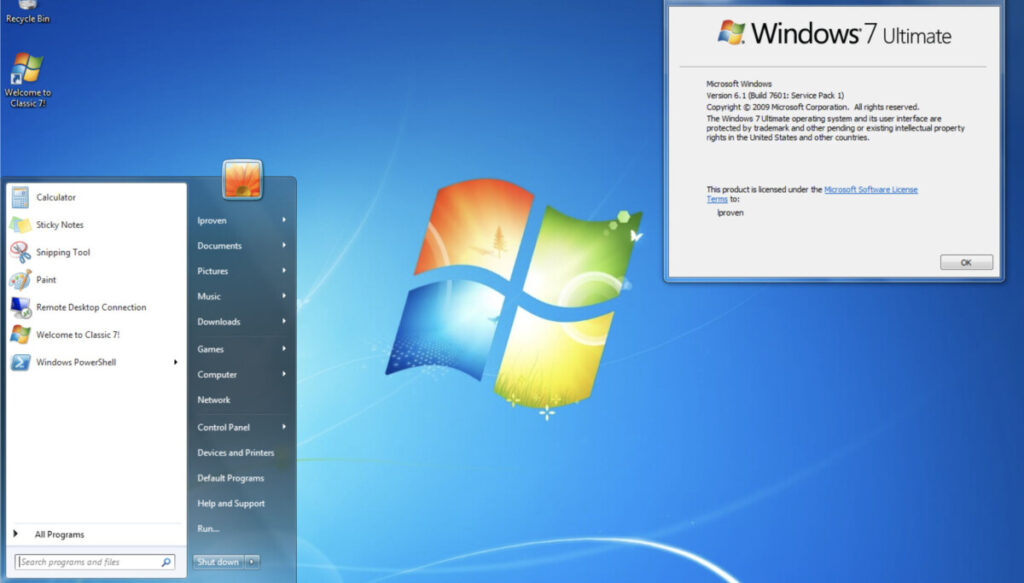
Table of Contents
A Digital Séance for the 2009 Desktop
For a specific subset of power users and nostalgia enthusiasts, the current trajectory of Microsoft’s user interface design has been a slow descent into flatness and minimalism. The solution for some has been a return to ‘Frutiger Aero’—that glossy, translucent, late-2000s aesthetic that defined Windows 7. Enter Classic 7, a meticulously crafted modification of Windows 10 that doesn’t just skin the OS, but attempts to resurrect the entire experience of 2009.
Classic 7 is built upon Windows 10 IoT LTSC (Long-Term Servicing Channel). The choice of base is strategic. While standard Windows 10 editions are nearing their end, the IoT LTSC version is slated for support and updates until 2032. This provides a stable, long-term foundation that allows users to enjoy a legacy aesthetic without sacrificing the security updates and driver compatibility required for modern hardware.
More Than a Theme: A Shell Transplant
Unlike typical theme packs that merely change colors and icons, Classic 7 performs what is essentially a face transplant. The project integrates actual binaries from legacy Windows versions, adapted to run on the Windows 10 kernel. The most striking example is Explorer7, a wrapper library that allows the original Windows 7 explorer.exe to function as the primary shell. This means the taskbar, window management, and file browsing aren’t just ‘imitations’—they are the real Windows 7 components.
The depth of this reconstruction extends to the Control Panel, restored via the Control Panel Restoration Pack, and even the inclusion of Windows Media Center. In a surprising twist of digital archaeology, the project incorporates the Windows XP version of Media Center, replacing the Windows 8 iteration found in earlier builds.
The project is a synthesis of several community-driven tools. It leverages Winaero Tweaker for UI adjustments and OpenGlass to bring back the signature Aero transparency. Other contributions come from the Windhawk modding community and developers like ImSwordQueen, whose work on DeviantArt has helped polish the visual fidelity of the build. Even the browser experience is curated; the project includes BeautyFox, a version of Firefox 115 ESR skinned to mirror the look of the classic Internet Explorer.
The Legality and Stability Gap
Despite the technical achievement, Classic 7 exists in a legal gray area. Because it is based on the Enterprise edition of Windows 10 IoT LTSC, it requires a Volume License Agreement for legitimate use. For the average home user, this means the installation is technically unlicensed unless they have a corporate agreement with Microsoft. This makes it a fascinating hobbyist project, but a risky choice for any production or professional environment.
In testing via VMware, the experience is largely uncanny but not without friction. Initial installations can be temperamental, specifically regarding disk partitioning. Users may find that letting the installer handle partitioning leads to failure, requiring the manual creation of a C: drive to proceed. Some glitches persist, including errors within the Windows Update interface and resolution issues that only resolve after installing guest additions.
The Allure of the Glossy Past
The drive to create Classic 7 highlights a growing fatigue with the ‘modern’ Windows experience. By fusing the stability of a 2032 support window with the visual language of 2009, the project solves the primary problem facing Windows 7 purists: software compatibility. While a native Windows 7 install struggles to run a modern browser or a recent GPU driver, Classic 7 allows the user to run the latest apps on a kernel that looks like a time capsule.
There is, however, a point where the commitment to the bit becomes overwhelming. Classic 7 goes so far as to modify the ver command and the ‘About’ dialog boxes to lie to the user about which version of Windows is actually running. For some, this is the ultimate immersive experience; for others, it is a step too far into digital deception.