China’s New Space Race: A Surge of Reusable Rockets Aims to Break the Launch Bottleneck
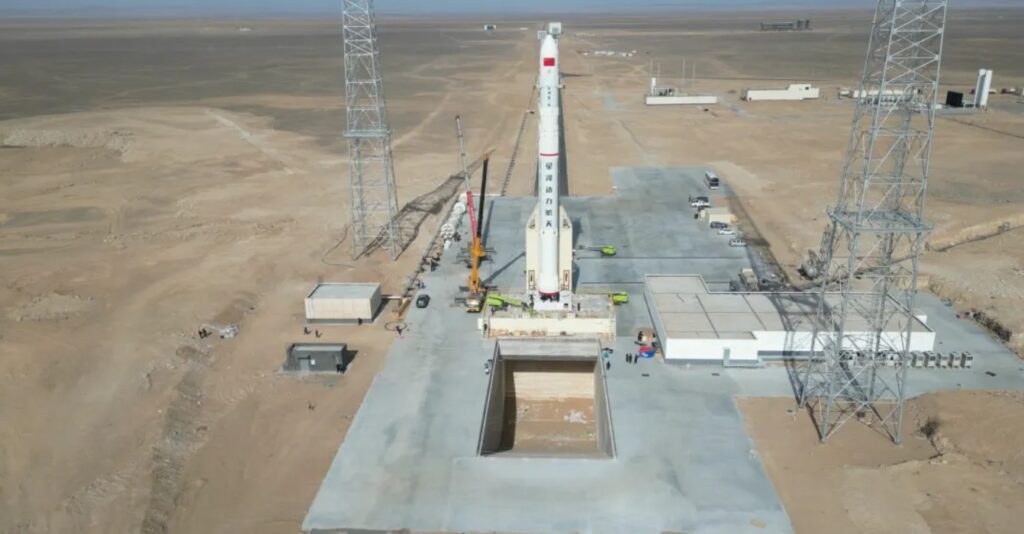
Table of Contents
The Push for Orbital Volume
China is entering a critical phase of its space strategy, moving beyond mere access to orbit and toward a sustainable, high-cadence launch architecture. A series of upcoming debuts and recovery attempts from both state-led entities and private commercial firms signal an aggressive effort to eliminate the launch bottlenecks currently hindering China’s ambitions for massive satellite constellations and lunar exploration.
The activity is centered largely around the Jiuquan Satellite Launch Center and the Wenchang Commercial Spaceport, where a variety of next-generation launchers are transitioning from ground tests to the pad. This shift isn’t just about adding more rockets; it’s a fundamental pivot toward reusability, mimicking the operational logic of SpaceX to lower costs and increase turnaround times.
CASC and the Long March Evolution
The state-owned China Aerospace Science and Technology Corporation (CASC) is diversifying its fleet with the Long March 12 series. Recent unofficial imagery shows the Long March 12B positioned vertically at the Dongfeng Commercial Space Innovation Test Zone. Unlike the 12A—which debuted in December 2025 and struggled with its first recovery attempt—the 12B utilizes a kerosene and liquid oxygen propellant mix.
The 12B is classified as a 4-meter-diameter rocket with an estimated 20-ton LEO (low Earth orbit) capacity. While the presence of landing legs on the pad suggests a recovery attempt, CASC has not confirmed whether the initial test flight will prioritize a successful orbit or a risky first-stage landing. For context, the methane-powered 12A can deliver roughly 9,000 kg to LEO, dropping to 6,000 kg in recoverable mode. The 12B is expected to make its mark in the first half of 2026.
The Commercial Contenders: Galactic Energy and iSpace
The commercial sector is moving with similar urgency. Galactic Energy has shifted its focus to liquid propellants with the Pallas-1, which is now vertical at the Dongfeng facility. While the rocket features grid fins and landing legs essential for reusability, the company is expected to prioritize a successful delivery of its 7,000 kg payload to a 200-km LEO over a recovery attempt during its maiden flight. Galactic Energy is already eyeing a much larger sibling, the Pallas-2, targeting a 20,000 kg capacity by 2027.
Meanwhile, iSpace is making headway with the Hyperbola-3. The company recently confirmed that its first-stage sea recovery system has cleared full-profile ground verification, including high-impact drop and shock tests. Backed by a massive $729 million funding round closed in February, iSpace is positioned to debut the Hyperbola-3 by the end of 2026, though the completion of these ground milestones suggests the timeline could slide forward.
Lunar Ambitions and the Long March 10
Perhaps the most strategically significant vehicle is the Long March 10B. As the cargo variant of the human-rated 10A, the 10B is the backbone of China’s lunar landing architecture and the Mengzhou crew spacecraft. Having already completed a wet dress rehearsal at Wenchang Commercial LC-2, the 10B is targeting a sophisticated sea-catch recovery using a wire-equipped ship.
While an initial test flight was anticipated sooner, current indicators suggest a July window. This launch will serve as a critical proof-of-concept for the recovery systems that will eventually support the 10A, which is expected to debut later this year following the successful in-flight abort tests for the Mengzhou capsule.
Managing the Risk of Failure
The road to reusability in China has been marked by a high tolerance for failure. Landspace’s Zhuque-3, for instance, successfully reached orbit late last year but failed during the powered descent phase of its landing attempt. The company is targeting Q2 2026 for a second attempt, with the hardware reportedly already at Jiuquan.
This pattern of rapid iteration—successes like CAS Space’s Kinetica-2 juxtaposed with failures like Space Pioneer’s Tianlong-3—shows that China is prioritizing speed of learning over a perfect track record. By flooding the pipeline with diverse launchers, Beijing is ensuring that the failure of a single commercial venture doesn’t derail the broader national goal of space dominance.


