Canon’s Identity Crisis: Decoding the EOS R6 Mark III and the R6 V
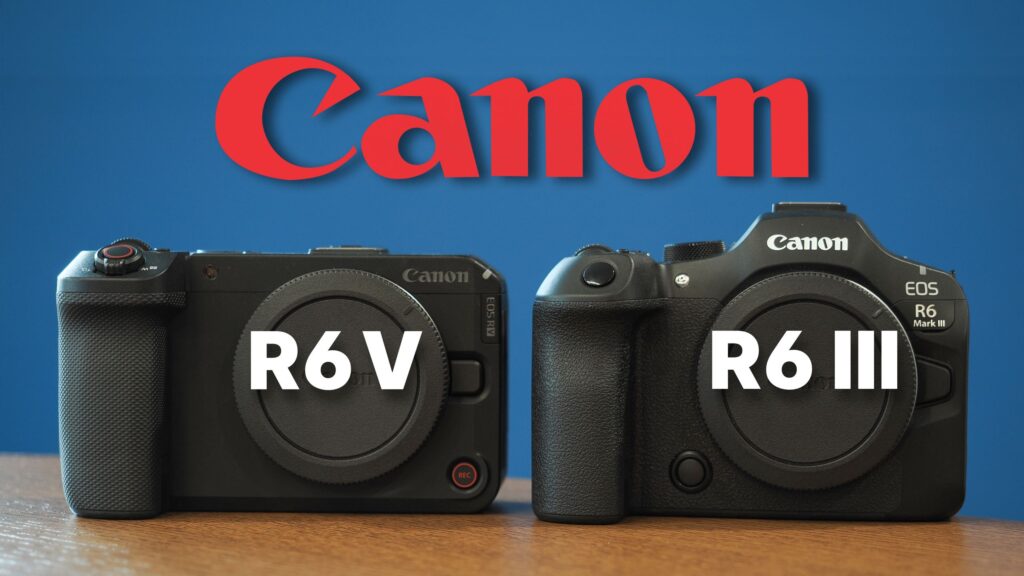
Table of Contents
A Split Strategy for the Hybrid Era
Canon has traditionally kept its R6 line as the reliable, all-rounder workhorse for enthusiasts and professionals. However, the latest generation has introduced a level of complexity that may leave potential buyers scratching their heads. With the simultaneous presence of the EOS R6 Mark III and the EOS R6 V, Canon is no longer offering a single ‘do-it-all’ body, but rather two specialized tools sharing a nearly identical internal brain.
On paper, the two cameras are twins. Both leverage a 32.5MP sensor capable of 7K 60p recording, a blistering 40fps electronic burst rate, and the sophisticated Dual Pixel CMOS AF II system. If you only look at the spec sheet, the choice seems arbitrary. But in practice, the hardware divergent paths between these two bodies create two entirely different user experiences.
The R6 Mark III: A Photographer’s Fortress
The EOS R6 Mark III remains the definitive choice for those who prioritize the still image. The most critical distinction here is the inclusion of a mechanical shutter. While the industry is moving toward electronic-only systems, the absence of a mechanical shutter in its sibling, the R6 V, introduces the risk of rolling shutter—where fast-moving subjects appear skewed or distorted during a scan.
Beyond the shutter, the R6 Mark III is built for the human eye. It features a high-resolution 3.69m dot OLED electronic viewfinder (EVF), providing the stability and focus that screen-only shooting cannot replicate in bright sunlight. The ergonomics are tailored for a traditional grip, and the In-Body Image Stabilization (IBIS) is a step more effective than in the V model, making it the superior tool for handheld street photography or event work.
The R6 V: A Cinema Camera in Disguise
If the Mark III is a camera that does video, the R6 V is a video tool that happens to take photos. The most striking omission is the EVF; the R6 V is a flat-top design, removing the viewfinder hump entirely. This isn’t just a cost-saving measure—it transforms the camera’s form factor into something far more ‘riggable.’ The rectangular body fits more naturally into cages and cinema rigs, and the addition of a second vertical tripod mount caters specifically to the vertical content trend dominating social media.
The real ‘killer feature’ of the R6 V, however, is its thermal management. High-resolution video is a heat-intensive process. While the Mark III is prone to overheating during extended 7K or 4K 60p clips, the R6 V integrates an active cooling system. This fan allows for prolonged recording times that are simply impossible on the Mark III, effectively bridging the gap between a mirrorless camera and a dedicated cinema line like the EOS C50.
The interface also reflects this shift. Button placements have been redistributed to prioritize video essentials like zebras, peaking, and live-streaming triggers. The addition of a tally light ensures the operator and talent know exactly when the record light is active—a small detail that is indispensable on professional sets.
Navigating the Value Proposition
Pricing adds one final layer to the decision. The R6 V is positioned as the more accessible entry point, starting at $2,399/2,499 depending on the region. The R6 Mark III commands a premium, starting at $2,799, reflecting its more complex mechanical assembly and the inclusion of the EVF.
For the hybrid shooter, the choice depends on where their ‘center of gravity’ lies. If you are a wedding photographer who needs a few high-quality B-roll clips, the R6 Mark III is the only logical choice. But for the YouTuber, the social media agency, or the corporate videographer who occasionally needs a high-res still, the R6 V offers a level of thermal stability and ergonomics that the Mark III cannot match.


