Bodycam Footage of Dying Student Sparks National Outcry Over Police Decision-Making in UK
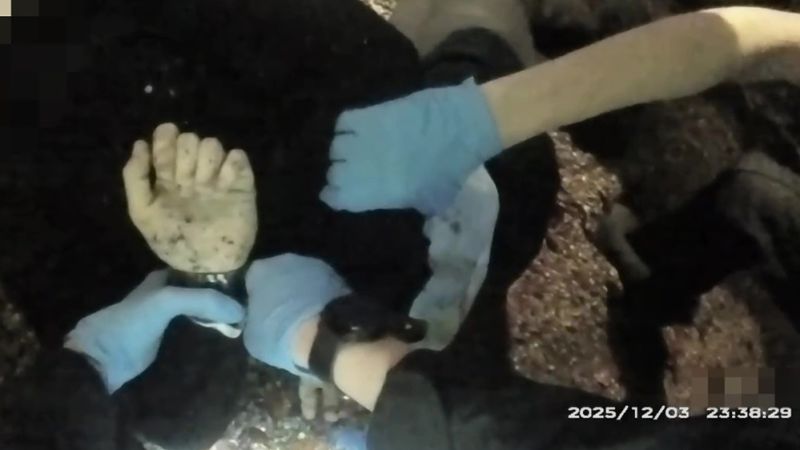
Table of Contents
The Footage That Sparked a Crisis
A series of police body-worn camera clips has ignited a fierce national debate in Britain, depicting the final moments of 18-year-old Henry Nowak. The footage, which has now reached the highest levels of the UK government, shows Nowak lying on a street in Southampton, bleeding from stab wounds and repeatedly stating, “I’ve been stabbed” and “I can’t breathe.” In a moment that has drawn widespread condemnation, a responding officer is heard replying, “I don’t think you have, mate,” before proceeding to handcuff the dying teenager.
The incident occurred last December, but the full weight of the circumstances only became public following the sentencing of Vickrum Digwa, a 23-year-old man who was convicted of Nowak’s murder. On Monday, Digwa was sentenced to life in prison. The court heard that Digwa had systematically deceived first responders at the scene, falsely claiming that Nowak had assaulted him and framing the encounter as a racist attack.
A Failure of Risk Assessment
The core of the controversy centers on why a critically injured person was treated as a suspect rather than a patient. The decision to apply handcuffs to a man in respiratory distress—while his attacker posed as the victim—has raised systemic questions about how police evaluate threats and identity-based reports in high-pressure environments.
Prime Minister Keir Starmer has stepped into the fray, acknowledging that there are “serious questions” regarding the decision-making process. Specifically, Starmer questioned how allegations of racism reported by Digwa may have skewed the officers’ perception of the scene, leading them to prioritize the restraint of Nowak over immediate life-saving intervention.
The technical failure here is not just one of medical triage, but of situational awareness. While bodycam technology is designed to provide an objective record of events, in this case, it served as the primary evidence of a catastrophic failure in judgment. Nowak was only uncuffed and given CPR after officers finally realized the extent of his injuries.
Political Aftershocks and Social Tension
The case has rapidly evolved from a criminal trial into a political flashpoint. Nigel Farage, leader of the Reform party, has used the incident to argue that a culture of fear regarding racism has compromised the impartiality of British policing. Farage explicitly drew a parallel to the 2020 death of George Floyd in the United States, noting that Nowak’s plea of “I can’t breathe” mirrors the phrase that sparked the Black Lives Matter movement, though in this instance, he argues the failure was driven by a misplaced desire to avoid being perceived as biased.
The fallout has manifested in street protests outside the Southampton police station, where activists and onlookers have chanted the same phrase recorded on the bodycam. However, the response from the government has been a plea for restraint. Interior Minister Shabana Mahmood told Parliament that while public services must assess risk without regard to race or religion, the tragedy should not be exploited for political gain.
Accountability and Legal Recourse
Hampshire Police have issued a formal apology following the release of the footage. The internal fallout has been immediate: one officer involved in the arrest has resigned, while three others are currently being treated as witnesses in an ongoing investigation into the conduct of the response.
Meanwhile, the legal community is questioning whether the current sentence for the killer is sufficient. The Attorney General’s Office confirmed it has received multiple requests to review and potentially increase Vickrum Digwa’s 21-year minimum term. Under UK law, officials have a 28-day window from the date of sentencing to decide if a sentence is “unduly lenient.”
For the Nowak family, the focus remains on the “inhumane and degrading” treatment their son received. While his father has urged that the death not be used to fuel national division, the evidence captured by the police’s own technology continues to serve as a catalyst for a broader conversation on police training and the intersection of identity and justice in the UK.