Bodycam Footage and Algorithmic Bias: The Deadly Cost of Misjudgment in the Henry Nowak Case
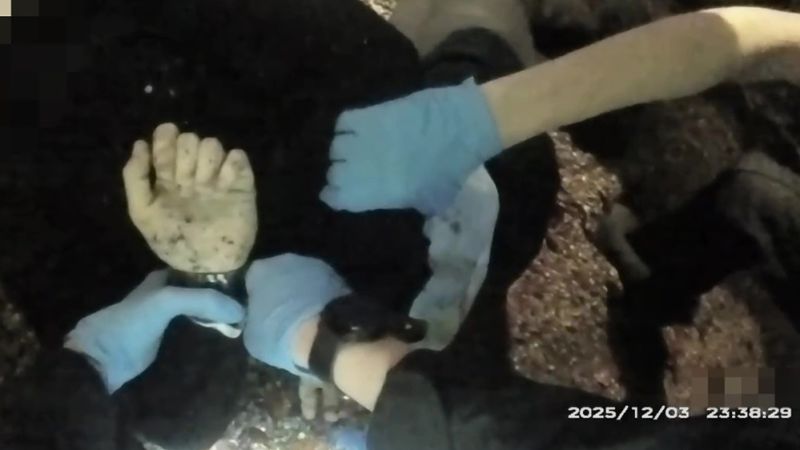
Table of Contents
A Failure of Perception and Protocol
The release of harrowing body-worn camera footage from Hampshire Police has ignited a firestorm of criticism across the UK, revealing a catastrophic failure in emergency response that resulted in an 18-year-old student being handcuffed while dying from a stab wound. Henry Nowak, a student in Southampton, was not treated as a victim in his final moments, but as a suspect—a miscalculation driven by the deceptive claims of his attacker.
The footage captures a scene of profound cognitive dissonance. As Nowak lay on the pavement, gasping for air and explicitly stating, “I’ve been stabbed” and “I can’t breathe,” the responding officer is heard dismissing the plea, replying, “I don’t think you have mate.” This moment, now central to an investigation by the Independent Office for Police Conduct (IOPC), serves as a grim case study in how perceived narrative can override physical evidence in high-stress environments.
The Anatomy of a Deception
The catalyst for the officer’s misplaced suspicion was Vickrum Digwa, a 23-year-old man who had inflicted the fatal wounds on Nowak. Upon the arrival of the police, Digwa didn’t just claim innocence; he actively weaponized identity and victimhood. He told officers that he had been the victim of a racially motivated assault and claimed his turban had been forcibly removed. Digwa was carrying a knife, which he argued was a ceremonial dagger permitted under Sikh religious exemptions.
This strategic misdirection created a psychological blind spot for the responding officers. By positioning himself as the aggrieved party in a hate crime, Digwa successfully diverted police attention away from the dying teenager and toward his own fabricated narrative. It was only after Nowak was handcuffed—and his condition visibly deteriorated—that officers realized the severity of his injuries and began CPR, though it was too late.
The Technology of Accountability
While the bodycam footage is being used to condemn the police response, the incident raises broader questions about the role of technology in policing. Body-worn cameras are marketed as tools for transparency and objectivity, yet in this instance, the footage merely documents the human failure to observe a dying man’s distress. The discrepancy between what the camera recorded (a man bleeding out) and what the officer perceived (a suspect to be detained) suggests that the hardware of accountability cannot compensate for a lack of situational judgment.
Police Commissioner Donna Jones has been blunt about the implications, stating that the details of the response raise “serious concerns about police impartiality, fairness and judgement.” The IOPC is now tasked with determining whether this was a case of individual incompetence or a symptom of a wider institutional hesitation to challenge narratives involving sensitive racial or religious dynamics.
Political Polarization and Social Friction
The case has quickly transcended the legal realm, becoming a flashpoint for political tension. Nigel Farage and the Reform party have seized on the tragedy, suggesting that a fear of being labeled “racist” led officers to prioritize Digwa’s claims over Nowak’s life. Farage explicitly drew parallels to the George Floyd case, noting the symmetry of the phrase “I can’t breathe,” though in this context, the tragedy was fueled by a perceived bias in the opposite direction.
Despite the political volatility, Nowak’s father has pleaded for the tragedy not to be used as a tool for division. However, with protests organized in Southampton, the social friction remains high. Digwa has since been sentenced to life in prison for the murder, but for the Nowak family, the legal victory does little to erase the image of Henry in handcuffs during his final seconds of life.
Systemic Implications for Emergency Response
The fallout from the Nowak case may force a re-evaluation of how UK police handle “conflicting narratives” at crime scenes. The danger highlighted here is the “halo effect” of a perceived victim—where an officer’s desire to protect a marginalized identity leads to the accidental victimization of another. As police forces integrate more data-driven and AI-assisted tools into their reporting and analysis, the human element of skepticism and critical observation remains the only true safeguard against such fatal errors.