BMW and Porsche Sweep Consumer Reports’ Luxury EV Recommendations, Leaving Tesla and Audi Behind
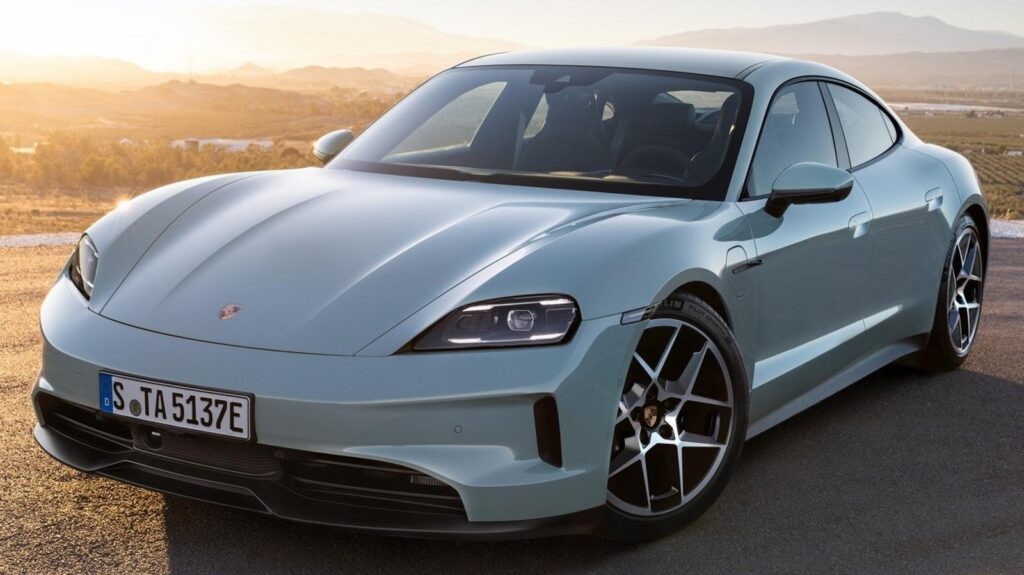
Table of Contents
The Reliability Gap in Luxury Electric Sedans
In the high-stakes world of luxury electric vehicles, a prestigious logo and a sleek silhouette are often used to mask a chaotic ownership experience. While Tesla and Audi have historically dominated the conversation around premium EVs, the latest data from Consumer Reports (CR) suggests that the actual ownership experience is diverging sharply from brand hype. In a surprising distillation of the current market, only three luxury electric sedans have earned the coveted CR recommended badge: the 2026 BMW i5, the 2026 BMW i4, and the 2026 Porsche Taycan.
The absence of Tesla and Audi from this specific recommendation list highlights a growing tension in the EV industry. While Tesla continues to lead in volume and software integration, its build quality and long-term reliability have remained perennial pain points for owners. Audi, meanwhile, has struggled to balance the transition from internal combustion engines to the e-tron platform without compromising the consistency that luxury buyers expect.
Why the CR Badge Carries Weight
Unlike many automotive publications that rely on manufacturer-provided loaners, Consumer Reports maintains a strict firewall of independence by purchasing its test vehicles at retail. This removes the possibility of “golden samples” being sent to reviewers. Each vehicle undergoes a rigorous gauntlet of more than 50 test protocols, including approximately 2,000 miles of real-world driving, to assess not just how the car feels on day one, but how it holds up under stress.
For the BMW i4, i5, and the Taycan, the path to recommendation was paved by high scores in three critical areas: road-test performance, owner satisfaction, and, most crucially, Predicted Reliability. In an era where “phantom braking” and panel gaps have plagued the industry, BMW’s ability to deliver consistent hardware quality has become a competitive advantage.
BMW’s Engineering Pivot
The success of the i4 and i5 is not an anomaly. BMW has pivoted its strategy toward “power-of-choice” platforms, allowing them to refine electric drivetrains without completely abandoning the chassis dynamics that made the brand famous. This approach has paid off; both BMW models currently hold some of the highest reliability ratings of any vehicle tested by CR. This aligns with external data from What Car?, which recently named BMW the most reliable EV brand in its own assessment.
Beyond reliability, the BMWs are proving to be more honest about their efficiency. While many manufacturers struggle with the discrepancy between EPA-estimated range and real-world highway mileage, the i4 and i5 have frequently exceeded their advertised range in practical testing, reducing the “range anxiety” that still haunts the luxury segment.
The Porsche Taycan: Performance Over Everything
While BMW wins on the reliability and value-proposition front, the Porsche Taycan represents the peak of EV dynamics. The Taycan’s inclusion on the recommended list is a testament to Porsche’s ability to translate its sports-car heritage into a battery-powered format. Motor Trend has twice named the Taycan its Performance EV of the Year, a sentiment echoed by Car and Driver, which awarded the vehicle a near-perfect 10/10 rating.
The Taycan avoids the common luxury EV pitfall of feeling like a “computer on wheels.” Instead, it offers a tactile, driver-centric experience that justifies its premium price point. When combined with CR’s reliability metrics, the Taycan emerges as the gold standard for those who prioritize driving dynamics over sheer utility.
Market Implications for Luxury Buyers
The current landscape suggests that the “first-mover advantage” once held by Tesla is evaporating. As legacy German automakers catch up on battery chemistry and software, they are leveraging decades of manufacturing discipline to outpace startups in build quality. For consumers, the takeaway is clear: the most innovative feature in a 2026 luxury EV may not be its autonomous driving capabilities or its screen size, but rather the fact that it doesn’t require a trip to the service center in its first year of ownership.


