Blue Origin’s New Glenn Suffers Catastrophic Explosion During Florida Static Fire Test
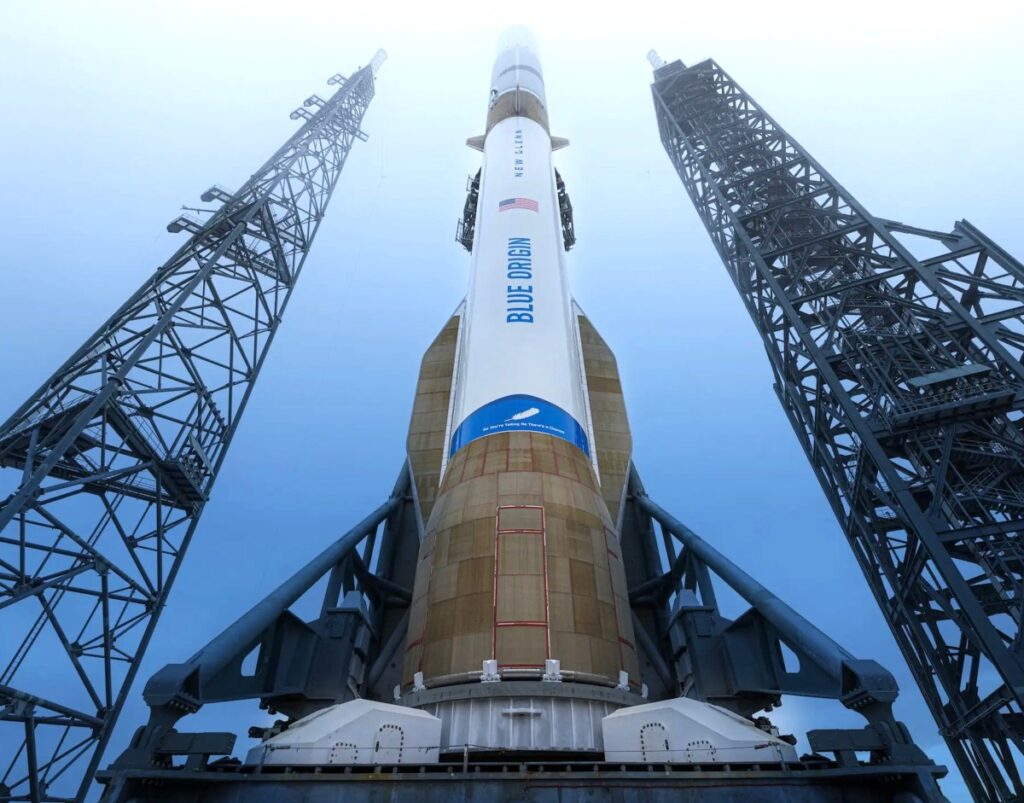
Table of Contents
A Massive Setback at Cape Canaveral
Blue Origin’s ambitions for a rapid-fire launch cadence have been dealt a severe blow. During a static fire test at its launch site in Cape Canaveral, Florida, the company’s heavyweight New Glenn rocket suffered a catastrophic explosion, resulting in what is likely one of the largest rocket failures in U.S. history.
The incident, captured via livestreams from NASASpaceFlight.com and SpaceFlight Now and subsequently confirmed by Blue Origin, occurred while the rocket was anchored to the pad. Because static fire tests are conducted with the vehicle fully fueled to simulate flight conditions, the resulting blast was immense. The company confirmed via X (formerly Twitter) that all personnel were accounted for and safe, while founder Jeff Bezos described the event as a “very rough day,” pledging to rebuild whatever was necessary to return to flight.
The Amazon Leo Connection
The timing of the failure is particularly damaging given the strategic pressures facing Blue Origin. The vehicle was being prepared for its fourth official launch, a mission intended to begin the deployment of Amazon’s Project Leo—a massive satellite internet constellation designed to challenge SpaceX’s Starlink dominance.
Amazon has contracted Blue Origin for 24 launches to build out the Leo network. While Amazon confirmed that no actual satellites were on board during this specific test, the destruction of a flight-ready booster creates a significant gap in the deployment schedule. For Amazon, which has touted the “reusable, heavy-lift” capabilities of New Glenn as a cornerstone of its space strategy, this failure removes a critical piece of infrastructure from the board.
A Pattern of Volatility
This explosion follows a rocky start to New Glenn’s operational life. After a decade of development, the rocket first flew in January 2025. While the initial flight reached orbit, the booster failed to land. By November 2025, Blue Origin achieved a breakthrough, successfully landing a booster and launching NASA payloads to Mars.
However, the momentum stalled during the third mission in April 2026. Despite a successful booster recovery, a cryogenic failure in the upper stage resulted in the total loss of an AST SpaceMobile satellite. The FAA had only just cleared the rocket to fly again last week after an investigation into that upper-stage anomaly. This latest explosion suggests that the stability of the New Glenn platform remains elusive, despite the company’s claims of having solved previous issues.
Implications for NASA and the Artemis Program
Beyond commercial satellites, the New Glenn program is integral to NASA’s deep-space architecture. Blue Origin is slated to provide critical launch support for the Artemis missions, which aim to return humans to the lunar surface and establish a permanent Moon Base.
NASA Administrator Jared Isaacman stated that the agency would work with Blue Origin to investigate the anomaly and assess the impact on near-term missions. Given the scale of the destruction, it is unlikely that New Glenn will meet its original goal of 12 launches this year. The inevitable pause for a federal investigation—overseen by the FAA—will likely push the Artemis timeline further into the future.
The incident also highlights the stark contrast between Blue Origin’s approach and that of SpaceX. While Elon Musk—who noted on X that “rockets are hard”—has historically embraced a “fail fast, fix fast” iterative process with Starship, Blue Origin has traditionally preferred a more methodical, slow-burn development cycle. This explosion proves that even a cautious approach cannot entirely eliminate the inherent volatility of cryogenic propulsion.


