Blue Origin’s New Glenn Rocket Ends in Fireball During Florida Static Fire Test
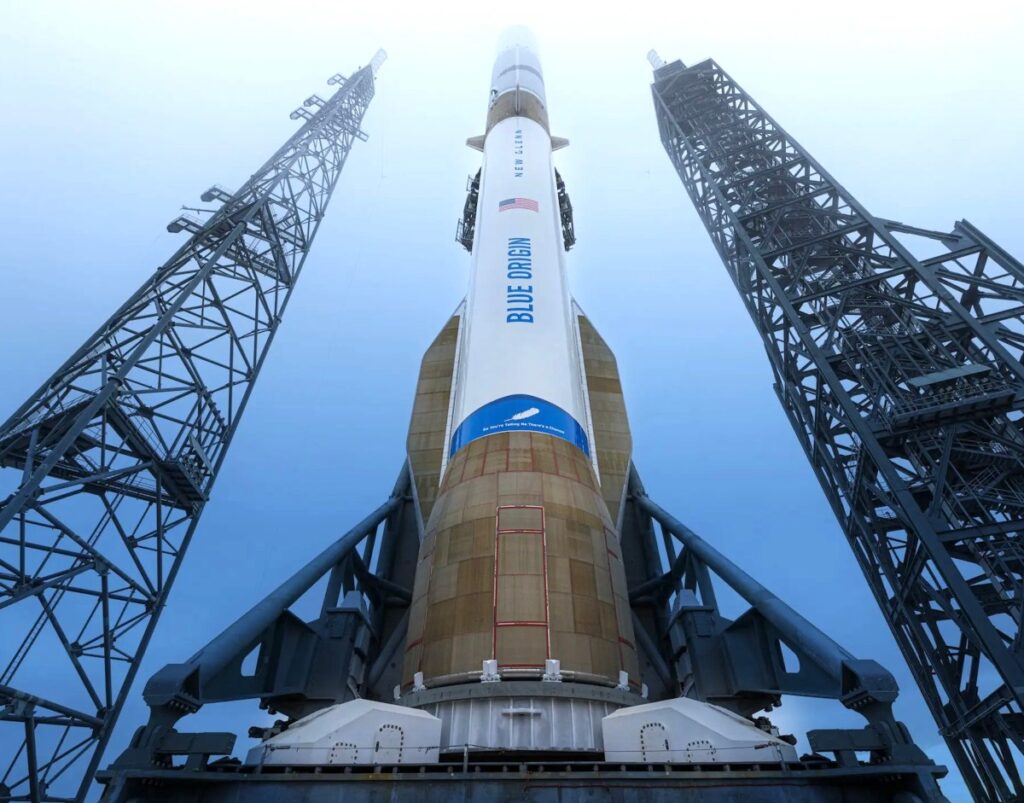
Table of Contents
A Catastrophic Setback at Cape Canaveral
The ambitious trajectory of Blue Origin’s New Glenn rocket hit a violent ceiling on Thursday. During a static fire test at the company’s launch site in Cape Canaveral, Florida, the massive heavy-lift vehicle exploded in a blast captured by livestreams from NASASpaceFlight.com and SpaceFlight Now, marking one of the most significant hardware failures in the history of the company.
The test was intended as a final validation before the rocket’s fourth flight, a mission critical to the deployment of Amazon’s Leo internet satellite constellation. While Blue Origin confirmed the explosion and stated that all personnel were accounted for, the sheer scale of the event suggests a systemic failure during the fueling or ignition sequence. Because the rocket was likely fully loaded with propellant for the static fire, the resulting energy release was immense, effectively erasing the vehicle from the pad.
Jeff Bezos, the founder of Blue Origin, took to X (formerly Twitter) to describe the event as a “very rough day,” while maintaining that the team would “rebuild whatever needs rebuilding.” The incident comes at a precarious moment for the company, which has spent nearly a decade attempting to move beyond sub-orbital tourism and establish a credible commercial alternative to SpaceX’s Falcon 9 and Starship platforms.
The Collision of Ambition and Reliability
This explosion is not an isolated hiccup, but rather the latest in a series of compounding failures for New Glenn. Just weeks prior, the rocket’s third mission ended in failure when a cryogenic malfunction in the upper stage prevented the AST SpaceMobile satellite from reaching its intended orbit. Though the FAA had cleared New Glenn for flight again last week, this ground-based disaster effectively resets the clock on Blue Origin’s operational cadence.
The stakes extend far beyond private corporate ego. Blue Origin is a pivotal partner in NASA’s Artemis program, tasked with providing the lunar lander capabilities required to return humans to the moon’s surface. NASA Administrator Jared Isaacman confirmed the agency will support a thorough investigation into the anomaly, noting that the impact on Artemis and Moon Base timelines will be assessed as data becomes available.
Furthermore, the Pentagon has looked to New Glenn for national security missions, seeking a diversified launch manifest that doesn’t rely solely on SpaceX. This failure introduces a layer of risk and uncertainty for government officials who had hoped for a stable, secondary heavy-lift provider.
Amazon’s Orbital Gamble
Perhaps the most immediate casualty of the explosion is the timeline for Project Kuiper—Amazon’s effort to challenge Starlink. Amazon has contracted 24 launches from Blue Origin to build out its Leo network. While Amazon confirmed that no satellites were on board during this specific test, the loss of a flight-ready vehicle creates a bottleneck in their deployment strategy.
Blue Origin had previously touted the “reusable, heavy-lift” nature of New Glenn as a key advantage, having successfully landed and re-flown a booster during its second and third missions. However, the transition from successful booster recovery to consistent upper-stage reliability remains the company’s Achilles’ heel.
As the FAA begins its investigation into the cause of the blast, the industry is reminded of the brutal learning curve associated with orbital rocketry. Even Elon Musk acknowledged the difficulty, posting a brief note stating, “Rockets are hard.” For Blue Origin, the path back to the launchpad will now require more than just rebuilding hardware; it will require a fundamental solution to the anomalies that continue to plague its most important asset.


