Blue Origin’s New Glenn Rocket Destroyed in Massive Cape Canaveral Test Failure
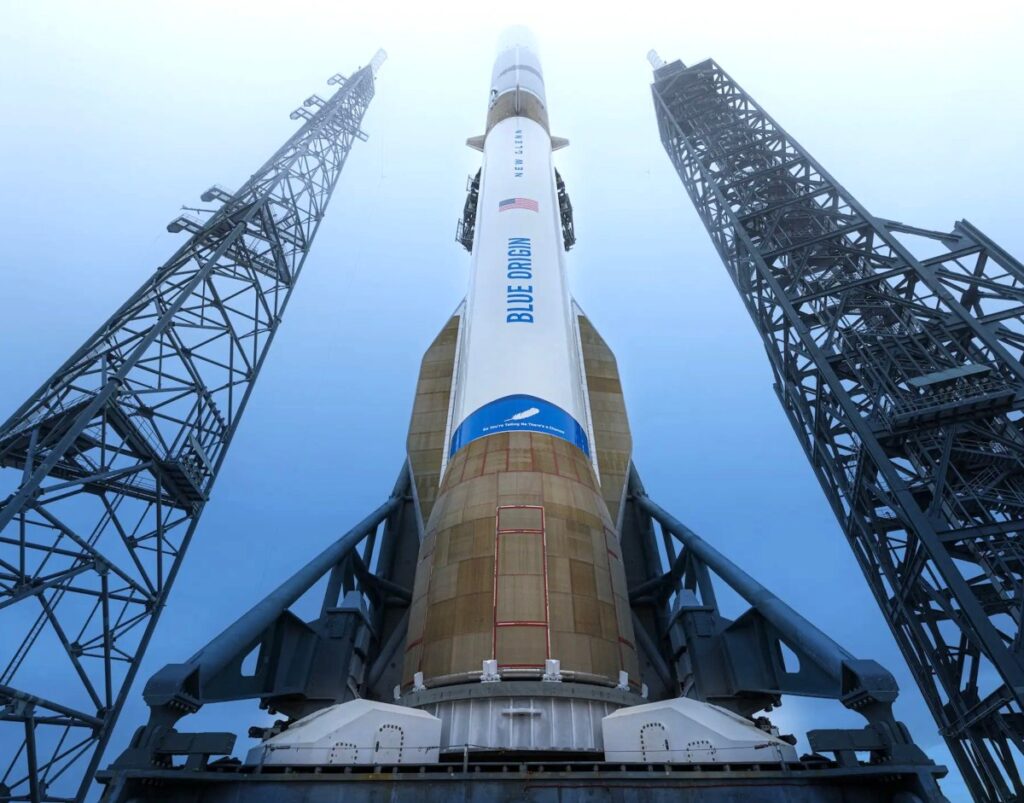
Table of Contents
A Catastrophic Setback for New Glenn
Blue Origin’s ambitions for heavy-lift orbital flight suffered a severe blow Thursday when a New Glenn rocket exploded during a static fire test at the company’s launch site in Cape Canaveral, Florida. The blast, captured in harrowing detail by livestreams from NASASpaceFlight.com and SpaceFlight Now, marks one of the most significant hardware losses in the history of the U.S. commercial space sector and perhaps the most critical failure in the history of Jeff Bezos’ space venture.
The company was conducting a critical pre-launch test ahead of a scheduled fourth mission. While Blue Origin confirmed the explosion via social media, the scale of the event suggests the vehicle may have been fully fueled—a scenario that transforms a controlled test into a massive kinetic event. In a statement on X, Blue Origin confirmed that all personnel were accounted for, and Jeff Bezos personally noted that the team remained safe.
“It’s too early to know the root cause but we’re already working to find it,” Bezos wrote, acknowledging the severity of the day while insisting that the company would rebuild and return to flight.
The Ripple Effect on Amazon and NASA
The timing of the failure is particularly damaging. New Glenn was poised to begin a high-cadence launch schedule, with Amazon having contracted the rocket for 24 launches to deploy the Project Kuiper-competing “Leo” internet satellite constellation. Amazon confirmed that no satellites were on board for this specific test, but the loss of a primary flight vehicle inevitably pushes back the deployment timeline for its satellite network, leaving a wider window for SpaceX’s Starlink to solidify its market dominance.
Beyond commercial interests, the explosion casts a shadow over NASA’s lunar ambitions. Blue Origin is a key partner in the Artemis missions, tasked with providing critical landing systems for the moon. NASA Administrator Jared Isaacman stated the agency would work with Blue Origin to investigate the anomaly and assess how this affects near-term mission impacts for the Artemis and Moon Base programs.
The Federal Aviation Administration (FAA) indicated that there was no impact on air traffic, though the agency will likely oversee the subsequent mishap investigation before New Glenn is cleared to fly again.
A Fragile Ascent to Orbit
This disaster follows a period of volatile progress for the New Glenn program. After a decade of development, the rocket finally flew in January 2025, successfully reaching orbit despite the booster failing to land. By November 2025, Blue Origin achieved a major milestone by launching NASA spacecraft toward Mars and successfully landing its first booster stage.
The program’s third mission in April 2026 demonstrated the ability to refurbish and re-fly a booster—a prerequisite for the cost-efficiency required to compete with SpaceX. However, that same mission ended in partial failure when a cryogenic issue in the upper stage resulted in the total loss of an AST SpaceMobile satellite. The FAA had only recently cleared New Glenn to resume flights following an investigation into that specific failure, making this explosion a devastating reversal of momentum.
The Competitive Landscape
The incident has not gone unnoticed by competitors. Elon Musk briefly commented on the failure via X, stating, “Most unfortunate. Rockets are hard,” while offering hopes for a quick recovery. The contrast is stark: while SpaceX has turned heavy-lift reusability into a routine operation, Blue Origin is still grappling with the fundamental instabilities of its largest vehicle.
With planned launches of up to 12 New Glenn missions this year, the company now faces a precarious gap in its schedule. The path back to the pad will require more than just replacing hardware; it will require solving a systemic “anomaly” that has, for now, grounded the Bezos-funded dream of a reusable heavy-lift fleet.


