Blood, Rot, and Time Warps: Why ‘Japanese Gothic’ is the Year’s Most Unsettling Literary Achievement
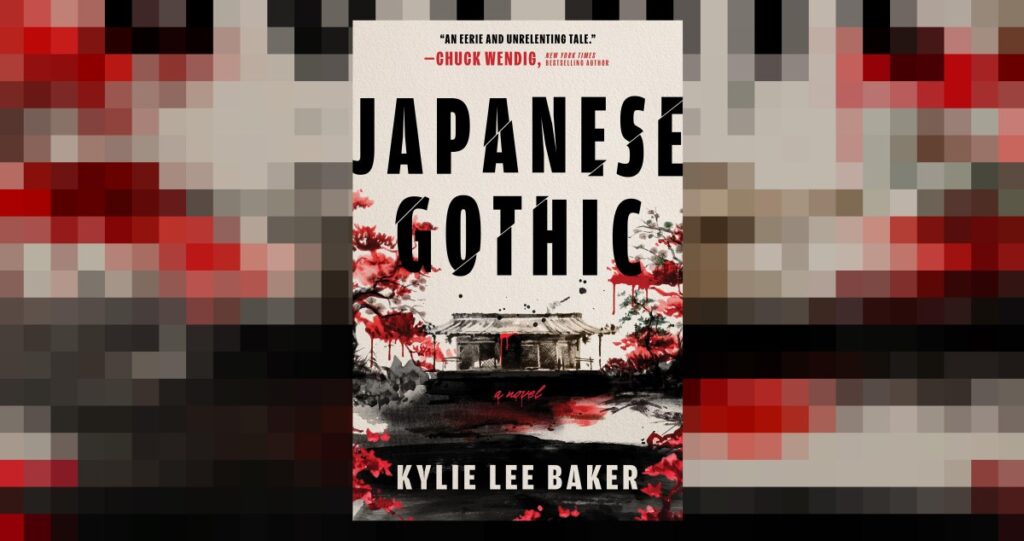
Table of Contents
A Masterclass in the Macabre
Horror often struggles to balance the visceral with the cerebral, frequently sacrificing narrative depth for shock value or becoming so bogged down in metaphor that it forgets to be scary. Kylie Lee Baker’s latest novel, Japanese Gothic, manages to navigate this tightrope with a precision that is as impressive as it is disturbing. Following the success of Bat Eater and Other Names for Cora Zeng, Baker has crafted a story that functions as a ghost story, a time-slip mystery, and a brutal autopsy of family trauma.
The narrative is built on a precarious duality, splitting its focus between two protagonists separated by 150 years but linked by a single, rotting architectural anchor. In 2026, we meet Lee Turner, an NYU student who has fled to Japan to seek refuge with his father. Lee is a fractured protagonist, drifting through a pharmaceutical haze of Ativan and Benadryl to suppress the memory of a violent crime: the murder of his roommate. His instability makes him a classic unreliable narrator, leaving the reader to piece together the truth through the gaps in his sedated consciousness.
Parallel to Lee is Sen Iwasaki, the daughter of a samurai during the era of the Meiji Restoration. Sen’s world is one of fading honor and violent erasure; her father is a survivor of the Satsuma Rebellion, the bloody final stand of the samurai against the Emperor’s imperial army. The tension of a dying warrior class provides a historical weight to the story, grounding the supernatural elements in the very real tragedy of cultural displacement.
The Architecture of Trauma
The bridge between these two eras is a house hidden behind sword ferns—a structure that feels less like a setting and more like a character. When a portal opens between Lee and Sen’s timelines, the novel shifts from a character study into a mind-bending puzzle. Lee views Sen not as a person, but as a medium—a bridge to the dead that might lead him to the truth about his mother, who vanished when he was twelve.
Baker’s prose is where the novel truly distinguishes itself. She employs a style that is simultaneously lyrical and repulsive. She doesn’t shy away from the clinical reality of gore; the text is littered with descriptions of the salty tang of blood and the sickening sight of intestines described as “ropes.” Yet, these moments of body horror are juxtaposed with surrealist imagery—food that tastes of “TV static” or a character described as a “refraction of light.” This contrast mirrors the internal state of the characters: the jarring collision of physical agony and mental dissociation.
Beyond the Jump Scare
While the plot is propelled by mysteries—the timing of the portal, the nature of Sen’s death, and the erratic behavior of Lee’s father’s girlfriend, Hina—the true engine of Japanese Gothic is its thematic ambition. The book uses its supernatural framework to dissect the cyclical nature of abuse and the persistence of colonial and patriarchal violence. The “ghosts” in this story are not merely spirits, but the lingering echoes of generational trauma that refuse to stay buried.
The climax avoids the typical tropes of the genre, opting instead for a dreamlike resolution that feels earned despite the convoluted path taken to get there. In an era of formulaic horror, Baker’s willingness to embrace a non-linear, often confusing structure pays off, mirroring the fragmented psyche of her protagonist.
For those who prefer their horror with a heavy dose of psychological weight and a willingness to get their hands dirty, Japanese Gothic is an essential read. It is a rare piece of fiction that manages to be compulsively readable while remaining intellectually demanding, proving that the most terrifying things are often the memories we try hardest to forget.