Beyond the Red Planet: Why Saturn’s Moon Titan is the Logical Next Step for Human Exploration
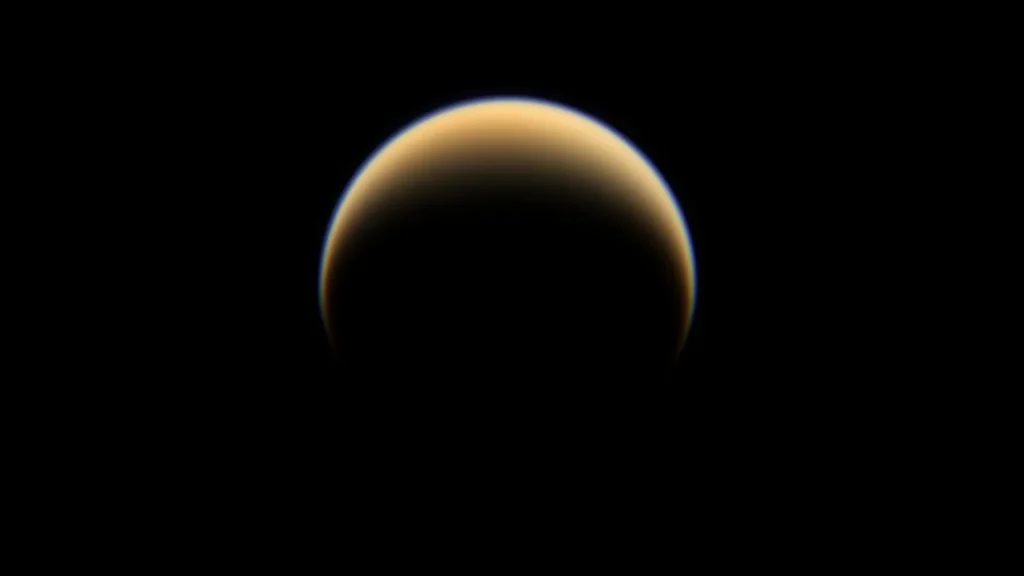
Table of Contents
The Post-Mars Dilemma
For decades, the narrative of human space exploration has followed a linear progression: the Moon, then Mars. This ‘Moon-to-Mars’ architecture, currently being operationalized through NASA’s Artemis program, serves as the primary blueprint for deep space endurance. However, a critical question remains largely unaddressed in current policy circles: what happens after Mars?
Establishing a destination beyond the Red Planet isn’t merely a philosophical exercise; it is a strategic necessity. The transition from lunar orbits to Martian soil represents a massive leap in autonomy and life-support reliability. If the goal is to move beyond the solar system’s inner circle, the agency and industry must identify the next ‘rallying call’ to ensure that current missions aren’t just endpoints, but stepping stones.
Evaluating the Outer Candidates
When surveying the solar system for the next viable outpost, most candidates fail on fundamental survival metrics. The upper atmosphere of Venus, while potentially accessible via buoyant airships, offers limited surface interaction and provides no sustainable path for permanent habitation. Conversely, the icy moons of the outer giants—specifically Jupiter’s Europa and Saturn’s Enceladus—are high-value targets for astrobiology due to their subsurface oceans. However, the radiation environments on these airless bodies are lethal, far exceeding acceptable limits for human crews.
Small asteroids and bolides present another set of hurdles, primarily regarding gravity. Surface operations in microgravity are technically cumbersome and offer little in the way of the geological or atmospheric stability required for a long-term colony.
The Titan Advantage
This leaves Saturn’s largest moon, Titan, as the most pragmatic candidate for deep-space expansion. Unlike Mars, Titan possesses a thick, nitrogen-rich atmosphere (roughly 95% nitrogen compared to Earth’s 78%) that provides an inherent shield against the solar radiation that plagues Europa and Mars. The surface pressure is only about 45% greater than Earth’s, a variance that human physiology can adapt to far more easily than the vacuum of space.
Beyond atmospheric protection, Titan is a goldmine for in-situ resource utilization (ISRU). The surface is composed of water ice and complex hydrocarbons—essentially the raw materials needed for fuel, plastics, and breathable air. In several key metrics of habitability and resource availability, Titan is arguably more welcoming than Mars.
Overcoming the Cold and the Distance
The challenges of Titan are not biological, but logistical and thermal. The surface temperature hovers around a constant -179°C. While this ‘deep cold’ is a known variable—similar to the permanently shadowed regions (PSRs) on the Moon—it demands a total rethink of materials science. At these temperatures, standard alloys become brittle, and the energy requirements for habitat heating spike exponentially.
Distance is the second primary hurdle. The Cassini-Huygens mission required seven years to reach the Saturnian system. Solar power, the backbone of current Mars rovers and lunar landers, is effectively useless at Titan, where sunlight is only 1% as intense as it is on Earth. Any human presence there would require the maturation of high-output nuclear power systems, a technology currently being refined for the NASA kilopower projects and upcoming lunar bases.
A Robotic Vanguard
A human mission to Titan is not a near-term reality, but the preparation must begin now. The precedent is clear: the Mars landings were only possible after decades of robotic precursors. Titan is currently following this script. The Huygens probe provided the first glimpse of the surface, and the upcoming Dragonfly mission—an octocopter designed to fly across the moon’s terrain—will be the critical test for aerial mobility in a dense, cold atmosphere.
To bridge the gap between Dragonfly and a crewed mission, a concerted effort in orbital infrastructure is required. We need a constellation of satellites to monitor Titan’s weather patterns and serve as high-bandwidth communication relays back to Earth. By declaring Titan the formal destination after Mars, NASA and its partners create a focused incentive for the planetary science community to prioritize the Saturnian system.
The road to Mars was envisioned by Werner von Braun nearly 60 years ago, yet we are still refining the means to get there. If the journey to Titan takes another half-century after the first Martian footprint, the planning must start today. The inspiration generated by Artemis II and the subsequent lunar landings can be harnessed to push the horizon further, ensuring that the leap to Mars is not the final destination, but the beginning of a truly interplanetary era.