Beyond the Alignment: How Computational Astronomy is Redefining the Manhattanhenge Phenomenon
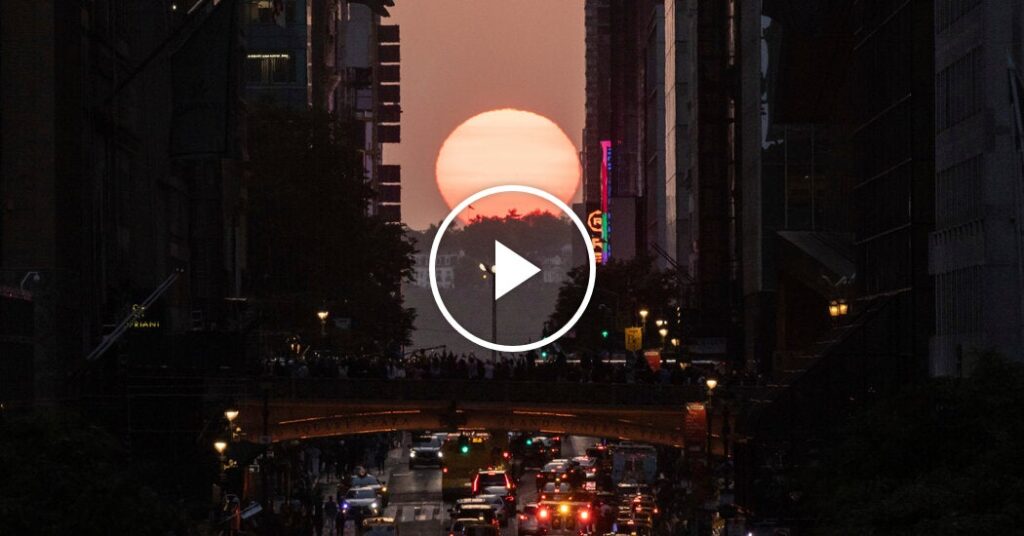
Table of Contents
The Intersection of the Grid and the Galaxy
Every year, thousands of New Yorkers and tourists converge on the city’s east-west streets to witness Manhattanhenge—the moment the setting sun aligns perfectly with the Manhattan street grid. While the visual result is a stunning corridor of gold and light, the phenomenon is actually a byproduct of a specific architectural misalignment. The city’s grid, established by the Commissioners’ Plan of 1811, is rotated roughly 29 degrees east of true north. This quirk of urban planning transforms the city into a massive, unintentional astronomical instrument.
For the casual observer, it is a viral social media moment. For the scientific community, however, Manhattanhenge represents a practical application of computational astronomy and planetary geometry. To predict the exact dates and times of these alignments, researchers and hobbyists rely on complex algorithms that calculate the sun’s declination—the angle between the rays of the sun and the plane of the Earth’s equator.
The Software Driving the Spectacle
The precision of modern Manhattanhenge predictions is far superior to the guesswork of previous decades. Today, the event is mapped using high-fidelity astronomical software and GIS (Geographic Information Systems) data. By layering the precise coordinates of the 1811 grid over the solar azimuth, developers can determine the exact window of alignment down to the minute. This digital mapping allows the city to anticipate crowd surges and permits photographers to position themselves with surgical precision.
The technical challenge lies in the ‘atmospheric refraction’ of light. As the sun dips toward the horizon, the Earth’s atmosphere bends the light, meaning the sun appears slightly higher than it actually is. Modern predictive models must account for this variance, as well as the varying heights of skyscrapers which create the ‘canyon effect,’ effectively narrowing the window of visibility for those not positioned on the exact center-line of the street.
A Digital Cultural Ritual
The event has evolved into a significant case study in digital culture and real-time data sharing. The surge in crowds is no longer driven by local knowledge but by algorithmic triggers. When astronomical apps and social media platforms push notifications that ‘the alignment is happening,’ it triggers a mass migration toward the Mid-town corridors. This feedback loop between astronomical data and human behavior has turned a celestial coincidence into a synchronized urban event.
Furthermore, the rise of high-dynamic-range (HDR) imaging and computational photography has changed how the event is documented. The extreme contrast between the dark shadows of the skyscrapers and the blinding solar disk is a nightmare for traditional sensors. The ‘golden hour’ captures now seen on Instagram are less a result of lighting and more a result of sophisticated AI-driven tone mapping and exposure blending, which allow the human eye to see the scene as the sensor does.
The Urban Geometry of Light
While Manhattanhenge is the most famous of these alignments, it is part of a broader trend of ‘Urban Astronomy.’ From the alignment of the sun with the streets of Chicago to the specific shadows cast by the Pyramids of Giza, the intersection of built environments and celestial bodies continues to fascinate. In New York, the event serves as a reminder that even in a city of concrete and steel, we remain tethered to the orbital mechanics of the solar system.
As the city continues to grow and new, taller structures are added to the skyline, the ‘viewing corridors’ for Manhattanhenge are shifting. The introduction of ultra-tall, slim towers in Billionaires’ Row has begun to obstruct previous sightlines, forcing the digital maps to be updated. The phenomenon is not static; it is a living interaction between the rigid lines of human engineering and the fluid motion of the cosmos.


