Beatbot Targets High-End Pool Automation With AquaSense X and Solar-Powered iSkim
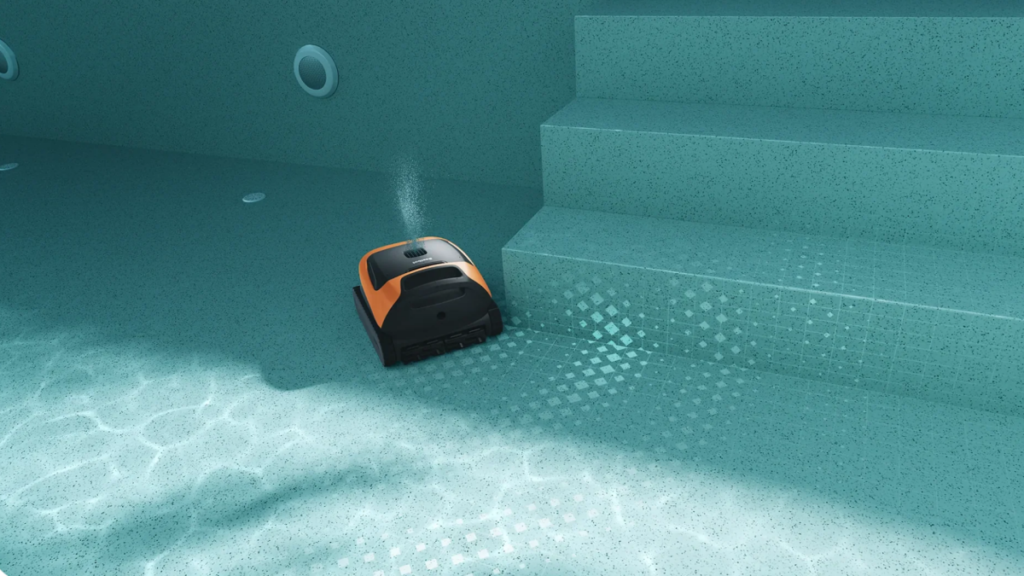
Table of Contents
The Shift Toward Autonomous Pool Maintenance
For decades, pool maintenance has remained one of the more stubborn chores of home ownership. While the industry has seen a slow migration from manual vacuuming to basic robotic cleaners, the current market is shifting toward true autonomy—devices that don’t just scrub surfaces but manage themselves via AI-driven navigation and renewable energy.
Beatbot is positioning itself at the center of this transition. The company’s latest rollout focuses on a tiered ecosystem designed to move users away from tethered, corded systems and toward a fully automated maintenance suite. By diversifying its hardware from entry-level scrubbers to high-end navigation units and solar-powered surface skimmers, Beatbot is attempting to solve the ‘maintenance gap’—the time between deep cleans where debris accumulates on the water’s surface.
The AquaSense X: Precision Engineering and High-End Navigation
At the top of the stack is the AquaSense X, a flagship model that signals a departure from the random-bounce patterns common in cheaper robotic cleaners. Priced at $3,999 (discounted from $4,250), the AquaSense X is engineered for what the company calls ‘all-zone coverage.’
Technically, the AquaSense X relies on advanced spatial mapping to ensure no section of the pool floor or walls is missed. While many robotic cleaners struggle with complex pool geometries—such as curved edges or deep inlets—the AquaSense X uses a combination of high-performance sensors and automated navigation to map the environment in real-time. This reduces the redundancy of cleaning the same spot multiple times and significantly cuts down on the total cycle time required to finish a pool.
For the ‘tech-head’ consumer, the appeal here isn’t just the cleanliness of the water, but the reduction of human intervention. The move toward cordless operation removes the primary friction point of robotic cleaners: the cumbersome, often tangled cables that require manual deployment and retrieval.
Solving the Surface Problem: The iSkim
While the AquaSense X handles the depths, the iSkim addresses the most frequent point of failure in pool hygiene: surface debris. Traditional skimmers are passive, relying on the pool’s pump system to push water and leaves into a basket. The iSkim is an active agent, moving across the surface to hunt for debris before it sinks.
The most notable engineering feat of the iSkim is its power management. Equipped with a 10,000 mAh battery supplemented by a 24W solar panel, the unit is designed for near-constant operation. According to Beatbot, this setup allows for up to 28 hours of active cleaning, essentially allowing the device to run 24/7 without requiring a manual recharge cycle.
To reduce the maintenance burden on the user, the iSkim utilizes a 9L filter basket. This capacity is significantly larger than standard portable skimmers, meaning users spend less time emptying the debris tray and more time utilizing the pool. At a promotional price of $419, it represents a lower-barrier entry point into the ecosystem than the flagship X model.
Entry Points and the Sora Series
Recognizing that $4,000 is a steep investment for those new to automation, Beatbot maintains the Sora series. These units serve as the gateway for users transitioning from manual care to robotics. The Sora line prioritizes ease of adoption, featuring simplified settings and a more straightforward functional layout compared to the sensor-heavy AquaSense X.
This tiered strategy—Sora for entry, iSkim for surface maintenance, and AquaSense X for deep-cleaning precision—mirrors the product ladders seen in the robot vacuum industry (such as iRobot or Roborock). By offering a complete ‘fleet’ of cleaners, Beatbot is betting that pool owners will eventually want a multi-device solution rather than a single do-it-all machine.
The company is currently leveraging an anniversary promotion running through May 25, 2026, to accelerate the adoption of these cordless systems, signaling a push to capture a larger share of the luxury home automation market before the peak summer season.


