Automated License Plate Readers Lead to Arrest of Pennsylvania Firefighter in Arson Spree
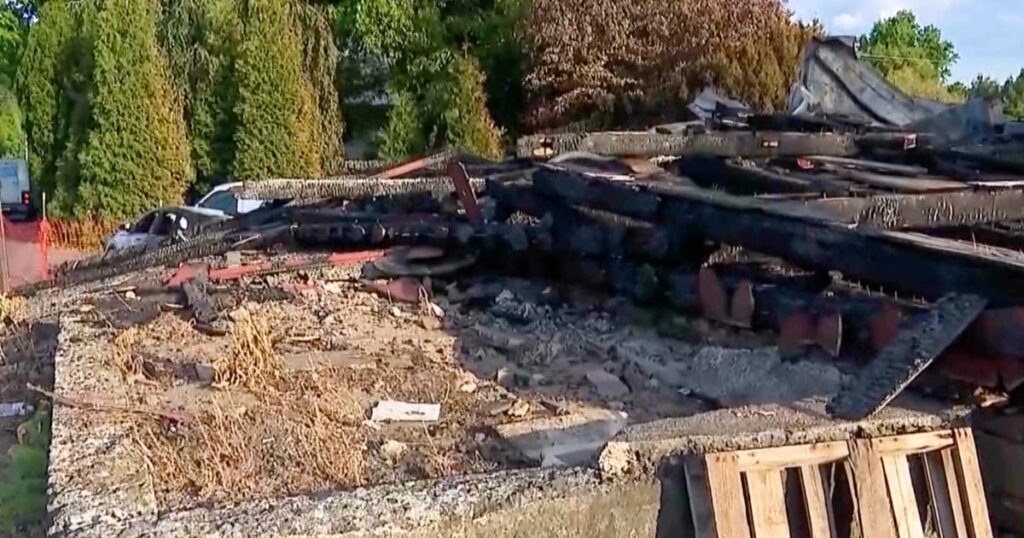
Table of Contents
Digital Breadcrumbs: How ALPRs Cracked a Local Arson Case
In a case that reads like a dark irony, a Montgomery County volunteer firefighter has been charged with orchestrating a 30-hour arson spree, allegedly setting three separate fires before responding to the scenes as part of the emergency crew. While the motive appears to be personal vendetta, the method of his capture highlights the increasing reliance on Automated License Plate Reader (ALPR) networks in modern policing.
Justin Sholly, 29, of Souderton, Pennsylvania, now faces a litany of charges, including arson, reckless burning, and recklessly endangering another person. The timeline of events began in the early hours of May 29, when the Perseverance Volunteer Fire Company responded to a pile of burning logs at the intersection of Forman and Schoolhouse roads in Franconia Township. This initial incident served as the catalyst for a wider investigation that would eventually intersect with digital surveillance data.
The spree escalated quickly. By 4:17 a.m. that same morning, a detached garage and barn on Lumber Street in Souderton were engulfed in flames, dangerously close to two residential homes containing ten occupants. The final strike occurred on May 30, targeting a barn, three vehicles, a shed, and a gazebo near Harleysville Pike, where eight more people were inside a nearby residence. The sheer scale of the destruction initially suggested a random act of chaos, but investigators from the Pennsylvania State Police Fire Marshal’s office suspected a targeted pattern.
The Role of Surveillance Forensics
The breakthrough in the case didn’t come from traditional forensic arson indicators, but from the intersection of geospatial data and license plate recognition. Investigators queried ALPR databases—systems that automatically capture images of license plates as vehicles pass specific checkpoints—and identified a black 2015 Ford Edge that appeared in the vicinity of all three fire locations within the narrow 30-hour window.
This digital trail narrowed the suspect pool significantly. Once the vehicle was registered to Sholly, investigators synchronized the ALPR timestamps with surveillance footage from the Perseverance Fire Company. The footage showed Sholly driving his Ford Edge into the company parking lot at 4:25 a.m. on May 30, just minutes before the call went out for the Harleysville Pike fire. This provided the critical link: Sholly wasn’t just near the fires; he was positioning himself to be among the first responders to the scenes he had created.
From Data to Confession
When detectives arrived at Sholly’s residence on Penn Avenue on May 31, the physical evidence mirrored the digital data. A 2015 Ford Edge was parked on the premises, and a search of the vehicle revealed fire-starter logs and a lighter. A subsequent search of his garage uncovered a more extensive kit: lighter fluid, a Motorola fire radio, and various incendiary materials.
During questioning, Sholly allegedly confessed to the crimes, adding a layer of personal grievance to the narrative. He claimed that the second fire in Souderton was intended to target a former boss who had fired him in 2025. Perhaps most jarring for the department is Sholly’s admission that he actively participated in the firefighting efforts at two of the scenes, working alongside fellow volunteers to extinguish the blazes he had ignited.
The use of ALPRs in this case underscores a broader trend in law enforcement where ‘pattern-of-life’ analysis—tracking a vehicle’s movements across different jurisdictions—can replace traditional eyewitness accounts. While controversial in some privacy circles, the precision of the timing in this case left little room for coincidence. Sholly remains held in Montgomery County Prison, with a preliminary hearing set for June 10, 2026.