Atmospheric Collision: Analyzing the Rare Space Debris Event Over Mayon Volcano
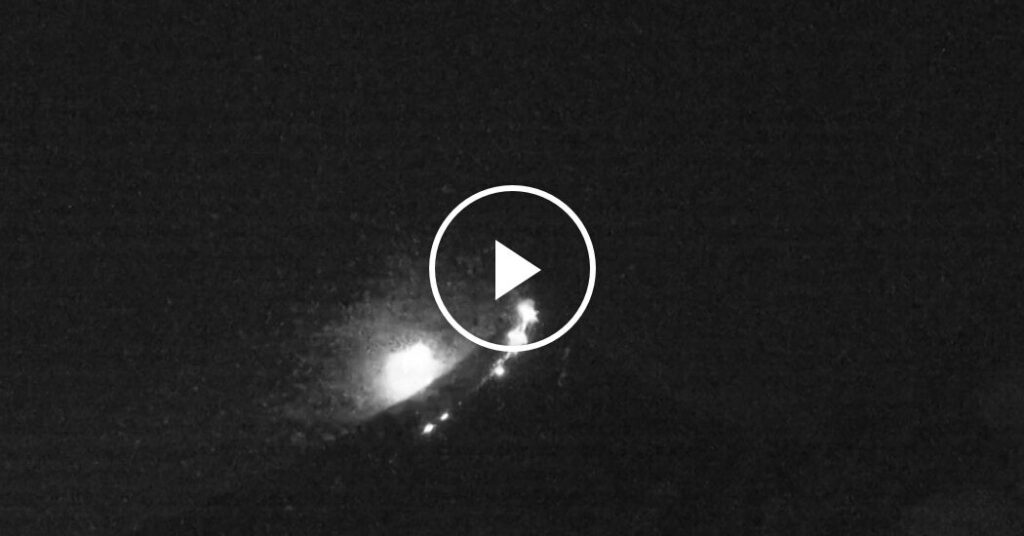
Table of Contents
A Rare Intersection of Geologic and Orbital Chaos
In a striking coincidence of natural and man-made phenomena, footage has emerged showing a bright fireball descending through the atmosphere directly above the active Mayon Volcano in the Philippines. The visual, which has circulated widely across digital platforms, captures a high-velocity object trailing a luminous wake as it streaks across the sky, momentarily competing with the volcanic activity on the ground for attention.
While local observers initially speculated about a meteor, the characteristics of the descent—specifically the fragmentation pattern and the duration of the glow—suggest a more technical origin: the reentry of orbital debris. Unlike a typical meteor, which consists of natural rock and ice and tends to burn up in a singular, violent flash, space debris often exhibits a slower, more fragmented breakup as different materials (aluminum, titanium, and composites) react differently to the intense heat of friction.
The Physics of Atmospheric Reentry
When an object enters the Earth’s atmosphere from orbit, it is traveling at speeds exceeding 17,000 miles per hour. The compression of air in front of the object creates a plasma sheath, resulting in the brilliant light captured in the Mayon footage. This process, known as ablation, strips away the outer layers of the object.
The timing of this event is particularly notable given the volatile state of Mayon, one of the world’s most active volcanoes. While there is no scientific link between volcanic eruptions and the reentry of space hardware, the visual juxtaposition serves as a reminder of the increasing density of objects in Low Earth Orbit (LEO). With the rise of mega-constellations like SpaceX’s Starlink and the decommissioning of older satellite clusters, the frequency of these “fireball” events has increased significantly over the last decade.
Distinguishing Between Meteors and Man-Made Junk
To the untrained eye, a bolide (a bright meteor) and a piece of falling satellite look nearly identical. However, astrophysicists look for specific markers to determine the source. A natural meteor typically enters the atmosphere at a steeper angle and vanishes quickly. In contrast, man-made objects, such as spent rocket stages or dead satellites, often enter at a shallower angle and “shred” as they hit the denser layers of the atmosphere, creating a train of multiple glowing fragments.
In the case of the Philippines event, the trajectory and the persistence of the light trail align more closely with the behavior of an object undergoing orbital decay. This is a common occurrence as satellites reach the end of their operational life and their orbits naturally dip into the atmosphere, ensuring they burn up before reaching the surface—a process designed to mitigate the risk of ground impact.
The Growing Challenge of Orbital Debris
This event highlights a broader trend in the aerospace industry: the struggle to manage “space junk.” With thousands of defunct satellites and millions of pieces of smaller debris circling the planet, the probability of visible reentry events is rising. While most debris burns up completely, the spectacle of a fireball over a landmark like Mayon underscores the sheer volume of material humanity has left in the void.
As regulatory bodies like the FCC and international agencies tighten the rules on satellite decommissioning, the goal is to move from accidental, random reentries to controlled descents into the “spacecraft cemetery” in the South Pacific. Until then, residents in the Pacific Rim may continue to witness these rare, blinding intersections of orbital mechanics and earthly geography.


