Artemis 3 Crew Named: Commander Randy Bresnik Bets on a Tight 2027 Timeline
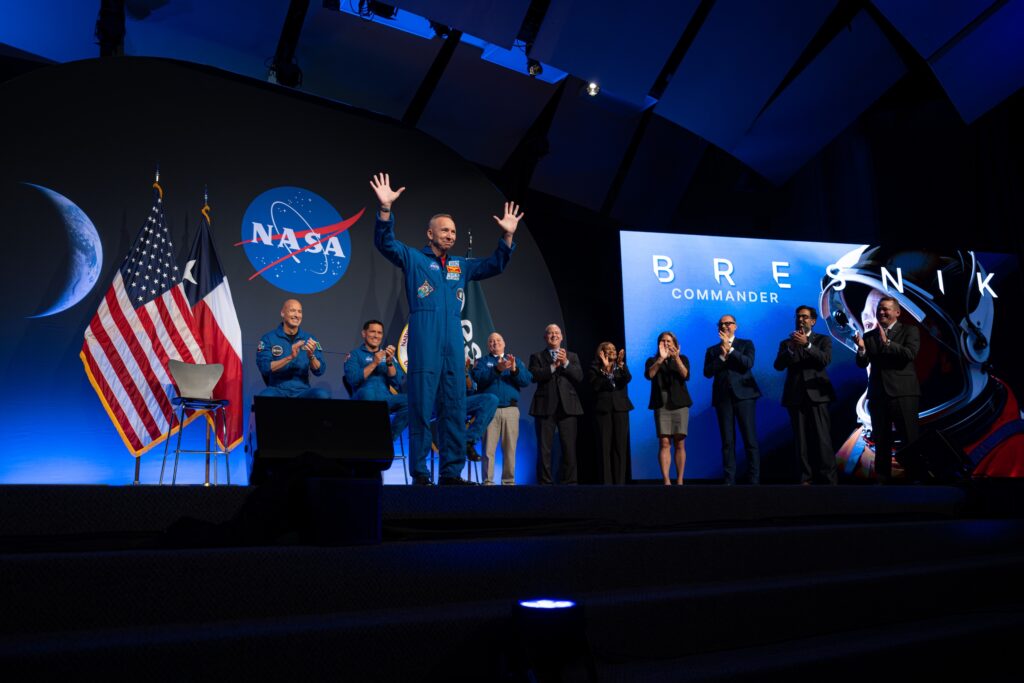
Table of Contents
A High-Stakes Race to 2027
NASA has officially designated veteran astronaut Randy Bresnik as the commander of Artemis 3, marking a critical step toward the agency’s goal of returning humans to the lunar vicinity. The announcement, made during a ceremony at the Johnson Space Center, introduces a crew tasked with what NASA describes as one of the most complex sequences of flight operations in the agency’s history.
Joining Bresnik are NASA astronauts Andre Douglas and Frank Rubio, along with ESA astronaut Luca Parmitano. The crew is slated for a two-week mission in low Earth orbit (LEO), utilizing the Orion spacecraft. Unlike the previous missions, the core of this operation involves a high-stakes dance of orbital mechanics: docking with two distinct lunar lander prototypes—SpaceX’s Starship and Blue Origin’s Blue Moon Mark 2.
The timeline is aggressively tight. With a target launch for mid-2027, the crew has roughly one year to synchronize their operations and master the systems required for these complex rendezvous. In the world of deep-space exploration, where training usually spans years, this window is remarkably narrow.
The ‘Apollo 11’ Precedent
The tension surrounding the compressed schedule isn’t lost on the crew. However, Andre Douglas, a rookie astronaut who previously served as a backup for Artemis 2, pointed to historical precedent to justify the feasibility of the plan. Douglas noted that the Apollo 11 crew was named in January 1969, only six months before they touched down on the lunar surface.
“So if they can do that in six months, we can make one year,” Douglas remarked, suggesting that the ability to rapidly synthesize training is a hallmark of the astronaut corps.
Bresnik’s own confidence stems from eight years of deep immersion in the Orion program and missions beyond Earth orbit. His role as an astronaut representative to the Artemis 2 mission management team gives him an insider’s view of the spacecraft’s current readiness. He specifically cited the “prox ops” (proximity operations) demonstration from Artemis 2—where Orion maneuvered around its upper stage—as a vital proof of concept.
“The prox ops demonstration of Artemis 2 showed that this thing flies very, very well,” Bresnik said, adding that the real-world data closely matched the simulator modeling, which significantly reduces the technical uncertainty for the Artemis 3 flight software.
Identifying the ‘Long Pole’
While the Orion spacecraft is the crew’s primary home, Bresnik is candid about where the real risks lie. In aerospace engineering, the “long pole” is the item that takes the longest to resolve or poses the greatest risk to the schedule. For Artemis 3, that isn’t the Orion capsule—it’s the landers.
The successful integration of the Blue Moon and Starship test articles in space is the primary variable. Because the specifics of the rendezvous altitudes and mission profiles are still being refined, the crew is adopting a tiered training strategy. Initially, they will “go whole hog” on Orion systems, mastering the capsule’s environment first. Once the lander fidelity increases and the mission profile is locked in, they will pivot to the specific docking and rendezvous training.
This phased approach allows the crew to maintain progress even as the commercial partners at SpaceX and Blue Origin continue to iterate on their respective hardware.
Buying Down Risk for Artemis 4
Artemis 3 is not just a destination; it is a massive flight-test exercise designed to pave the way for Artemis 4, which aims for a full crewed lunar landing. Bresnik views the upcoming mission as a way to “buy down risk,” essentially using the LEO mission to flush out anomalies and verify docking procedures before the crew commits to a trajectory that takes them away from Earth’s immediate rescue capabilities.
As Bresnik noted during the announcement, the inherent difficulty of spaceflight means the most important mission is always the next one. By treating Artemis 3 as a rigorous testing ground, NASA hopes to ensure that when the agency finally attempts a lunar landing, the machinery and the crew are no longer operating on a trial basis.