Artemis 3 Crew Named: Commander Randy Bresnik Bets on 2027 Timeline Despite Lander Uncertainties
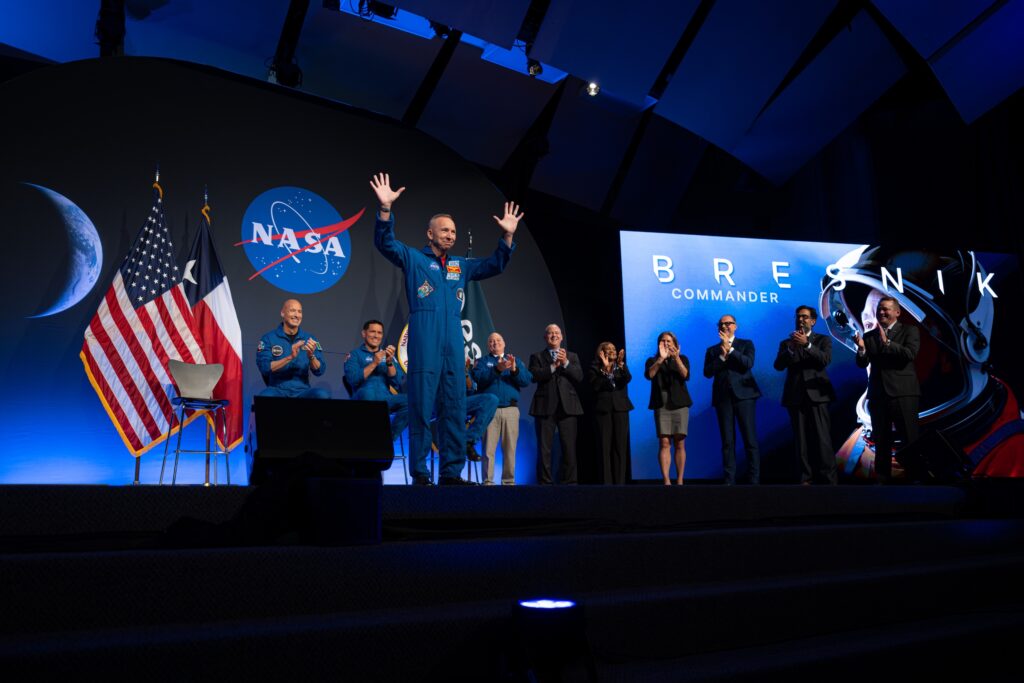
Table of Contents
A Tight Window for a Complex Orbit
NASA has officially named the crew for Artemis 3, appointing veteran astronaut Randy Bresnik as commander. The announcement, made during a ceremony at the Johnson Space Center, puts a human face on one of the most technically aggressive schedules in modern spaceflight. Joining Bresnik are NASA astronauts Andre Douglas and Frank Rubio, alongside Luca Parmitano of the European Space Agency (ESA).
The mission, currently targeted for a mid-2027 launch, is not a direct lunar landing attempt but a high-stakes orbital choreography. The crew will spend two weeks in low Earth orbit aboard the Orion spacecraft, serving as the final human validation for the lunar landers that will eventually carry astronauts to the surface. Specifically, the mission involves docking with prototypes of SpaceX’s Starship lunar lander and Blue Origin’s Blue Moon Mark 2.
For the crew, the clock is ticking. With the launch window barely a year away, the training regimen is condensed. However, Bresnik and his team aren’t deterred by the timeline. Drawing a parallel to the Apollo era, Andre Douglas noted that the Apollo 11 crew was finalized just six months before their historic landing in July 1969. “If they can do that in six months, we can make one year,” Douglas remarked, suggesting that the institutional knowledge available today makes a 12-month prep cycle feasible.
Orion: The Known Quantity
Of the many variables in the Artemis program, the Orion spacecraft and the Space Launch System (SLS) rocket are the elements Bresnik trusts most. Having spent eight years working on systems beyond Earth orbit and serving as an astronaut representative for Artemis 2, Bresnik views the hardware as proven.
He pointed specifically to the “prox ops” (proximity operations) demonstration during the Artemis 2 mission, where Orion maneuvered around its upper stage. According to Bresnik, the precision of that maneuver validated the physics modeling used in NASA’s simulators. “The prox ops demonstration showed that this thing flies very, very well,” he said, noting that the high fidelity of the simulators will significantly reduce the actual time required for crew training compared to the Apollo days.
While Artemis 3 will introduce new hardware—including updated docking ports and specialized systems to facilitate the rendezvous with commercial landers—Bresnik does not view the spacecraft itself as the primary risk factor.
The ‘Long Pole’: Commercial Lander Integration
The real challenge, according to the commander, isn’t the ship they are flying, but the ships they are meeting. Bresnik identified the presence and readiness of the lunar lander test articles as the “long pole” in the tent—the critical path item that could potentially delay the entire mission.
Because the mission profile and the exact altitude of the rendezvous are still being refined, the crew is adopting a tiered training strategy. They are currently “going whole hog” on Orion mastery, ensuring they are experts in the primary vehicle before layering on the specific, high-fidelity training required for docking with the SpaceX and Blue Origin modules.
This phased approach is a necessity given the volatility of commercial space development. By mastering Orion first, the crew ensures that once the mission profile is locked in, they can pivot quickly to the specifics of the rendezvous without being slowed down by basic vehicle operations.
Buying Down Risk for Artemis 4
The stakes for Artemis 3 extend beyond its own orbital success. The mission is designed as a massive risk-reduction exercise for Artemis 4, which is intended to be the mission that actually puts boots back on the lunar surface.
Bresnik views Artemis 3 as a way to “buy down risk,” testing the docking mechanisms and crew transfers in a controlled environment before attempting the far more dangerous descent to the lunar south pole. In a candid assessment of the trajectory of the program, Bresnik admitted that spaceflight remains inherently difficult, stating that the most important mission will always be the next one, as each subsequent flight increases in complexity and risk.