Apple Shifts Focus to ‘Protective AI’ and Family Ecosystem Logic at WWDC26
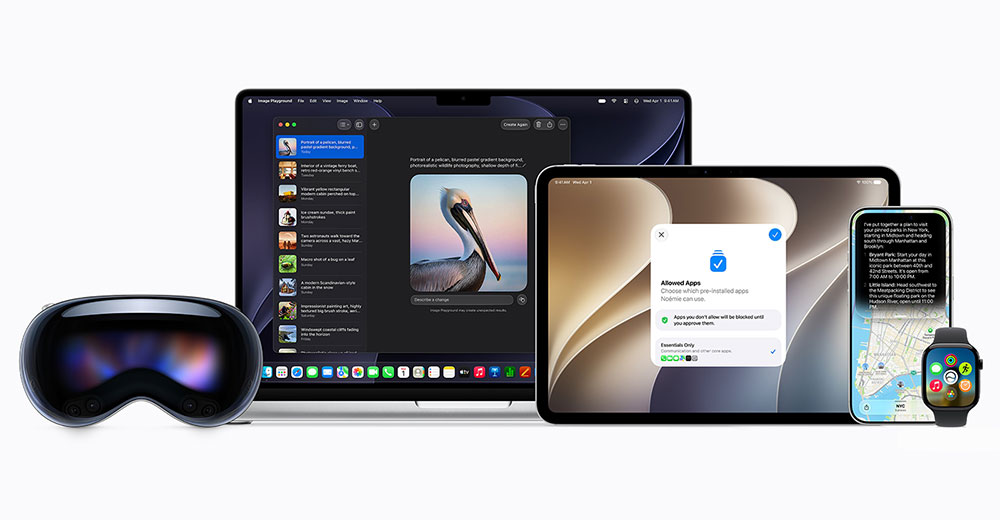
Table of Contents
Beyond the Chatbot: Apple’s Pivot to Utility
For the past two years, the narrative around ‘Apple Intelligence’ has been defined by a cautious game of catch-up with OpenAI and Google. But at WWDC26, Tim Cook and his engineering leads signaled a shift in strategy. The focus has moved away from the novelty of generative text and toward what the company is calling ‘Protective Intelligence’—a layer of AI designed not to create content, but to curate and guard the user experience, specifically for the youngest members of the Apple ecosystem.
The centerpiece of the announcement is a revamped approach to Screen Time and Content Restrictions. Rather than relying on blunt-force blocklists or rigid time limits that teenagers routinely bypass, the new AI-driven system analyzes app behavior and interaction patterns in real-time. This allows the OS to detect ‘distress signals’ or predatory patterns in social media interactions before a human moderator—or a parent—would even notice a red flag.
Siri as a Digital Guardian
The most tangible manifestation of this shift is the evolution of Siri. While previous updates focused on natural language processing, the new integration allows Siri to act as an active intermediary for children’s accounts. When a child asks Siri to access an app or a website that triggers a safety threshold, the AI doesn’t just block the request; it provides a contextual explanation and triggers a ‘Smart Request’ to the parent’s device.
Unlike the previous system, which required parents to manually approve every single app download or site visit, the new logic uses on-device machine learning to categorize requests. A request for a known educational tool is granted instantly, while a request for an unverified social platform triggers an immediate, detailed alert to the parent, including why the AI flagged the specific site as potentially risky.
The Privacy Paradox: On-Device Processing
Apple is leaning heavily into its ‘Private Cloud Compute’ architecture to justify these more invasive monitoring features. To avoid the optics of a company spying on its own children’s users, Apple confirmed that the behavioral analysis for child safety happens almost entirely on-device. Only anonymized metadata is sent to the cloud to update the global ‘safety models’ that protect all users.
This move puts Apple in direct competition with specialized third-party safety apps like Bark or Qustodio. By baking these capabilities directly into the kernel of iOS and macOS, Apple effectively removes the need for third-party accessibility hacks—which are often clunky and easily disabled—creating a seamless, albeit closed, safety loop.
Integrating the Family Circle
The integration extends beyond the phone. Apple announced a tighter linkage between the Apple Watch and the new safety AI. In a scenario where a child’s heart rate spikes in conjunction with a specific app usage pattern, the system can now prompt the child to take a break or notify a guardian if the behavior deviates significantly from the child’s established baseline.
Industry analysts note that this is a strategic move to increase ecosystem lock-in. Once a family relies on Apple’s proprietary AI for the safety and mental well-being of their children, the friction of switching to Android becomes not just a matter of hardware preference, but a perceived risk to family security.