Apple Reportedly Skipping M6 Pro and Max to Fast-Track AI-Centric M7 Architecture
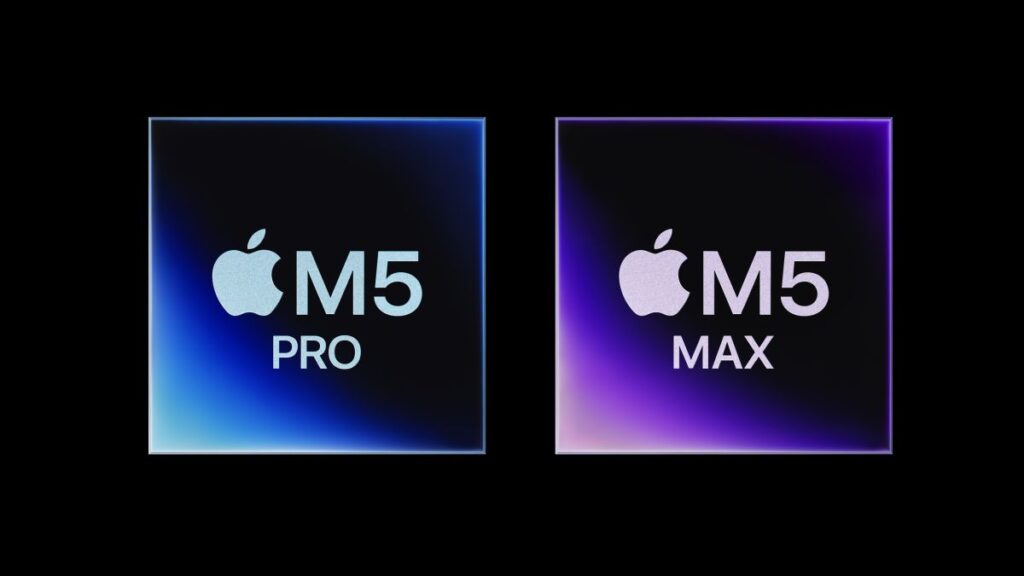
Table of Contents
A Strategic Pivot in Cupertino
Apple is reportedly rethinking its roadmap for high-end silicon, moving away from the predictable annual cadence of the M-series to better align with the escalating demands of generative AI. According to a report from Bloomberg, citing sources familiar with the company’s internal planning, Apple intends to bypass the release of M6 Pro and M6 Max processors entirely, jumping straight to a next-generation M7 series.
This departure from the established numbering sequence suggests that the incremental gains promised by a theoretical M6 architecture were insufficient to meet the hardware requirements of Apple’s future software ambitions. By skipping a generation, Apple can consolidate its engineering efforts on a more radical architectural shift—one designed specifically to handle the massive compute loads required for sophisticated on-device LLMs (Large Language Models) and advanced neural processing.
The Legacy of the M5 and Fusion Architecture
To understand why Apple would abandon the M6, one must look at the current state of the M5 lineup. Released in March, the M5 Pro and M5 Max chips introduced what Apple calls “Fusion Architecture.” These 3nm chips feature an 18-core CPU configuration, splitting duties between 12 standard performance cores and six specialized “high-performance super cores.” This design was aimed at maximizing single-threaded performance, which remains a critical metric for professional creative applications.
While the M5 series provided a substantial leap for the 2026 MacBook Pro and MacBook Air, the industry-wide shift toward AI has changed the goalposts. The bottleneck for modern professional workflows is no longer just raw CPU clock speed, but the efficiency of the Neural Engine and the bandwidth available to the GPU for AI-accelerated rendering and processing.
M7: Building for an AI-First Ecosystem
The rumored M7 Pro and M7 Max chips, expected to debut in 2027, are not merely speed bumps but are being envisioned as the foundation for a new era of macOS. Insiders suggest the M7 series will focus heavily on expanded memory bandwidth and a redesigned Neural Engine capable of running complex AI agents locally, reducing the reliance on cloud-based processing.
This shift reflects a broader trend across the semiconductor industry. Much like how Nvidia shifted focus toward Tensor cores to dominate the AI era, Apple is likely pivoting its silicon design to ensure that the MacBook Pro remains the premier machine for AI developers and power users. The move to the M7 allows Apple to implement newer fabrication processes—potentially moving beyond the current 3nm iterations—to achieve the power efficiency necessary to run high-wattage AI tasks without compromising battery life.
Market Implications and Timing
If Bloomberg’s reporting holds true, the 2026 cycle will likely see a stabilization of the M5 family rather than a mid-cycle refresh with M6 chips. This means current owners of M5-powered machines will have a longer period of peak relevance before the M7 disrupts the landscape in 2027.
For the broader market, this indicates that Apple is no longer content with incremental iterations. The leap to M7 signals an aggressive push to integrate AI deeper into the hardware layer, ensuring that future versions of Siri and Apple Intelligence aren’t just software overlays, but are natively supported by silicon designed from the ground up for cognitive computing.