Apple Leverages ‘Apple Intelligence’ to Overhaul Accessibility Suite Across Ecosystem
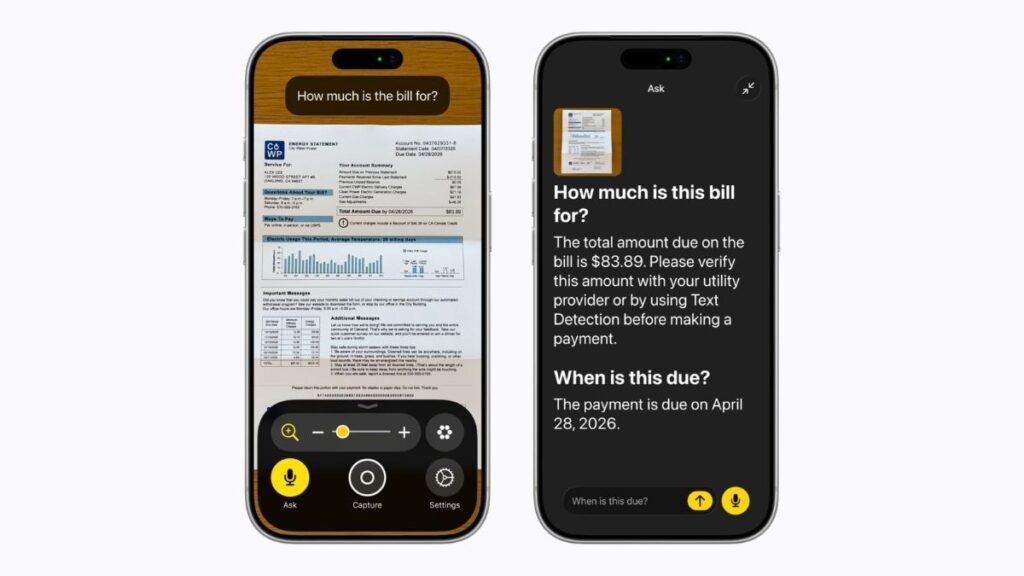
Table of Contents
Beyond the Hype: Applying Generative AI to Assistive Tech
Apple has long treated accessibility as a core product pillar rather than a compliance checklist, but the recent integration of “Apple Intelligence” marks a shift in how the company approaches assistive technology. On Tuesday, the company unveiled a series of updates across iPhone, Mac, and Vision Pro that move beyond static shortcuts toward dynamic, AI-driven environmental awareness.
While much of the industry’s focus on generative AI has centered on productivity chatbots and image creation, Apple is applying these models to the gaps in human-machine interaction. The most immediate impact is felt in the company’s expanded captioning capabilities. Apple is introducing AI-generated subtitles for video content that previously lacked captions, utilizing on-device processing to transcribe audio in real-time. This is a critical move for the Deaf and hard-of-hearing community, effectively turning any video stream into an accessible experience without requiring a third-party plugin or manual transcription.
Intelligence in the Sight and Sound Suite
The core accessibility tools—VoiceOver, Magnifier, and Voice Control—are receiving intelligence-based upgrades that aim to reduce the “cognitive load” for users with visual or motor impairments. For VoiceOver users, the AI is being tuned to provide more descriptive, context-aware summaries of on-screen elements. Instead of a mechanical reading of a button’s label, the system can now better interpret the intent of a complex UI layout, making navigation more intuitive.
The Accessibility Reader is also seeing a boost. By leveraging the same Large Language Models (LLMs) powering the broader Apple Intelligence rollout, the reader can now synthesize information more effectively, allowing users to extract key points from dense documents via voice commands. This transforms the tool from a simple text-to-speech engine into a functional reading assistant.
Vision Pro: Solving the Mobility Gap
Perhaps the most technically ambitious update arrives with visionOS. Apple has introduced eye-tracking-based wheelchair controls for the Vision Pro. By synthesizing gaze data with specific intent-recognition algorithms, the headset can now interface with compatible mobility devices, allowing users with limited physical mobility to navigate their environment using the same precision Apple uses for UI navigation.
This move is a strategic signal ahead of WWDC 2026. By expanding these features to Apple TV and iPad, Apple is ensuring that its “walled garden” is not just seamless for the average consumer, but navigable for those who rely on assistive tech. The goal is a unified experience where a user’s accessibility preferences migrate instantly from a MacBook to a Vision Pro without needing to re-calibrate complex settings.
The Technical Trade-off: Privacy vs. Utility
Apple’s insistence on on-device processing for these features is not just a marketing point; it is a necessity for accessibility. Users relying on real-time subtitles or VoiceOver cannot afford the latency of a cloud-based roundtrip, nor can they risk the privacy breaches associated with sending sensitive environmental data—like a live camera feed of a home—to a remote server.
By integrating these tools directly into the silicon, Apple is positioning its accessibility suite as a benchmark for the industry. While competitors like Google and Samsung are deploying AI in similar directions, Apple’s deep integration across hardware and software gives it a distinct advantage in reducing the latency that often makes AI-driven assistive tools frustrating or unusable in real-world scenarios.