Apple Finally Launches Siri AI: A Deep Dive Into the Conversational Shift and Visual Intelligence
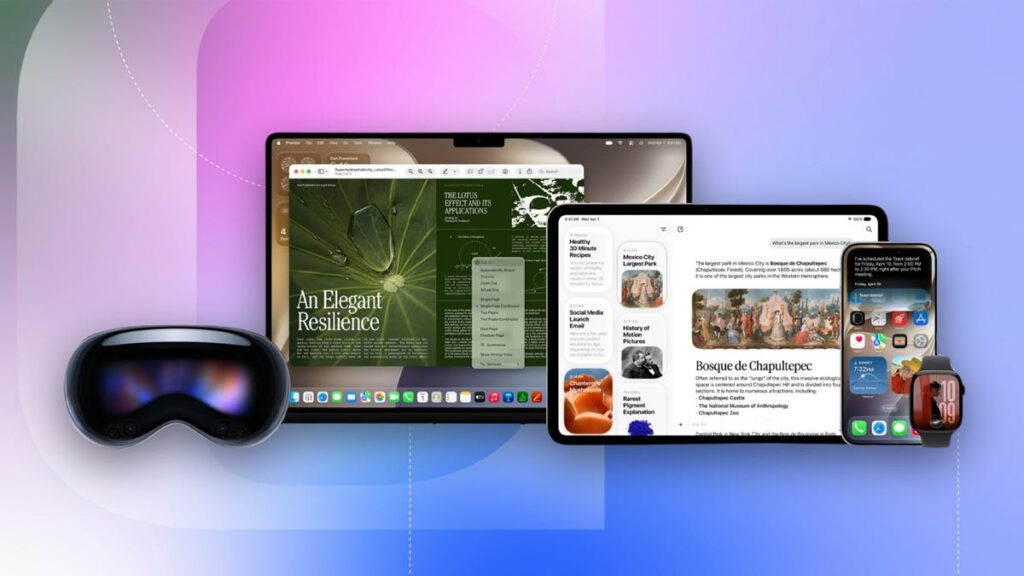
Table of Contents
The Long-Awaited Pivot to Siri AI
For over a decade, Siri has been the ubiquitous yet often frustrating face of Apple’s voice interface. After years of static responses and “I found this on the web” redirects, Apple has officially pivoted. At WWDC 2026, the company unveiled Siri AI, a fundamentally reconstructed assistant designed to move beyond simple command-and-control and into the realm of genuine conversational agency.
This is not merely a software patch; it is a structural overhaul of how the iPhone interacts with its user. By integrating deeper access to personal context and introducing a dedicated app for conversation history, Apple is attempting to bridge the gap between a voice-activated tool and a digital companion. For users, this means a transition from saying “Set a timer” to asking “When is that concert my friend mentioned in a text last week, and can you find me the cheapest tickets?”
- Conversational Memory: Siri AI now supports multi-turn dialogue, allowing users to refine requests without repeating the subject.
- Visual Intelligence: The assistant can now “see” and analyze on-screen content or camera feeds to perform real-world actions.
- Dedicated Ecosystem: A new Siri AI app acts as a persistent record of interactions, moving the assistant from a transient voice to a documented resource.
- Privacy Architecture: Heavy reliance on on-device processing and Private Cloud Compute to ensure user data remains inaccessible to Apple.
Understanding Visual Intelligence and Personal Context
The most significant leap in this update is the introduction of Visual Intelligence. In a series of live demonstrations led by Mike Rockwell, Apple showcased Siri’s ability to interpret the visual world in real-time. This isn’t just object recognition; it is contextual understanding. For example, Siri AI can identify a landmark from a photo, cross-reference it with a user’s messages to see if a contact lives nearby, and then suggest a route—all without the user manually switching between the Photos, Messages, and Maps apps.
This capability relies on a sophisticated layer of on-device semantic indexing. Siri AI scans the metadata of your emails, texts, and calendar events to build a personal knowledge graph. When you ask about “the hotel for my trip,” Siri doesn’t search the web; it searches your specific digital footprint to find the exact confirmation email and the check-in time.
The Shift to Multi-Turn Conversations
One of the primary criticisms of the legacy Siri was its “forgetfulness.” If you asked about the weather in Paris and then asked “How do I get there?”, the system often lost the context of Paris. Siri AI implements a conversational buffer that maintains the state of the interaction. This allow users to iterate on a task—asking for a flight, then a hotel, then a dinner reservation—as a single, fluid thread of thought.
The Technical Backbone: Private Cloud Compute
To achieve this level of intelligence without compromising Apple’s strict privacy stance, the company has deployed Private Cloud Compute (PCC). While basic requests are handled by the on-device Neural Engine, complex queries requiring massive Large Language Models (LLMs) are sent to specialized Apple Silicon servers.
According to Apple’s technical documentation, PCC ensures that data sent to the cloud is not stored and is not accessible to Apple personnel. This creates a tiered processing system: On-Device for speed and privacy, and Private Cloud for heavy-duty reasoning. This architecture is designed to prevent the data-mining practices common in competitors’ cloud-based AI models.
Performance and Compatibility
Siri AI is not a lightweight update. It requires the processing power of the most recent Apple silicon. It is currently available for developer testing on iOS 27, iPadOS 27, macOS 27, and visionOS 27. While the software is in beta, the full consumer experience is expected to synchronize with the launch of the next-generation iPhone hardware later this year.
Market Context: A High-Stakes Redemption Arc
The arrival of Siri AI comes at a precarious moment. This is effectively “Take Two” for Apple’s AI strategy. The initial Apple Intelligence promises of 2024 were marred by delays and legal challenges, including a $250 million settlement regarding claims that the company misled consumers about AI capabilities. For Tim Cook, delivering a functional, impressive Siri AI before his anticipated transition from the CEO role is a matter of corporate legacy.
Industry analysts suggest that Apple is playing a game of “meaningful parity.” Ben Wood of CCS Insight noted that the challenge for Apple is not simply matching the raw knowledge of ChatGPT or Gemini, but proving that a privacy-first, integrated approach provides a more seamless everyday utility. The goal is to make the AI feel “invisible”—something that works in the background rather than a chatbot you have to manage.
Current market data indicates that while 70% of users have tried a generative AI tool, fewer than 30% use them daily for productivity. Apple’s strategy is to bake the AI into the OS (the “system level”), bypassing the need for a standalone app for most tasks and increasing the “stickiness” of the ecosystem.
What This Means for the End User
For the average consumer, the transition to Siri AI represents a shift from manual navigation to intent-based interaction. Instead of opening an app to find a piece of information, you describe your goal, and the OS handles the orchestration.
For Power Users: The integrated writing tools and advanced dictation mean that the iPhone becomes a more viable tool for professional drafting and long-form communication. The ability to reference previous conversations via the dedicated Siri AI app turns the assistant into a searchable database of your own voice-driven queries.
For Casual Users: Visual Intelligence lowers the friction of interacting with the world. Identifying a plant, translating a menu, or finding a specific product in a photo becomes a one-step process rather than a multi-app journey.
Addressing the Privacy Paradox
There is an inherent tension in a system that “knows everything” about your messages and photos while claiming to be private. Apple attempts to resolve this by keeping the Personal Index encrypted on the device. When Siri AI accesses your email to find a flight number, it is the local OS performing the search, not a remote server.
However, critics argue that the reliance on Private Cloud Compute still introduces a point of failure. While Apple claims the data isn’t stored, the mere act of transmitting personal context to a server—even a private one—is a shift from the 100% on-device promise of earlier iOS versions. The trust in Siri AI will ultimately depend on third-party audits of the PCC infrastructure.
Comparing Siri AI to the Competition
| Feature | Siri AI (Apple) | Google Gemini (Android) | ChatGPT (OpenAI) |
|---|---|---|---|
| System Integration | Deep (OS Level) | Deep (OS Level) | App/API Level |
| Personal Context | High (Emails/Messages) | High (Google Workspace) | Limited (User-provided) |
| Privacy Model | On-Device + Private Cloud | Cloud-Centric | Cloud-Centric |
| Visual Intelligence | Integrated via Camera/Screen | Integrated via Lens | Multimodal Uploads |
Final Analysis: Promise vs. Utility
The technical achievements of Siri AI are undeniable. The move to a conversational, context-aware agent is the correct trajectory for the company. However, as analyst Paolo Pescatore suggests, the true test is whether this translates into “everyday utility.” A demo in a controlled keynote environment is vastly different from a user trying to navigate a noisy street or a glitchy Wi-Fi connection.
Apple has successfully moved the needle from a basic voice command system to a sophisticated AI agent. Whether this is enough to regain the trust of users after the 2024 delays remains to be seen. For now, the rollout to developers marks the beginning of the most critical phase of Apple’s AI journey: the transition from a marketing promise to a functional tool in the pockets of millions.
Frequently Asked Questions
Is Siri AI free to use?
Apple has not explicitly announced a subscription fee for Siri AI. It is expected to be integrated into the OS for users with compatible hardware, although some advanced “cloud-heavy” features may eventually be tied to an Apple Intelligence+ subscription model.
Which devices support Siri AI?
Siri AI requires the Neural Engine found in newer Apple Silicon. It is currently targeted for devices running iOS 27, iPadOS 27, and macOS 27. Older iPhones that do not support Apple Intelligence will likely not receive the full Siri AI update.
Does Siri AI record my conversations?
Apple states that Siri AI only activates upon the “Hey Siri” trigger or a physical gesture. While it uses context from your messages and emails to provide answers, it does not store your conversations on Apple servers in a way that is accessible to the company, thanks to Private Cloud Compute.
When can I download Siri AI?
The software is currently in developer beta. The general public can expect the wide release later in 2026, likely coinciding with the launch of the next iPhone series.
Can Siri AI speak languages other than English?
At launch, Siri AI is limited to English. However, Apple has confirmed that a roadmap for additional language support is in place, with a gradual rollout of localized AI models throughout 2027.