Apexel’s TeleMacro Pro 10X Attempts to Bridge the ‘Pro’ Gap for Standard Smartphones
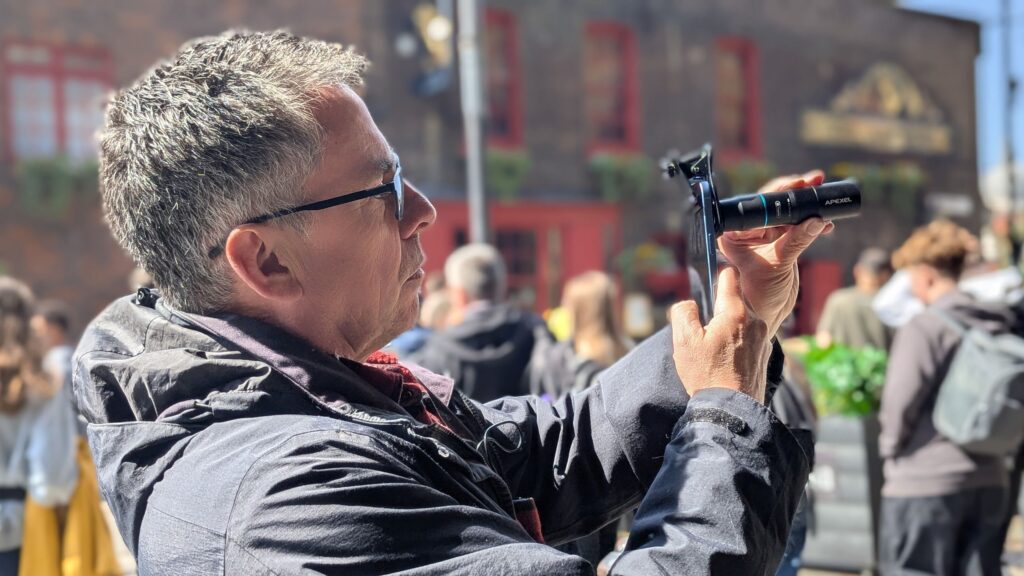
Table of Contents
Closing the Hardware Gap
For most smartphone users, the decision between a base model and a ‘Pro’ variant often comes down to a single factor: the camera array. Specifically, the loss of a dedicated periscope zoom lens can make street photography and architectural captures feel limiting. The Apexel TeleMacro Pro 10X Kit attempts to solve this by adding a layer of physical glass to the smartphone’s primary sensor, effectively granting 10x optical magnification to devices that typically rely on digital cropping.
Apexel, a China-based optics specialist founded in 2011, has carved out a niche by creating high-magnification attachments that go beyond the capabilities of built-in software. While the TeleMacro Pro 10X isn’t designed to replace a professional DSLR, it offers a tangible way for users of devices like the iPhone 17 to regain the reach typically reserved for higher-tier models without upgrading their entire handset.
Optical Engineering and Build
The kit is centered around a 5.51-inch barrel constructed from aircraft-grade aluminum. Weighing in at 145g, the lens is surprisingly lightweight given its size, though the physical length creates a significant shift in the phone’s center of gravity. The optical assembly consists of 12 elements with a multi-coating designed to minimize glare and internal reflections—a necessity when pushing light through a long glass path.
Unlike many cheap clip-on lenses that rely on fixed focus, the TeleMacro Pro features a tactile manual focus ring. This allows users to fine-tune the focal plane from 1 meter to infinity, providing a level of control that software-based autofocus often struggles with at high magnifications. The kit also includes a detachable rubber eyepiece, which essentially transforms the smartphone attachment into a handheld monocular for spotting subjects before snapping a photo.
The Macro Pivot
Beyond the telephoto capabilities, the ‘Macro’ half of the kit consists of a screw-on 10x macro lens. This attachment shifts the focus distance to between 20 and 24 cm, allowing for extreme close-ups of flora and fauna. A primary advantage of this physical offset is that it prevents the smartphone itself from casting a shadow over the subject—a common frustration when using the built-in macro modes on modern iPhones.
The narrow depth of field produced by the macro lens creates a natural, abstract bokeh that is difficult to replicate using ‘Portrait Mode’ software, offering a more organic look for nature photography.
Real-World Friction: The Clip Problem
The hardware performance is impressive, but the user experience is marred by the mounting system. The kit ships with a universal clip mount that proves temperamental during setup. In field tests at London’s Southbank, aligning the lens perfectly with the iPhone 17’s main camera took several minutes of trial and error. Any slight misalignment results in a heavy black vignette or blurred edges, forcing the user to repeatedly unscrew and adjust the grip.
Crucially, Apexel offers device-specific cases that allow the lens to be screwed directly into a pre-aligned thread. For iPhone users, this is effectively a requirement; the universal clip is far too imprecise for a lens with such a narrow field of view. Additionally, while the lens is stable for stills, shooting steady video at 10x zoom is nearly impossible without a tripod—an accessory notably absent from this specific kit, unlike Apexel’s higher-end 36x wildlife setup.
Verdict on Versatility
At roughly $89.98, the TeleMacro Pro 10X is a compelling value proposition for those who want to experiment with composition and distance without spending an additional $300+ on a Pro-tier smartphone. While the mounting process is fiddly and the lack of a tripod is a missed opportunity for videographers, the optical results are genuine. It successfully compresses distance and provides a cinematic perspective that digital zoom simply cannot emulate.