Anker Bets on Silicon with Liberty 5 Pro Series: AI Chips and Touchscreen Cases Aim for the High End
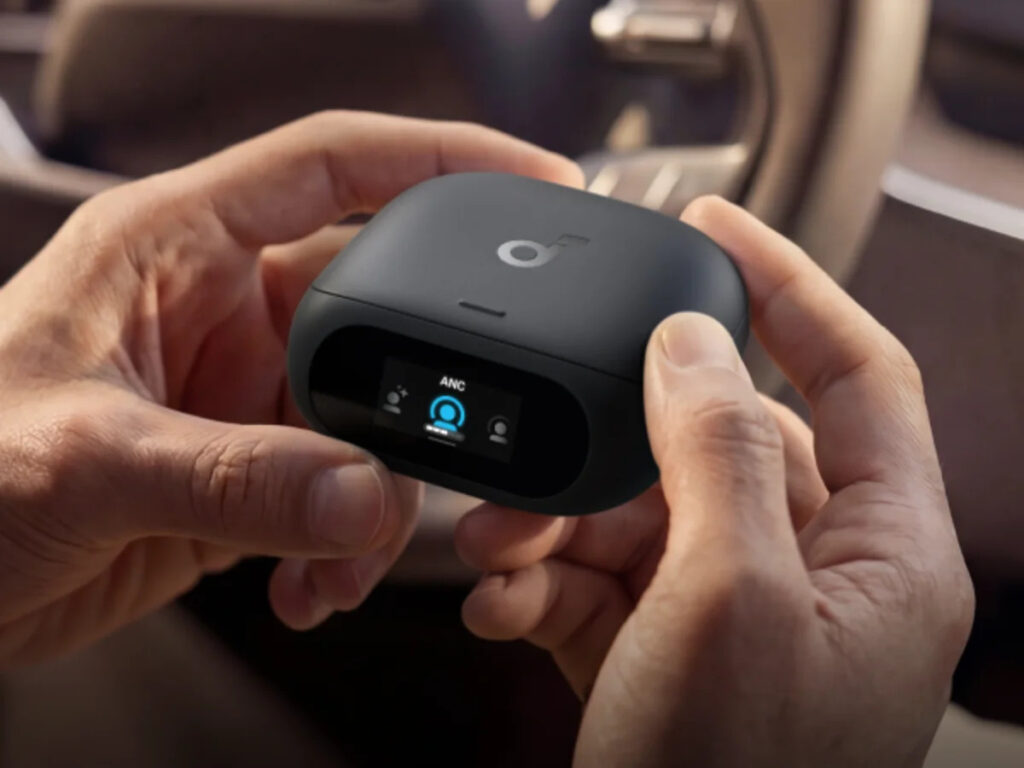
Table of Contents
Anker moves from peripherals to processors
Anker is no longer content simply assembling high-quality components from third-party vendors. Following the April announcement of its first proprietary silicon, the company is now deploying that hardware into the wild. The new Soundcore Liberty 5 Pro and the flagship Liberty 5 Pro Max aren’t just iterative updates to the Liberty 4 series; they are the first consumer products to feature Anker’s homegrown ‘Thus’ AI chip.
The integration of a dedicated AI chip marks a strategic shift for Anker, moving it closer to the vertical integration seen in companies like Apple or Sony. By controlling the silicon, Anker claims to have solved several of the perennial bottlenecks in wireless audio: latency in voice commands and the imprecise nature of adaptive noise cancellation (ANC).
The ‘Thus’ Chip and the battle against noise
According to Anker, the Thus AI chip allows the Liberty 5 Pro series to process environmental noise at a rate of 384,000 times per second. This is a significant leap in sampling frequency, which Anker claims results in noise cancellation that is ‘up to 2x deeper’ than the previous generation. Rather than a static filter, the system is designed to dynamically adjust to everything from the low-frequency hum of a jet engine to the erratic, high-frequency chatter of a crowded coffee shop.
The chip also tackles the ‘clunky’ feel of voice assistants. By moving more processing onto the device rather than relying solely on the connected smartphone, Anker reports a voice command response time of 0.91 seconds for 20 built-in commands. In a market where voice latency often leads to user frustration, sub-second responsiveness is a tangible win for the user experience.
Bone conduction and the ‘lost’ audio problem
Call quality in earbuds is often a compromise between wind noise and voice clarity. Anker is attempting to bridge this gap by combining a 10-sensor matrix with a neural-net AI model and—most interestingly—bone-conduction sensors. By picking up vibrations directly from the jawbone, the earbuds can better isolate the wearer’s voice from ambient noise, a technique typically reserved for high-end military or industrial headsets.
Perhaps the most provocative claim is tied to Anker’s HearID system. While personalized EQ is common, Anker asserts that the new system can ‘rebuild’ audio detail lost during Bluetooth compression, claiming to restore up to 65% of the missing data. This is a bold assertion that challenges the inherent limitations of the SBC and AAC codecs, though it remains to be seen how this performs in blind A/B testing against high-bitrate wired alternatives.
The case as a companion device
The most striking visual difference between the two models lies in the charging cases. The Liberty 5 Pro features a standard status screen, but the Pro Max introduces a 1.78-inch AMOLED touchscreen. This isn’t just a novelty for changing tracks; the screen serves as a hub for a new AI-driven productivity suite.
The Pro Max case can act as a standalone recorder for meetings. Once the audio is captured, the integrated AI processes the recording to create full transcriptions, identify different speakers, and automatically extract action items and to-do lists. This positions the Pro Max not just as a pair of earbuds, but as a productivity tool for professionals—a niche previously occupied by dedicated AI recorders like those from Plaud.
Technical specifications and availability
Under the hood, both models support LDAC for high-resolution audio and integrate with Apple Find My and Google Fast Pair. Battery life is rated at 6.5 hours of continuous playback, extending to 28 hours with the case. Multi-point connectivity allows for simultaneous pairing with up to three devices, addressing one of the most requested features for power users.
The Liberty 5 Pro is priced at $170, while the AI-heavy Liberty 5 Pro Max carries a premium price tag of $230. Both are available for order now.


