AMD’s Radeon RX 9070 GRE is a textbook case of GPU shrinkflation
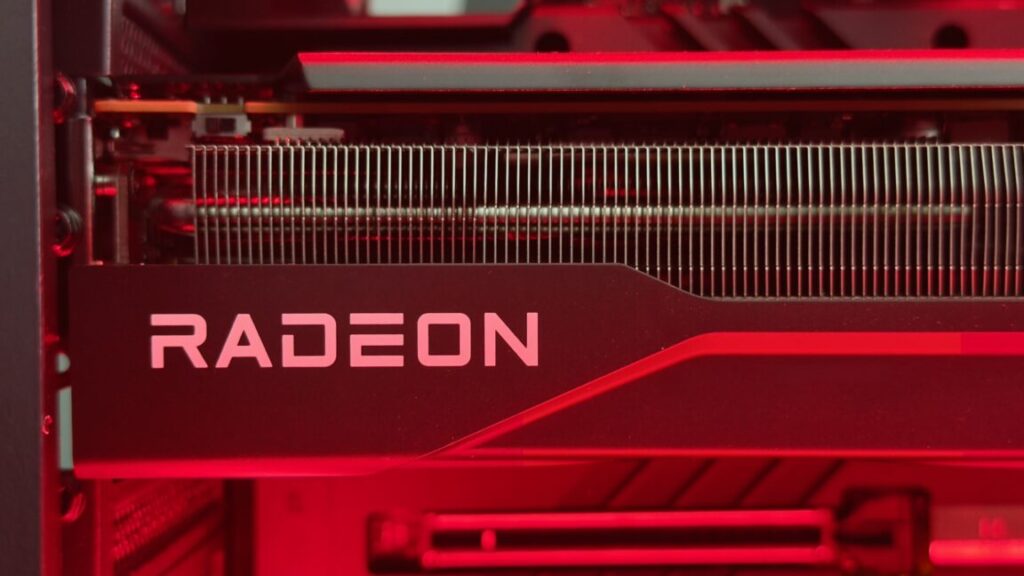
Table of Contents
The Same Price for Less Silicon
In the consumer electronics world, there is a quiet phenomenon known as shrinkflation—where a product’s price remains steady while the quantity or quality diminishes. Usually, this happens with bags of chips or boxes of detergent. However, AMD is bringing this strategy to the enthusiast PC market with the launch of the Radeon RX 9070 GRE.
Launching at a suggested retail price of $549, the RX 9070 GRE occupies the exact same price point as the original RX 9070 did a year ago. On paper, however, the ‘GRE’ (Golden Rabbit Edition) is a significant step backward. This card, which has seen a limited release in China over the last year, arrives in the US market with 85% of the GPU cores, 75% of the memory, and only 66% of the memory bandwidth compared to the standard RX 9070.
For the average consumer, AMD’s naming convention here is baffling. In almost every other GPU lineup—whether it’s Nvidia’s ‘Ti’ and ‘Super’ or AMD’s own ‘XT’—additional letters typically signal a performance bump. In the case of the 9070 GRE, the extra letters signal a downgrade.
Hardware Cuts and Memory Bottlenecks
The RX 9070 GRE utilizes the Navi 48 silicon, but it has been aggressively pruned. It features 3,072 shader cores, down from the 3,584 found in the standard 9070 and the 4,096 in the 9070 XT. More concerning is the memory configuration: a 192-bit interface and 12GB of VRAM, compared to the 256-bit interface and 16GB of VRAM on its sibling.
This memory cut is where users will feel the most friction. While 12GB is sufficient for 1080p and most 1440p titles, it creates a ceiling for those eyeing 4K gaming. For entry-level 4K, users will be forced to rely heavily on FSR upscaling or lower their texture settings to avoid stuttering. By stripping away those extra 4GB, AMD has removed one of the primary reasons to choose the 9070 series over Nvidia’s RTX 5070.
Real-World Performance: 1440p vs 4K
In benchmarking on a system powered by the Ryzen 7 9800X3D, the RX 9070 GRE shows a modest but consistent performance dip. At 1440p, it is generally 10% to 20% slower than the standard RX 9070. While it still outperforms the RX 9060 XT by roughly 25%, the gap between it and the competition is narrowing in a way that doesn’t favor AMD.
The most telling comparison is against the GeForce RTX 5070. While the standard RX 9070 typically holds its own or wins, the GRE version falls behind. In rasterization (non-ray-tracing) tasks, it is about 10% slower than the 5070. When ray-tracing is enabled, the gap widens to 20%, with titles like Black Myth: Wukong exposing the card’s struggles when settings are maxed out.
At 4K, the situation worsens. High-end presets in Cyberpunk 2077, specifically the Overdrive RT setting, are virtually unplayable on the GRE. The 12GB VRAM buffer becomes a hard wall, causing the card to struggle with stability and frame rates in ways the 16GB models do not.
The Efficiency Paradox
Perhaps the most frustrating aspect of the RX 9070 GRE is its power profile. Despite having fewer cores, the card consumes nearly the same amount of power as the full-fat RX 9070. AMD has attempted to compensate for the loss of silicon by pushing the remaining cores to a higher boost clock. The result is a card that is less efficient than its predecessor while providing less performance.
When looking at current street prices, the value proposition is grim. While the MSRP is $549, market inflation has pushed the cheapest standard 9070s to the $600–$640 range and the RTX 5070 to roughly $630. While the GRE is technically the ‘cheaper’ entry point to the 9000 series, it feels less like a strategic product launch and more like an attempt to fill a price gap with repurposed, cut-down hardware.


