Algorithmic Outrage: How Social Media Amplified Belfast’s Anti-Immigrant Riots
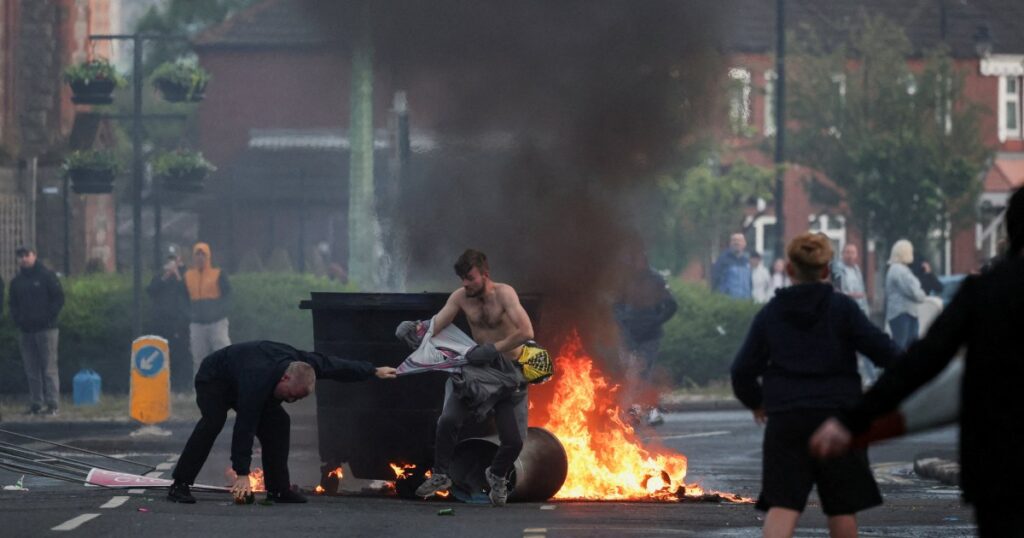
Table of Contents
The Speed of Digital Escalation
The violence that erupted in Belfast this week—characterized by torched vehicles, petrol bombs, and targeted attacks on buildings—did not happen in a vacuum. While the immediate trigger was a stabbing attack in north Belfast by a 30-year-old Sudanese national, the speed with which this isolated criminal incident transitioned into coordinated urban unrest points to a well-documented phenomenon in modern digital culture: the algorithmic acceleration of outrage.
Within hours of the attack on Monday night, fragmented details about the suspect’s nationality and immigration status began circulating through encrypted messaging apps and X (formerly Twitter). By Tuesday, masked groups were not just protesting, but coordinating arrivals at specific city center locations and in Antrim, nearly 25km west of the city. This pattern of rapid, decentralized mobilization is a hallmark of contemporary digital unrest, where the ‘information gap’ between a crime and the official police report is filled by inflammatory narratives designed for high engagement.
The ‘Information Gap’ as a Weapon
In the hours following the incident, the Police Service of Northern Ireland (PSNI) worked to establish facts, eventually confirming the suspect’s status as a five-year visa holder who had traveled from Sudan via Paris and Dublin. However, in the digital ecosystem, nuanced legal statuses are secondary to the narrative of “uncontrolled immigration.”
This gap allowed political figures and anti-immigration influencers to exert significant pressure on the narrative. Figures like Nigel Farage and Rupert Lowe utilized their platforms to demand immediate disclosures, effectively signaling to their followers that the event was part of a broader systemic failure. When political leaders leverage their reach to question immigration frameworks in the immediate aftermath of a crime, it creates a feedback loop that validates the aggression of those on the street.
The Southampton Precedent
The Belfast unrest is not an isolated glitch but part of a larger trend of “mimetic violence” seen across the UK. Recent tensions in Southampton, where a student’s murder was initially mischaracterized due to false allegations by the killer, served as a blueprint. In that instance, protesters targeted hotels housing asylum seekers, linking unrelated crimes to immigration status through social media hashtags.
The transition from a digital post to a physical fire is now nearly instantaneous. The use of petrol bombs and the targeting of bins near residential buildings in Belfast suggest a level of tactical aggression that is often discussed and disseminated in private Telegram channels and closed Facebook groups, away from the immediate reach of mainstream content moderation.
The Algorithmic Incentive for Chaos
From a technical perspective, the platforms used to coordinate these events are designed to prioritize “high-arousal” content. Rage, fear, and indignation are the strongest drivers of user retention. When a video of a knife attack or a burning bus is uploaded, recommendation engines push that content to users already predisposed to anti-immigrant sentiment, creating a digital echo chamber that renders the calls for calm from leaders like First Minister Michelle O’Neill nearly invisible.
O’Neill’s condemnation of the “disgusting cowardice” of those burning families out of their homes was broadcast via X, but the nature of the platform means such statements often reach the general public, while the actual coordination of the riots happens in the shadows of encrypted apps. This creates a dual reality: an official narrative of condemnation and a hidden, algorithmic narrative of mobilization.
A Critical Incident in the Digital Age
Assistant Chief Constable Ryan Henderson declared the unrest a “critical incident,” but the criticality extends beyond the physical streets. The ability of a small group of masked individuals to plunge a city into chaos based on a rapid-fire stream of online information highlights a growing vulnerability in urban security. The challenge for law enforcement is no longer just managing a crowd, but managing the data flow that summons that crowd into existence.
As the 30-year-old suspect prepares for his court appearance on Wednesday, the aftermath in Belfast serves as a stark reminder that in the modern era, the crime is often only the spark; the digital infrastructure is the fuel.


