Algorithmic Incitement: How Social Media Amplification Fueled Belfast’s Anti-Immigrant Riots
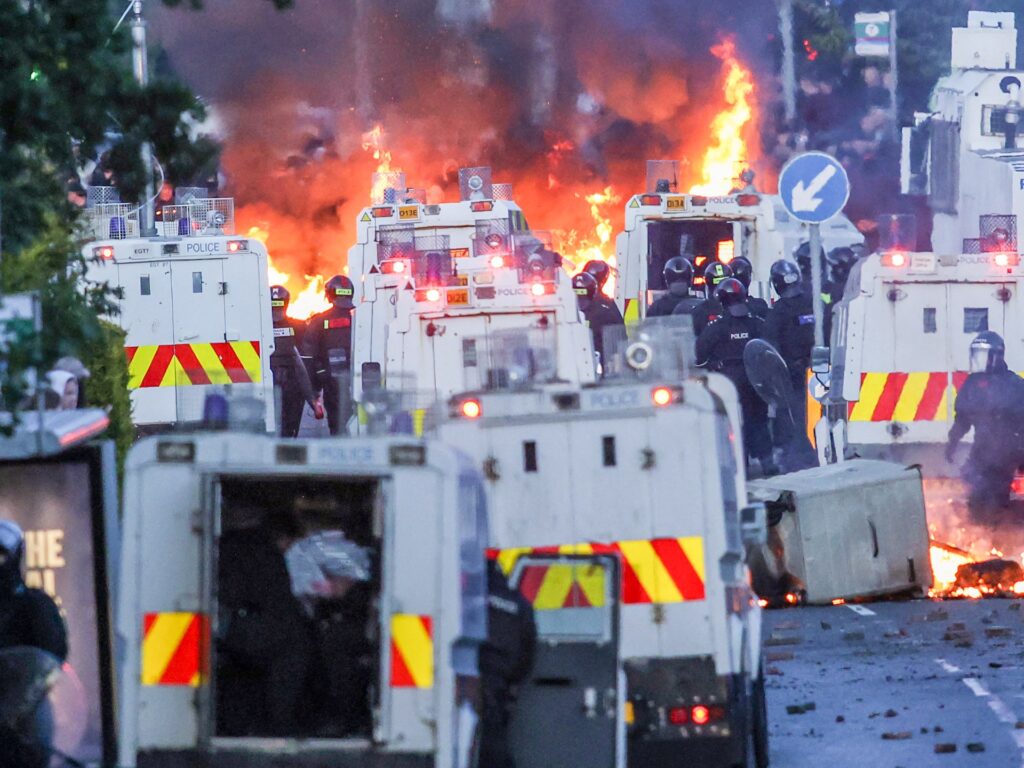
Table of Contents
The Digital Spark in a Physical Powderkeg
The deployment of water cannons by police in Belfast this week serves as a stark visual reminder of civil unrest, but the actual catalyst for the violence was not found on the streets—it was distributed via the feed. What began as a localized criminal incident involving a knife attack by a Sudanese national, Hadi Alodid, rapidly mutated into a city-wide riot through a coordinated cycle of algorithmic amplification and high-profile digital endorsements.
The speed with which the unrest escalated on Tuesday evening—resulting in families being burned out of their homes and vehicles reduced to shells—highlights a recurring pattern in modern conflict: the ‘digital-to-physical’ pipeline. In this instance, videos of the stabbing circulated on social media platforms with minimal context, providing a foundation for far-right agitators to frame a specific crime as a systemic failure of immigration policy.
The X-Factor: Amplification from the Top
The role of X (formerly Twitter) and its owner, Elon Musk, has come under intense scrutiny following the riots. Musk’s decision to repost messages linking migration to systemic violence in the UK didn’t just signal agreement; it provided a massive visibility boost to narratives that were already being weaponized by figures like Tommy Robinson. When a platform owner utilizes their reach to validate fringe theories about “mass uncontrolled immigration,” it effectively signals to the algorithm that such content is high-value, pushing it into the feeds of undecided or vulnerable users.
Anna Turley, chairwoman of the UK’s governing Labour Party, explicitly identified these dynamics, suggesting that Musk acted as one of several “bad faith actors” inflaming tensions. This is not merely a matter of free speech, but of algorithmic curation. When hate speech is amplified by the highest-profile account on the platform, the moderation barriers designed to prevent real-world harm are effectively bypassed.
From Viral Loops to Door-to-Door Violence
The physical manifestations of this digital incitement were precise and brutal. According to UK minister Ruth Anderson, at least 27 people were made homeless after rioters went door-to-door specifically targeting foreign nationals. This suggests a level of coordination that transcends organic anger; it implies the use of digital tools to identify, target, and harass specific demographics in real-time.
Chief Constable Jon Boutcher described the rioters as “mindless idiots,” yet the tactical nature of the attacks—targeting ethnic minority groups and burning homes—points to a level of radicalization fostered in online echo chambers. These digital environments strip away the nuance of the actual event, replacing a criminal case with a narrative of existential threat, which then justifies extreme violence in the minds of the perpetrators.
The Responsibility of the Infrastructure
The United Nations human rights chief, Volker Turk, has called the dehumanization of groups on social media “despicable,” urging platforms to take their responsibility regarding hate speech seriously. The Belfast unrest exposes a critical failure in the current architecture of the social web: the gap between the speed of a viral lie and the speed of a factual correction.
While the family of the victim, Stephen Ogilvie, has pleaded for calm and emphasized the value of migrants in their community, their voice—grounded in human empathy and fact—struggles to compete with the high-engagement metrics of rage-driven content. The tragedy in Belfast demonstrates that when software is optimized for engagement over accuracy, the real-world cost is measured in burned homes and shattered lives.
As Hadi Alodid remains in custody with his case adjourned to July 8, the broader legal question remains: at what point does a platform’s failure to moderate systemic incitement transition from a corporate oversight to a liability for public safety?