Administrative Limbo: The Legal and Logistical Vacuum Trapping Gaza Medical Evacuees in Baghdad
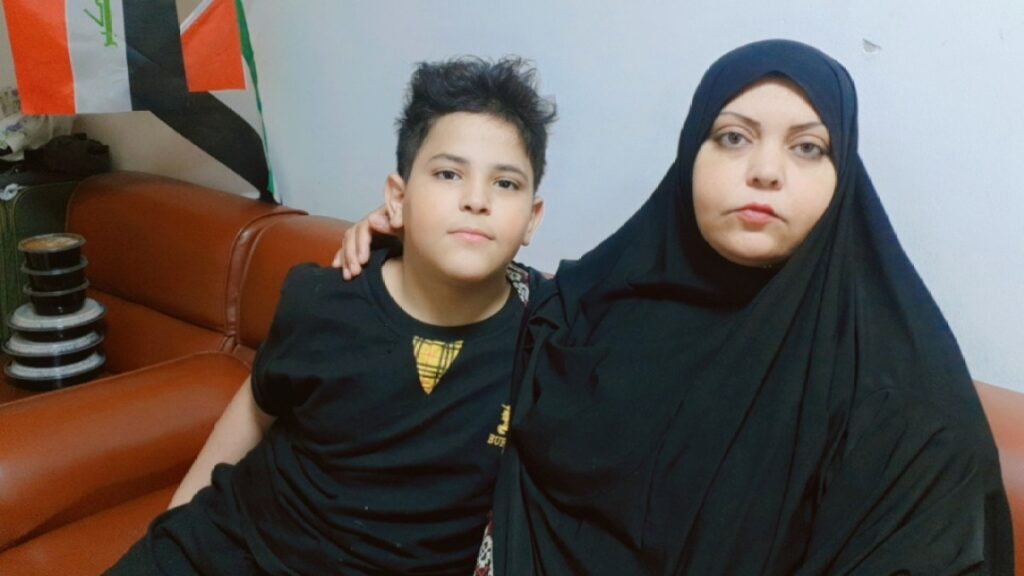
Table of Contents
A Sanctuary Turned Cage
For Hanin Muhammad and a small cohort of Palestinians evacuated from the Gaza Strip to Baghdad, the promise of life-saving medical intervention has been eclipsed by a grueling administrative stalemate. Muhammad, who traveled to Iraq as a medical companion for her sister—a kidney transplant recipient—now finds herself entering a third year of separation from her six children, trapped within the confines of the Private Nursing Home Hospital inside Baghdad’s Medical City complex.
The situation is not an isolated case of misfortune but a systemic failure of coordination. Muhammad is part of a group of 46 Palestinians—consisting of 21 patients and 25 family escorts—who were flown to the Iraqi capital in May 2024 via military aircraft. The operation was ostensibly a coordinated effort between the Iraqi and Egyptian governments, with nominal involvement from the Palestinian Embassy in Cairo. However, upon arrival, the logistical framework collapsed, leaving the evacuees in a state of legal invisibility.
The Documentation Gap
The primary mechanism of their confinement is the seizure of identification and travel documents. According to reports from the evacuees, Iraqi authorities confiscated their original papers immediately upon their transfer from Egypt’s Heliopolis Hospital. Muhammad alleges that these documents were handed over to Iraqi Intelligence and the Ministry of Foreign Affairs, and despite repeated requests, they have not been returned.
While the Palestinian Embassy in Baghdad has attempted to mitigate the crisis by issuing new passports, these documents lack the necessary official stamps from the Iraqi government. Without these stamps, the passports are functionally useless for international travel, rendering the holders unable to exit the country or even move freely within Baghdad.
For escorts like Noor Ibrahim (a pseudonym), the psychological toll of this “temporary” six-month trip has become unsustainable. Ibrahim, who accompanied her aunt for cancer treatment, remains stranded with four of her aunt’s children, separated from her fiancé and family in Gaza for over two years. The administrative vacuum has essentially frozen their lives, turning a medical mission into a form of indefinite detention.
A Broader Systemic Collapse
This localized crisis in Baghdad reflects a catastrophic medical vacuum within the Gaza Strip. Data from Gaza’s Health Ministry indicates that more than 20,000 patients and wounded individuals are currently awaiting evacuation for treatment that is unavailable locally. The scale of the need is underscored by the figures provided by Zaher al-Waheidi, head of the ministry’s Information Unit, who reports that 1,200 children are suffering from spinal cord injuries and paralysis, with another 4,000 requiring urgent overseas care.
The disparity between the need and the actual evacuations is stark. Since the Rafah crossing—the primary gateway to Egypt—partially reopened in February under heavy Israeli restrictions, only 154 children have been permitted to leave. The medical crisis extends to the most vulnerable; in 2025, over 4,000 premature deliveries were recorded, and nearly 4,800 infants were born with low birth weights, doubling the pre-war average.
Survival on Charity
Inside the Medical City complex in Baghdad, the daily reality for these Palestinians is one of material deprivation. Deprived of monetary stipends, the group relies on the hospital for basic shelter and the generosity of Iraqi citizens for food and supplies. Samah Abdul Moati, a 65-year-old battling leukemia and liver cancer, describes the hospital-provided food as unfit for consumption, noting that they survive largely on the grace of local well-wishers.
For patients like Abdul Moati, the medical treatment—while necessary—has become secondary to the desire for repatriation. With her husband fighting cancer in a Gaza ICU and her grandchildren living in tents, the clinical success of her treatment in Baghdad is overshadowed by the agony of being trapped in a foreign city, separated from her family by a wall of bureaucracy and confiscated papers.